Support

Sintra

About

Sintra is a truly fairytale town located near Lisbon that enchants visitors with its unique atmosphere, romantic architecture, and lush green hills. This UNESCO World Heritage site looks as if it stepped off the pages of a magical book, offering every guest an unforgettable journey into the past.

Geographically, Sintra is located in the Lisbon District of Portugal, nestled on the slopes of the Serra de Sintra mountains. Due to its location and proximity to the Atlantic Ocean, the climate here is milder and more humid compared to Lisbon, which promotes lush vegetation and creates a refreshing coolness even on hot summer days. The town's population is approximately 377,835 people.
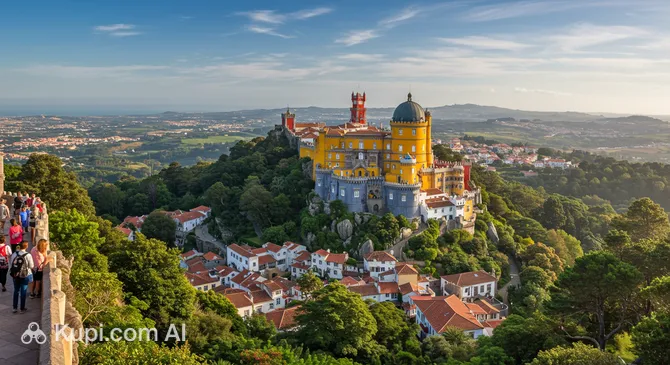
Sintra. Illustration.
Source: Kupi.com AI

Among the main gems of Sintra that attract travelers from all over the world are the magnificent Pena Palace (Palácio Nacional da Pena) with its bright, fairytale facades, the mysterious Quinta da Regaleira estate with its enigmatic initiation wells, and the majestic Moorish Castle (Castelo dos Mouros), which offers breathtaking panoramic views of the surroundings and the Atlantic Ocean. Each of these attractions holds its own centuries-old stories and legends.

A visit to Sintra is a unique opportunity to plunge into a world of dreams and romance, explore ancient castles and luxurious palaces, stroll through shady parks, and enjoy the unique beauty of this amazing corner of Portugal. Don't miss the chance to discover the magic and charm of Sintra, which will stay in your memory for a long time.

You can find more interesting facts on the Sintra city history page.
Weather Overview

The weather in Sintra is characterized by a mild Mediterranean climate with oceanic influence, making it pleasant to visit all year round. Summers are warm and predominantly dry, while winters are mild and more humid. The average temperature in the hottest months, July and August, is around 20.2°C, with almost no precipitation. In winter, for example in January, the average temperature stays around 12.3°C, and November sees the highest amount of precipitation, about 3 mm, with about 11 rainy days. Spring and autumn offer comfortable temperatures for walking and exploring attractions, with a moderate amount of rainfall.

Overall, expect a warm, very dry summer and a mild winter with occasional rain. To find out more about the weather by month, visit the Sintra Climate page.

Average monthly temperature

Average monthly precipitation

Interesting Facts

In addition to its world-famous palaces and castles, Sintra hides many amazing stories and little-known details that make this town even more attractive. Ready to learn a few secrets of this magical place?

  • The famous English poet Lord Byron, who lived here for a while, was so enchanted by Sintra that he called it a "glorious Eden" in his poem "Childe Harold's Pilgrimage," immortalizing its romantic aura for the whole world.

  • Sintra still operates a historic tram (Elétrico de Sintra), which has been running along a scenic route of about 11 km since 1904, connecting the town with the charming coastal resort of Praia das Maçãs. It's not just transport, but a real journey through time with views of the mountains and the ocean!

  • Sintra is famous not only for its architecture but also for its unique local sweets. Be sure to try "queijadas de Sintra"—small sweet cheese pastries whose recipe reportedly dates back to the 13th century—and delicate "travesseiros"—puff pastries with almond and egg cream.

  • One of the most romantic and secluded spots is the Chalet of the Countess of Edla, built by King Ferdinand II for his second wife, opera singer Elise Hensler. This charming Alpine-style chalet, surrounded by an exotic garden, was their private love nest and a symbol of their union, which was unconventional for the time.

  • The ancient Romans, impressed by the mystical beauty of the local mountains, called this area "Mons Lunae" or "Mountain of the Moon." This name hints at ancient cults and legends associated with this place long before the appearance of the famous royal palaces and castles.

Chalet of the Countess of Edla. Illustration.
Source: Kupi.com AI

Traveler photos:

How to Get There

When planning a trip to this fairytale Portuguese town, it's important to think about your route in advance. Sintra is located very close to the capital, so getting here is easy. You can find all the details and alternative options by reading our article on all the ways to get to the city.

The main air gateway for travelers is Lisbon Portela Airport (LIS). There is no airport in Sintra itself, so most tourists fly into Lisbon, which is only 16.9 km from Sintra. This is the country's largest international hub, receiving flights from all over the world. The journey from there by taxi or transfer will take about 45–50 minutes. If you prefer public transport, you can easily get from the airport to Lisbon's train stations, which have direct suburban trains to Sintra.

Another option, especially if you are planning a trip through the north of the country, could be Porto Airport (OPO). It is located in the city of Porto, at a distance of about 274.7 km from Sintra. This is also a major international airport. A car journey from there will take about 3 hours, so this option is suitable for those who want to combine a visit to Sintra with a larger tour of Portugal.

For convenience, here is a summary of the main airports:

AirportPassenger trafficDistance
Cascais Municipal Aerodrome35 00012 km
Lisbon Portela Airport35.1 mln17 km
Badajoz Airport75 416217 km
Faro Airport9.8 mln234 km
Porto Airport15.9 mln275 km

If you are considering arriving by train from neighboring Spain, you should look at the nearest major railway hubs. There is no long-distance railway station in Sintra itself, but you can arrive at the Badajoz Railway Station, which is approximately 203.4 km from Sintra. From there, you can reach the town by taxi or rental car, which will take about 2.5 hours.

Below is information about the nearest major railway stations in the region:

StationPassenger trafficDistance
Badajoz Railway Station125 198203 km
Mérida Railway Station470 592259 km
Cáceres Railway Station426 505264 km
Huelva Station295 000272 km

Main Attractions

Sintra, a fairytale town in Portugal, is famous for its palaces and castles, each possessing unique charm and a rich history. Here are some of the key attractions to include in your itinerary:

One of the most recognizable symbols of Sintra is the Pena National Palace. This fairytale castle, perched on a hilltop, captures the imagination with its bright colors and eclectic architecture, combining elements of Neo-Gothic, Neo-Manueline, and Neo-Moorish styles. Built in the 19th century by King Ferdinand II, the palace is surrounded by an extensive park with exotic plants from all over the world. Tourists are drawn not only by its photogenic appearance but also by its richly decorated interiors and the breathtaking panoramas from its terraces.

Pena National Palace. Illustration.
Source: Kupi.com AI

Traveler photos:

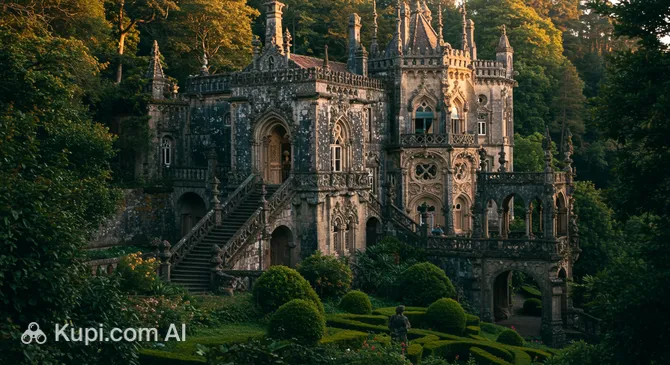
No less mystical and attractive is Quinta da Regaleira. This mysterious early 20th-century estate is full of symbolism related to Masonry, the Knights Templar, and alchemy. The main highlight is the famous Initiation Well—a spiral tower sinking deep into the earth, symbolizing a journey between light and darkness. A walk through the park with its grottoes, lakes, fountains, and mysterious structures leaves an indelible impression.

Quinta da Regaleira. Illustration.
Source: Kupi.com AI

Traveler photos:

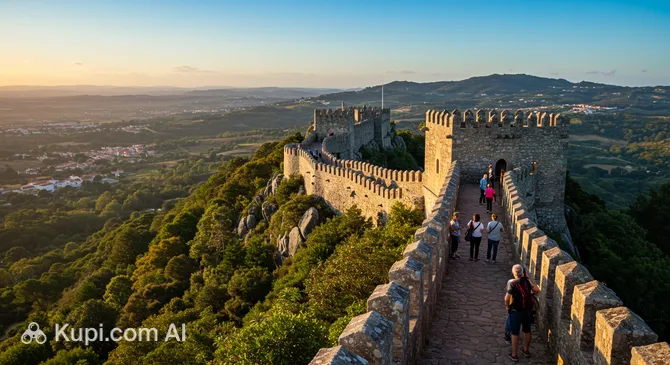
For history buffs and panoramic view seekers, the Moorish Castle (Castelo dos Mouros) is a must-visit. These ancient ruins of a fortress built by the Moors in the 8th–9th centuries serve as a reminder of the region's long history. Climbing its walls and towers allows you to enjoy stunning views of Sintra, Pena Palace, and even the Atlantic Ocean on a clear day. This place breathes history and makes you feel like part of a distant past.

Moorish Castle. Illustration.
Source: Kupi.com AI

Traveler photos:

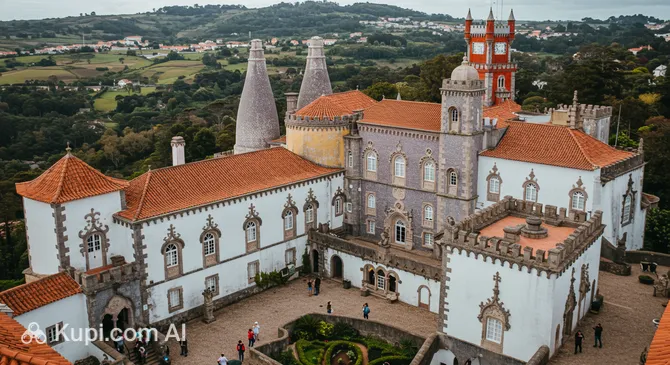
Located in the heart of the Sintra historic center, the Sintra National Palace (Palácio Nacional de Sintra) is easily recognized by its two enormous conical chimneys, which have become its trademark. This is the oldest surviving royal palace in Portugal, with a history spanning over a thousand years. Inside, you can see richly decorated halls, each with its own unique story and style, including the famous Swan Room and Magpie Room. The palace served as a summer residence for Portuguese monarchs for many centuries.

National Palace of Sintra. Illustration.
Source: Kupi.com AI

Traveler photos:

For a more secluded and romantic stroll, head to the Chalet of the Countess of Edla. This charming Alpine-style house was built by King Ferdinand II for his second wife, opera singer Elise Hensler, Countess of Edla. Located in the western part of Pena Park, the chalet is surrounded by a beautiful garden created with love and attention to detail. This place exudes coziness and tranquility, offering a glimpse into the more intimate side of royal life.

Chalet of the Countess of Edla. Illustration.
Source: Kupi.com AI

Traveler photos:

Local Cuisine

The gastronomic scene of Sintra is a delightful addition to its fairytale palaces and lush gardens. The local cuisine is rooted in traditional Portuguese recipes but possesses its own unique charm, especially when it comes to sweets. Here you can enjoy both hearty main courses and unique desserts that have become the town's hallmark.

The main stars of local culinary art are undoubtedly the famous pastries. Be sure to try "queijadas de Sintra"—small sweet tartlets made with fresh cheese, a recipe that dates back several centuries. Another iconic treat is "travesseiros de Sintra", which means "pillows." These are delicate puff pastries filled with an almond and egg yolk cream that simply melt in your mouth. They are often served warm and dusted with powdered sugar.

In addition to sweets, it is worth paying attention to fresh seafood dishes in Sintra, as the ocean is very close, as well as traditional meat stews and roasted meats. Portuguese cuisine in general is characterized by the use of high-quality seasonal products, olive oil, and aromatic herbs. The city's gastronomic scene offers both simple, home-style dishes and more refined options in restaurants catering to tourists and local gourmets.

As for drinks, local wines are popular in Sintra, as in all of Portugal. You can try both light green wines (Vinho Verde) and richer reds and whites from various regions of the country. Don't miss the chance to taste "ginjinha"—a traditional Portuguese cherry liqueur often served in chocolate cups. Among non-alcoholic drinks, fresh juices and, of course, aromatic Portuguese coffee are popular.

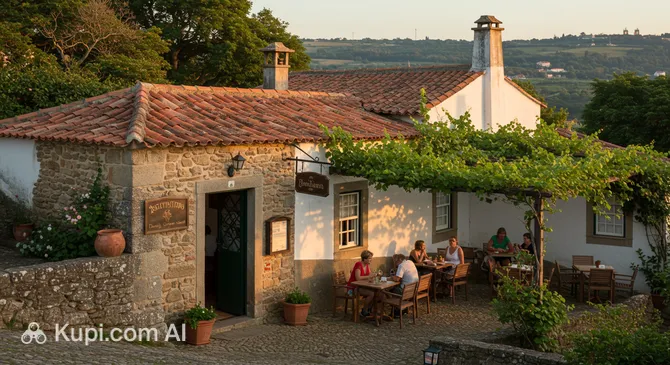
Locals and tourists in Sintra usually eat in traditional small restaurants called "tascas," which serve authentic dishes at reasonable prices, or in pastry shops (pastelarias) where you can enjoy pastries and coffee. The historic center of the town is home to many establishments for every taste and budget, from cozy family cafes to elegant restaurants. For example, to get acquainted with local cuisine, you can visit the Tasca do Strauss restaurant, known for its atmosphere and traditional dishes.

Tasco do Strauss. Illustration.
Source: Kupi.com AI

Traveler photos:

Travel Tips

Welcome to magical Sintra! To make your journey through this fairytale town in Portugal as comfortable and memorable as possible, we have prepared some practical tips. They will help you navigate better and enjoy every moment of your stay.

  1. Clothing and Essentials: Sintra's climate is mild, but due to the hilly terrain and proximity to the ocean, the weather can be changeable. Be sure to bring comfortable shoes for walking on cobblestones and climbing up to palaces. Layered clothing is a good choice, as it can be cooler in the morning and evening, especially on high ground. A light jacket or raincoat will come in handy any time of year, except perhaps the hottest summer months. Don't forget sunscreen and a hat in summer. For visiting churches (if they are on your itinerary), stick to a modest dress code (covered shoulders and knees). Bring a universal adapter for your electronics.

  2. Getting Around Town: It's best to move around Sintra itself on foot and by public transport. The historic center is compact, but the main attractions, such as Pena Palace and the Moorish Castle, are located on hills. Bus No. 434 (Circuito da Pena) is your main assistant for trips to them from the railway station. Bus No. 435 will take you to Quinta da Regaleira and Monserrate Palace. Taxis and tuk-tuks are available but can be more expensive. Ride-hailing apps (e.g., Uber, Bolt) also work. Renting a car to get around Sintra is not recommended due to the narrow, winding roads, limited parking, and heavy traffic, especially during the tourist season.

  3. Finances: The official currency in Portugal is the Euro (EUR). You can exchange currency at banks or exchange offices (câmbios), but the best rates are usually not at the airport. Bank cards (Visa, Mastercard) are accepted in most hotels, restaurants, and shops, but it's always useful to have some cash for small purchases or in case cards aren't accepted. ATMs (Multibanco) are widespread. An approximate daily budget (excluding accommodation and entrance tickets to main attractions) could be €50–€100. Tipping is not mandatory but welcomed: 5–10% in restaurants for good service or rounding up the bill in cafes and taxis.

  4. Health and Safety: Sintra is generally a safe town. The main precaution is to watch your belongings in crowded places to avoid pickpockets. Pharmacies (Farmácias) are marked with a green cross; check the opening hours of the one nearest you. In emergencies, call 112. It is recommended to have travel insurance. Keep in mind that the terrain is hilly and walking can be physically demanding.

  5. Communication: The official language is Portuguese. In Sintra's tourist areas, many people speak English, especially young people and service workers. Learn a few basic phrases in Portuguese, such as "Olá" (Hello), "Por favor" (Please), "Obrigado/Obrigada" (Thank you—said by men/women), "Bom dia" (Good morning)—this is always appreciated by locals. An internet SIM card can be bought at Lisbon airport or in mobile stores in towns. Wi-Fi is available in most hotels and many cafes.

  6. Local Etiquette: Portuguese people are polite and friendly, though they may seem reserved at first. When entering a shop or a small cafe, it is customary to say hello ("Bom dia" or "Boa tarde"). Avoid being overly noisy in public places. If you are taking photos of people, especially locals, it's better to ask permission.

  7. What to Avoid:

    • Don't try to see all of Sintra's sights in one day. It is physically taxing and won't allow you to enjoy the atmosphere of each place. It's better to choose 2–3 main sites and dedicate enough time to them.

    • Avoid driving a car into the historic center during peak season if possible. Traffic jams and parking problems can ruin the experience.

  8. Extra Tip for Sintra: Be sure to buy tickets to the palaces (especially Pena and Quinta da Regaleira) online and in advance. This will save you a lot of time you would otherwise spend in queues, especially in the high season. Also, try to start your sightseeing as early as possible in the morning to avoid the main crowds. And of course, don't leave Sintra without trying the local sweets—queijadas and travesseiros!

We hope these tips make your journey to Sintra even more pleasant and worry-free. Enjoy every moment in this amazing corner of Portugal, full of history and magic!

Entertainment & Nightlife

While Sintra is primarily known for its fairytale palaces and daytime excursions, the town doesn't go completely to sleep after sunset, offering cozy options for relaxation. The nightlife here is not as vibrant as in major metropolises, but it possesses its own unique charm, perfect for ending a day full of impressions.

The main evening activity is concentrated in the historic center of Sintra, especially in the streets around the Sintra National Palace. Here you will find many restaurants offering traditional Portuguese cuisine where you can enjoy dinner in a romantic setting. Many of them stay open until late evening, allowing for a leisurely meal. The atmosphere is mostly calm and relaxed, with a crowd consisting of both tourists and locals enjoying the evening cool. The dress code in most establishments is casual.

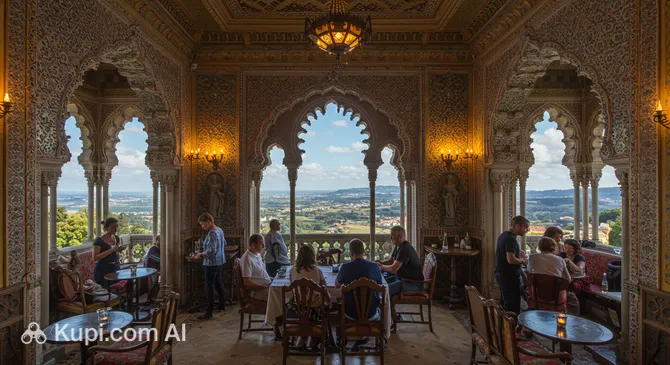
For those looking for a livelier spot for a cocktail or a glass of local wine, Sintra has several pleasant bars. For example, you can drop by Nau Palatina, known for its cozy atmosphere and selection of drinks, or visit Villa Craft Beer & Bread, where craft beer connoisseurs will find something to their taste. Some venues may offer live music, especially on weekends. Bars are usually open until midnight or 1:00 AM. There are virtually no large nightclubs in Sintra itself; for that type of entertainment, it's better to head to nearby Lisbon.

Nau Palatina. Illustration.
Source: Kupi.com AI

Traveler photos:

Practical tips: The best time for evening walks and visiting bars is after 8:00 PM, when the daytime heat subsides and the tour groups thin out. Average prices for drinks in Sintra's bars are quite moderate. Regarding transportation at night, it is most convenient to move around the town by taxi, as public transport runs less frequently in the late hours. You can call a taxi by phone or through apps. Sintra is considered a fairly safe town for night walks, especially in the central areas, but it is always worth taking standard precautions.

During the day, Sintra offers a rich cultural program. In addition to world-famous palaces like Pena National Palace and Quinta da Regaleira, you can visit the Biester Palace and Park or the Air Museum. For nature lovers, there are many parks, such as Liberty Park (Parque da Liberdade). However, if you are looking for loud amusement parks or large concert venues, you won't find them in Sintra itself—the town is more focused on quiet and cultural leisure.

Parks & Museums

Sintra is not only a town of majestic palaces and castles but also a true oasis with lush parks and gardens, as well as a guardian of rich cultural heritage presented in its unique museums. Here, everyone will find a corner for their soul, whether it's a walk along centuries-old alleys or an introduction to unique exhibitions.

One of the most impressive green spaces is Pena Park, stretching around the famous palace of the same name. This huge romantic park, created by King Ferdinand II, amazes with its variety of exotic plants from all over the world, winding paths, hidden gazebos, and lakes. It's an ideal place for long walks and enjoying nature. Equally famous are the mysterious gardens of Quinta da Regaleira, full of symbolism, grottoes, fountains, and the famous Initiation Well; a walk here is a true immersion into a world of enigmas. For a quieter rest within the city, Liberty Park (Parque da Liberdade) is suitable—a cozy spot with ancient trees, sculptures, and fountains where you can take a break from the tourist bustle.

Pena Park. Illustration.
Source: Kupi.com AI

Traveler photos:

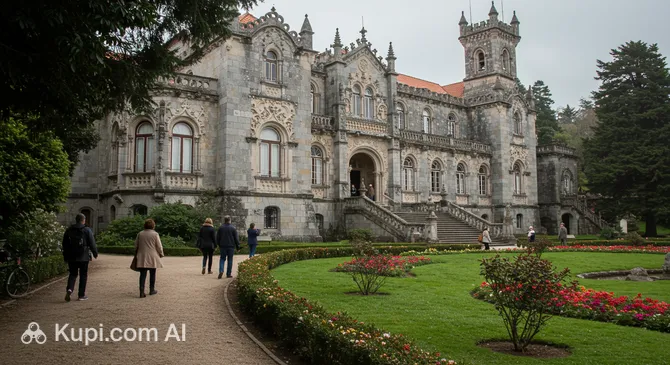
Sintra's cultural life is no less vibrant. The heart of the historic center is the Sintra National Palace, the oldest royal palace in Portugal, whose halls, decorated with famous azulejo tiles, tell the country's centuries-old history. For connoisseurs of more secluded and atmospheric places, the Biester Palace and Park will be of interest—an elegant late 19th-century mansion with a beautiful garden that recently opened its doors to visitors, offering a glimpse into the life of the aristocracy of that time. If you are interested in something completely different, visit the Air Museum, located a bit away from the main tourist routes but offering a fascinating exhibition on the history of Portuguese aviation.

Biester Palace and Park. Illustration.
Source: Kupi.com AI

Traveler photos:

In addition to palace-museums, Sintra offers other cultural venues. For example, the Olga Cadaval Cultural Center regularly hosts concerts, exhibitions, and theater productions, so it's worth checking its schedule before your trip. Insider tip: when exploring extensive parks like the aforementioned Pena Park, don't be afraid to turn off the main paths—you may discover secluded corners with stunning views that are not always mentioned in guidebooks. And for families with children, a visit to the Pony Corner in Sintra might be interesting, where little travelers can interact with animals.

Air Museum. Illustration.
Source: Kupi.com AI

Traveler photos:

Getting Around

Moving around Sintra and its picturesque surroundings is most convenient by bus and, for a special touch of local color, the historic tram. The town is located on hilly terrain, so public transport becomes a real lifesaver for tourists wishing to see the numerous palaces and parks.

The main type of public transport in Sintra is buses. The most popular routes for tourists connect the railway station with the main attractions, such as Pena Palace, Quinta da Regaleira, and the Moorish Castle. For example, bus No. 434 runs a circular route from the station to the main palaces. Bus No. 435 goes to Quinta da Regaleira and Monserrate Palace. Note that intervals can be significant, especially in the low season.

The historic Sintra tram (Elétrico de Sintra), which connects the town with the coastal resort of Praia das Maçãs, deserves special mention. It is not so much a means of transportation as a tourist attraction, offering a leisurely ride (about 45 minutes) through scenic spots. The tram doesn't run very often, especially on weekdays and out of season, so it's better to check the schedule in advance.

As for fares, bus tickets can be purchased directly from the driver upon boarding. For frequent use of public transport in the Lisbon region (including Sintra), a Viva Viagem or 7 Colinas transport card (they are interchangeable) can be beneficial. These cards can be topped up with a specific amount (zapping) or loaded with daily passes. Cards are sold and topped up at ticket offices and machines at railway stations, as well as in some kiosks. The cost of a single bus trip around the town is usually a few euros. The ticket for the historic tram is purchased separately and is more expensive.

Practical tips for tourists: * Buy tickets in advance if possible, especially for popular tourist buses, to avoid queues. * Always validate your ticket or card when boarding the bus. * Transport operating hours are usually from early morning until late evening but can vary depending on the route and day of the week. It's best to check schedules at stops or on the websites of transport companies. * In peak season, buses to the attractions can be overcrowded. Consider visiting popular sites early in the morning or later in the evening.

Alternative ways of moving around in Sintra include taxis and ride-hailing services (e.g., Uber, Bolt), which can be convenient for small groups or when time is tight, but they will cost more. Due to the hilly terrain and narrow streets, especially in the historic center, bicycle rental is not as popular as in other cities but is possible for fit tourists. Many prefer to explore central attractions on foot; however, public transport or a taxi is necessary for visiting remote palaces. Car-sharing is poorly developed in Sintra itself, but you can arrive in a rental car from Lisbon; however, you should consider parking issues, especially in the high season.

Accommodation

In Sintra, you will find a variety of accommodation options capable of satisfying the needs of both budget travelers and those looking for a luxury holiday. The range of offers includes cozy guesthouses and hostels, comfortable mid-range hotels, charming boutique hotels, as well as apartments and villas for self-catering, many of which are located in historical buildings with a unique atmosphere.

The most popular area for tourists to stay is the historic center of Sintra (Sintra Vila). Staying here provides walking distance to many iconic attractions, such as the Sintra National Palace and Quinta da Regaleira, as well as numerous restaurants and souvenir shops. Options near the train station are also convenient, from where it is easy to reach Pena Palace and the Moorish Castle by bus. For those seeking seclusion and tranquility, options in more remote areas surrounded by greenery are suitable.

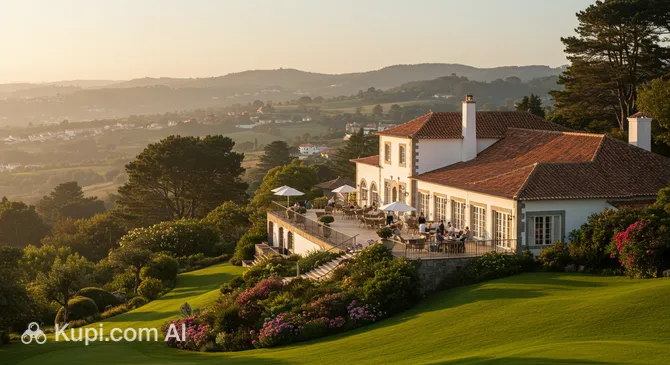
Sintra Golf Resort. Illustration.
Source: Kupi.com AI

Traveler photos:

Among the accommodation options, one can highlight, for example, the Pestana Sintra Golf Resort, which offers not only lodging but also opportunities for active recreation. In general, the choice of hotels varies from small family-run establishments to larger complexes with a wide range of services.

The price range for housing in Sintra is quite wide: from budget options to luxury offers. It is recommended to book accommodation in advance, especially if your trip falls during the peak tourist season (summer and holidays), as popular places fill up quickly. The main booking methods are popular online platforms and aggregators, as well as direct booking through hotel websites.

Nearby Cities

For those who want to explore the surrounding area, Sintra serves as an excellent starting point for day trips to several interesting nearby locations. Among them, the capital Lisbon stands out, located just 20 km away, beckoning with its famous historical sites, yellow trams, and the unique atmosphere of old quarters like Alfama. No less attractive is Cascais (about 13 km from Sintra)—a charming coastal town with beautiful beaches, a picturesque promenade, and a relaxed resort atmosphere, ideal for a day trip to the Atlantic Ocean.

CityPopulationDistance
Cacem21 2896 km
Agualva-Cacem35 8246 km
Rio de Mouro47 3117 km
Belas21 1727 km
Massama28 1129 km

These nearby destinations provide an insight into the diverse culture and landscapes of the Portugal region.

Shopping & Souvenirs

Shopping in Sintra is more of a pleasant addition to exploring its fairytale palaces and parks than a goal in itself. The town is not famous for huge shopping centers or designer boutiques, but here you can find many charming little shops with unique souvenirs, products from local craftsmen, and traditional Portuguese goods. The main emphasis is on authenticity and local flavor.

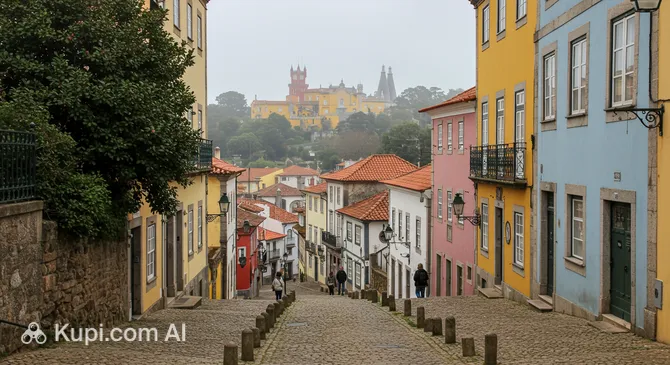
The main place for shopping is undoubtedly the Historic Center of Sintra (Sintra Vila). Its narrow, winding streets, such as Rua das Padarias, are filled with small shops selling ceramics, textiles, handmade jewelry, and, of course, the famous local sweets. A walk through these streets is a pleasure in itself, even if you don't plan any major purchases.

Historic Center of Sintra. Illustration.
Source: Kupi.com AI

Traveler photos:

If you need more traditional shopping with well-known brands or just everyday goods, you can check out Cacém Shopping. It is located not in the tourist heart of Sintra but in a more modern part of it, yet it offers a standard set of shops that can be useful.

Cacém Shopping. Illustration.
Source: Kupi.com AI

Traveler photos:

Regarding markets, Sintra is not famous for large permanent markets like Lisbon. However, especially on weekends or during festivals, you can come across small craft fairs or farmers' markets selling local products and handmade items. It is better to check information about such events locally.

From Sintra, it is worth bringing back traditional Portuguese souvenirs. Look out for azulejos (painted ceramic tiles), cork products (wallets, bags, coasters), and high-quality textiles (tablecloths, embroidered towels). Don't forget gastronomic souvenirs: the famous "queijadas de Sintra" and "travesseiros" pastries, local gin, or port wine. Items featuring the Rooster of Barcelos—one of the symbols of Portugal—are also popular.

Shops in Sintra are usually open from 10:00 AM to 7:00 PM; some small shops may close for a lunch break (siesta), especially outside the tourist season. In tourist areas, many shops also work on weekends. Bank cards are accepted almost everywhere, but it's better to have some cash for small purchases or at occasional markets.

For tourists from countries outside the European Union, a Tax Free refund system is available. If you make purchases of a certain amount in stores participating in this system, you can arrange a refund of part of the VAT. Usually, you need to ask for a special receipt (Tax Free form) upon purchase and present it along with the goods at customs when leaving the EU.

Reached the end of the page?

That means the route is fully explored