Support

Chaves

About

Chaves is a charming city in the northern part of the Trás-os-Montes region, nestled in the fertile valley of the Tâmega River. Located just 10–18 kilometers from the border with Spain, it has historically served as an important strategic point and a "gateway" for travelers entering a country as beautiful as Portugal. The city is surrounded by the picturesque spurs of the Cantabrian Mountains, creating a unique microclimate and an atmosphere of seclusion at an altitude of about 350 meters above sea level.
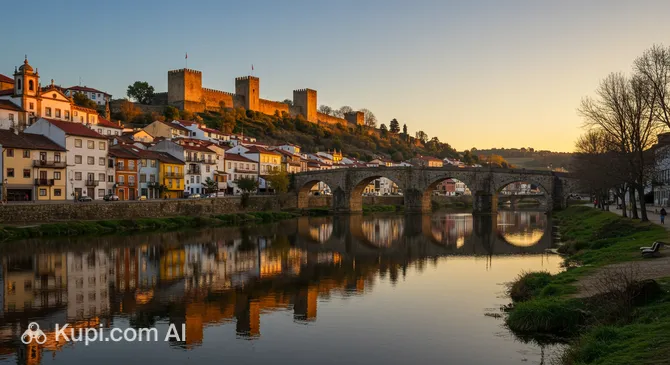
Chaves. Illustration.
Source: Kupi.com AI

Today, Chaves is home to about 41,000 people, and the locals are renowned for their genuine warmth and hospitality. Walking through the ancient streets, you can feel a special connection across eras: the ancient history of Chaves is visible in literally every stone, from the massive defensive structures to the perfectly preserved medieval buildings. It is not just a town, but a true cultural center of the Vila Real district, where traditions have been carefully preserved for centuries.

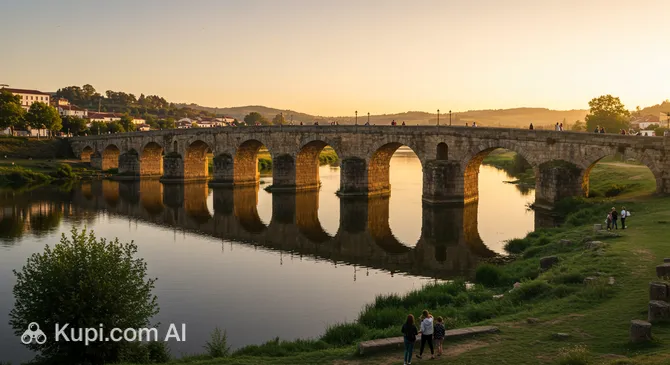
One of the main draws for tourists is the famous thermal springs, known for their healing properties since the days of the Roman Empire. Visitors can not only improve their health in modern spa complexes but also admire the majestic Roman Bridge over the Tâmega River—the city's indisputable landmark. The combination of architectural heritage and natural riches makes this corner an ideal place for leisurely walks and discoveries.

Chaves is well worth a visit for anyone seeking harmony between educational tourism and quality relaxation. Whether it's tasting local gastronomic delicacies, immersing yourself in authentic culture, or relaxing in the thermal waters, this city will leave you with warm memories and a desire to return.
Weather Overview

The climate in this region is characterized by distinct seasonality, allowing tourists to choose the ideal time for a visit depending on their preferences. Expect warm and dry summers with comfortable sunny days and fairly cool winters when precipitation occurs much more frequently.

The hottest period falls in July and August, when the average daytime temperature reaches 28°C, and rain becomes a rarity—statistics record only about 3 wet days per month. The current weather in Chaves during this season is perfect for long walks and sightseeing under clear skies.

With the arrival of autumn and winter, the picture changes: by November and December, the number of rainy days increases to 13–14 per month. In January, the coldest month, nighttime temperatures can drop to 2.2°C, while daytime temperatures stay around 6–9°C. Spring arrives gradually: if in March the air warms up to an average of 13°C, by May travelers are greeted by a pleasant 20°C, signaling the start of the tourist season.

Average monthly temperature

Average monthly precipitation

Interesting Facts

Besides its well-known architectural monuments, Chaves holds many fascinating secrets that reveal themselves only to inquisitive travelers. This city is a true mosaic of eras, where every stone can tell an amazing story about Roman emperors or medieval battles.
  • In ancient times, the city bore the proud name Aquae Flaviae, given in honor of the Roman Emperor Titus Flavius Vespasianus. It was around the healing springs that the first settlement arose, and the famous Trajan Bridge, built in the 1st–2nd centuries, still serves as a reliable crossing and the main symbol of Roman heritage in the region.

  • The local thermal waters are officially recognized as the hottest in Europe—their natural temperature at the source reaches 73°C. Rich in sodium and silica, these springs were valued even by ancient legionaries who recovered their strength here after campaigns. Today, you can learn more about this wellness tradition by visiting the Roman Baths in Chaves.

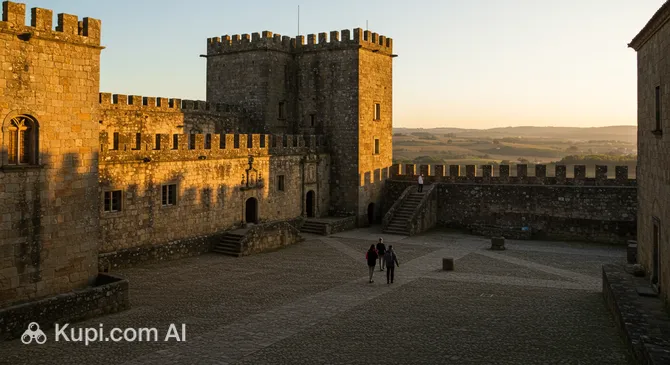
  • Due to its strategic border location, Chaves remained an impregnable bastion for centuries, where the interests of Romans, Visigoths, and Moors intersected. The city's turbulent military past and heroic defense are commemorated by the preserved fortress walls and the majestic Chaves Castle, a silent witness to many historical battles.

  • The city is famous not only for its warriors but also for its creators: many of Portugal's outstanding poets and artists were born here. Cultural life is still vibrant today, manifesting in rich folk festival traditions and the craftsmanship of local artisans, whose work can be found in the shops of the old town.

Castle of Chaves. Illustration.
Source: Kupi.com AI

Traveler photos:

How to Get There

When planning a trip to this picturesque corner in northern Portugal, it is worth thinking through the logistics in advance. Since the city is located very close to the border, convenient entry points can be not only Portuguese but also Spanish transport hubs. You can find out more about how to get to Chaves by studying all available routes, and below we look at the most popular options.

There is no airport in Chaves itself, but travelers most often choose the international Porto Airport (OPO). It is located about 113 km away and is the largest air hub in the region with excellent connections. If you rent a car or order a taxi, the drive along modern highways will take only 1.5–2 hours. A trip by regular bus will take longer, but this option is also available and popular among tourists.

Another convenient way is to use Spanish airports. The closest one is Vigo Airport (VGO), located in Galicia, approximately 111 km from the destination. Travel time by car from there will also be around 1.5–2 hours. This is an excellent choice if you are combining a trip to both countries or found cheap tickets to Spain.

Below is a summary of the main airports within a 200 km radius to help you plan your arrival:

AirportPassenger trafficDistance
Vigo Airport1.1 mln111 km
Porto Airport15.9 mln113 km
Santiago de Compostela Airport3.6 mln152 km
Leon Airport63 442179 km
Matacan Airport21 100186 km

For those who love traveling by rail, it is important to know that Chaves does not currently have a railway service. The nearest major hub is in Spain—the Ourense Railway Station (OUQ). It is located only 75 km from the city. From there, you can reach your destination very quickly by taxi or rental car—in about 50 minutes to 1 hour. This makes Ourense an extremely convenient transfer point for those taking high-speed trains from Madrid.

Here is a list of the closest railway stations to consider when planning your route:

StationPassenger trafficDistance
Ourense Railway Station2.2 mln75 km
Vigo Railway Station1.3 mln117 km
Pontevedra Railway Station1.6 mln124 km
Lugo Railway Station67 603144 km
Zamora Railway Station397 428147 km

Main Attractions

Chaves is a literal open-air museum where every era has left its mark. A walk through the city turns into a fascinating journey through time, from the Roman Empire to the Middle Ages. There are several iconic sites that are a must-see for any tourist wishing to understand the soul of this ancient region.

The dominant feature of the historical center is the majestic Chaves Castle. This medieval fortress, built to protect the Portuguese borders, today attracts travelers with its powerful architecture and the perfectly preserved main tower—the Torre de Menagem (Keep). Climbing the ramparts, you can enjoy a breathtaking panorama of the city, the Tâmega River valley, and the surrounding mountains. Inside the tower is a Military Museum, whose exhibition tells the story of the region's turbulent military past.

Trajan Bridge. Illustration.
Source: Kupi.com AI

Traveler photos:

Another essential symbol of the city is the Trajan Bridge. This is an outstanding example of Roman engineering, built as far back as the 1st century AD. The bridge, about 140 meters long, connects the banks of the Tâmega River and is still used by pedestrians today, impressing with its durability after two millennia. Walking across its stone slabs, notice the surviving memorial columns with inscriptions dedicated to the emperors and local residents of that era.

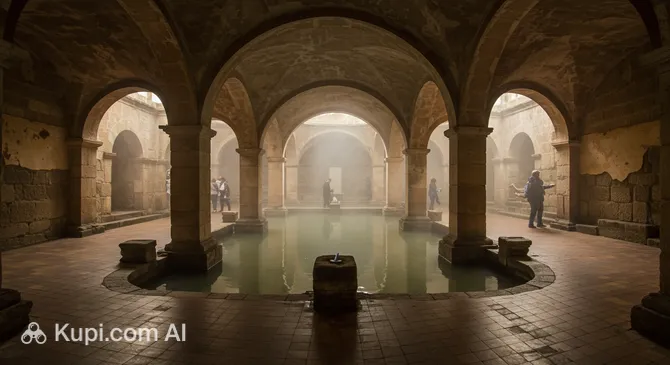
For those interested in the history of wellness and ancient life, the Roman Baths in Chaves will be a true discovery. This is one of the most significant archaeological complexes of its kind on the Iberian Peninsula. Long hidden underground, the baths were discovered by accident and have now been transformed into a modern museum. Here, you can see a complex system of pools and learn how the ancient Romans used the city's unique hot springs for healing and relaxation.

Local Cuisine

The gastronomy of Chaves is a real find for foodies wishing to get acquainted with the authentic flavors of the Trás-os-Montes region. Hearty and rich dishes prevail here, with culinary traditions passed down from generation to generation. The undisputed king of the local table is the famous Pastel de Chaves—a delicate puff pastry pie with a juicy veal filling. This dish has a Protected Geographical Indication, and visiting the city without trying it is considered a major omission.

The region is famous for its meat delicacies and smoked meats, known as "fumeiro." At local markets and on restaurant menus, you will be spoiled for choice: homemade sausages, spicy alheira, presunto ham, and chouriço. For lunch, it is worth ordering roasted lamb or pork, prepared according to ancient recipes in wood-fired ovens. They also don't forget the main symbol of Portuguese cuisine—cod (bacalhau), which is served baked with potatoes and plenty of olive oil.

Meals are traditionally accompanied by magnificent wines from local vineyards, which are distinguished by their deep flavor and aroma. Fans of digestifs should look out for traditional liqueurs. A unique feature of the city is also its natural mineral water: it is not only used for medicinal purposes but is also popular as a table drink due to its special composition. If you are looking for a place to relax with a glass of something, you can stop by the Ilha do Cavaleiro bar.

Carvalho Restaurant. Illustration.
Source: Kupi.com AI

Traveler photos:

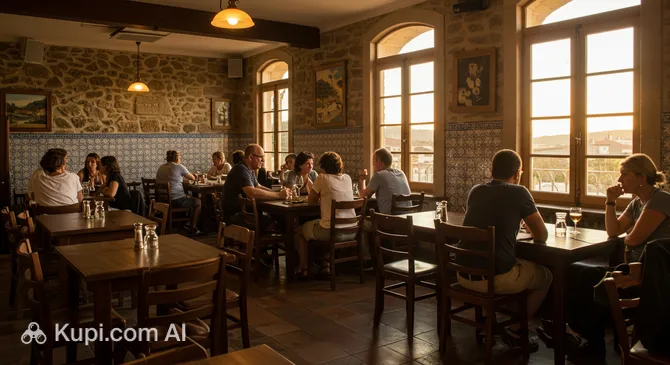
The dining culture in Chaves is very democratic: locals value long feasts and quality products. Tourists can choose between colorful street fairs where farmers offer the freshest cheeses and fruits, and cozy establishments with a homey atmosphere. An excellent example of a place where you can appreciate local hospitality and traditional dishes is Restaurante Carvalho. Furthermore, the city lives to the rhythm of gastronomic festivals, which regularly gather food lovers from all around.

Travel Tips

Chaves is an incredibly welcoming city where every traveler feels at home, but knowing the local peculiarities will make your visit even more pleasant. We have compiled a list of practical recommendations to help you avoid minor troubles and fully immerse yourself in the atmosphere of this unique corner that Portugal is proud of.

  1. Clothing and Seasonality. The climate here has its own characteristics: it can be very hot in summer, so light clothing made of natural fabrics and a hat are mandatory. However, in winter and late autumn, it often rains, so a waterproof jacket and sturdy shoes will be very useful. Given the cobblestones in the historical center, swap heels for comfortable sneakers or flat boots.
  2. Transport. The historical center of Chaves is compact, and it is best to explore it on foot—this way you won't miss any hidden architectural details. Public transport consists of buses, but for trips around the picturesque surroundings of the Vila Real district, it is more convenient to rent a car or use a taxi. Taxi-hailing apps work, but the waiting time may be longer than in large cities.
  3. Finance. The main currency is the Euro. Large hotels and restaurants accept cards without issues, but small traditional shops, cafes, and markets often ask for cash. We recommend always having small bills with you. Tipping is not a strict rule here, but leaving 5–10% of the bill or simply rounding up is considered good manners.
  4. Health and Safety. Chaves is a quiet and safe city. Pharmacies are easy to find by the green cross sign (Farmácia), and many of them stay open late. Tap water is not recommended for drinking; it is better to buy bottled. If you plan to visit the thermal springs, consult in advance about contraindications, as the water here is very active.
  5. Communication. The official language is Portuguese. Due to the proximity to the border, many locals understand Spanish, and young people and tourism workers speak decent English. However, if you learn a few phrases, such as "Bom dia" (Good morning) or "Obrigado" (Thank you), it will elicit a sincere smile and endear you to your interlocutor.
  6. Local Etiquette. The Portuguese are polite and unhurried people. It is customary to say hello when entering a shop or an elevator. Lunch and dinner are sacred times for socializing, so service in restaurants may seem slow. Don't rush the staff; it is customary here to enjoy the moment and the food.
  7. What to Avoid. Don't start a conversation with locals immediately in Spanish, assuming it's the same thing. Although you will likely be understood, the Portuguese are very proud of their culture and language. It's better to start in English or apologize for not speaking Portuguese before switching to Spanish.
  8. Special Tip: Thermal Water. While in the city, be sure to try the famous mineral water from the pump room (Buvette). But be careful: it is served at a natural temperature of about 73°C! Use special ceramic mugs and let the water cool down a bit. Locals drink it in small sips before meals to improve digestion.

Following these simple tips, you can avoid unnecessary worries and focus on what matters most—relaxation and new experiences. Chaves is open to friends and ready to give you warm memories that will stay with you for a long time!

Entertainment & Nightlife

Entertainment and Nightlife:

While Chaves may not be a boisterous party capital, its nightlife possesses a unique charm. This is a city for those who appreciate soulful conversations, quality drinks, and a relaxed atmosphere rather than the deafening bass of a metropolis. Evening activity is mainly concentrated in the historical center (Centro Histórico) and along the picturesque Tâmega River embankment, where old buildings are illuminated by the soft light of lanterns, creating a romantic setting.

The main format of nocturnal leisure in Chaves involves cozy bars, pubs, and taverns where locals and tourists mingle in a single friendly company. The crowd is diverse, ranging from students of the local polytechnic institute to respectable couples. The dress code in most establishments is casual; however, if you plan to visit the famous Casino de Chaves, located on the outskirts of the city, smart casual is preferred. The casino is a major draw, hosting not only gambling but also vibrant shows and concerts.

If you are looking for a place to have a drink in an authentic atmosphere, be sure to drop by Ilha do Cavaleiro. This establishment is popular for its character and good selection of drinks. It's a great place to spend time chatting while enjoying local wines or cocktails, making it an ideal spot to continue your evening after a walk through the old town.

Ilha do Cavaleiro. Illustration.
Source: Kupi.com AI

Traveler photos:

The tradition of long dinners flows smoothly into night-time gatherings. Many restaurants stay open late, turning into social hubs as the night progresses. For instance, you could start your evening at Restaurante Carvalho, which is famous for its cuisine and hospitality. After a hearty meal, guests often linger here, enjoying digestifs and the cozy atmosphere before continuing their stroll.

Regarding daytime entertainment, Chaves offers a calm and cultural getaway. You can visit the Nadir Afonso Contemporary Art Museum, stroll through the green parks along the river, or dedicate time to your health in the thermal complexes. For history buffs, the museums in the fortress are open, while families with children will appreciate the spacious pedestrian zones and playgrounds within the city.

Practical Tips for Night Owls:

Nightlife in Chaves comes alive closer to 10:00 PM – 11:00 PM, especially on Fridays and Saturdays. On weekdays, the city goes to sleep earlier. Prices for drinks and entry are significantly lower than in Lisbon or Porto: a glass of beer or wine will cost an average of 2–4 euros. The city is very safe for night walks, even alone, though as with anywhere, it is best to stick to well-lit streets.

Public transport is rare at night, so for moving between the center and outlying hotels (or the casino), it is best to use a taxi. You can find them at designated stands in the center or call one by phone; a trip within the city will be inexpensive, usually around 5–8 euros.

Parks & Museums

Chaves is a city where natural beauty and rich cultural heritage are harmoniously intertwined, offering tourists not only historical excursions but also the chance to relax in shaded alleys or enjoy art. Green zones here serve as the perfect complement to museum halls, creating a space for reflection and relaxation after a busy day.

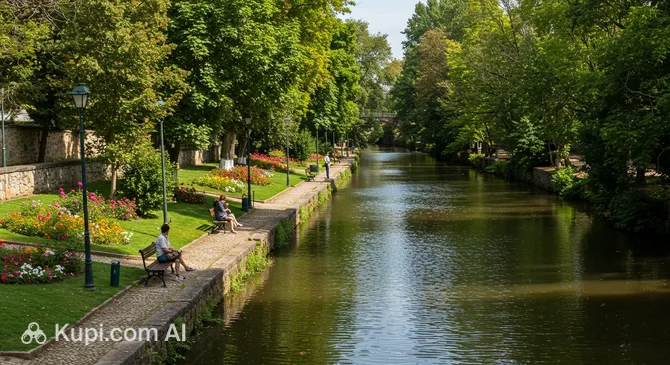
For lovers of outdoor walks, the Public Garden (Jardim Público) is a real gift. This elegant park, located in the heart of the city, is decorated with a classic bandstand (coreto) and century-old trees. It is a favorite spot for locals for family meetings and leisurely reading. Right nearby flows the Tâmega River, along whose banks the picturesque Riverside Area (Zona Ribeirinha) is laid out. Here, kilometers of walking and cycling paths are surrounded by greenery—an ideal location for a morning jog or a romantic picnic overlooking the ancient bridge.

The cultural life of the city is centered in its unique museums. One of the most significant sites is the Nadir Afonso Contemporary Art Museum (MACNA). The museum building itself is an architectural masterpiece designed by the famous architect Álvaro Siza Vieira. Inside is an extensive collection of works by the outstanding Portuguese artist Nadir Afonso, a native of these parts whose work is known far beyond the country's borders.

Roman Baths of Chaves. Illustration.
Source: Kupi.com AI

Traveler photos:

You can dive into ancient history by visiting the Roman Baths in Chaves. This museum complex is unique in that it allows you to see the preserved ruins of the ancient baths exactly where they were built 2000 years ago. The exhibition details the culture of water healing, Roman engineering achievements, and the significance of thermal waters for the region's development. This is not just an excavation site but a modern interpretation center, interesting for both adults and children.

One cannot overlook the Museum of the Flaviense Region (Museu da Região Flaviense), located in the Palace of the Dukes of Braganza. It houses a rich archaeological collection ranging from prehistoric finds to artifacts from the Roman and medieval eras. And if you climb to the fortress walls, you can visit Chaves Castle, inside whose main tower (Torre de Menagem) the Military Museum is located. Its exhibits—weapons, armor, and documents—tell of the strategic role of the city in defending the Portuguese borders.

Insider Tip: While walking near the Public Garden, be sure to find the famous "Kilometer Zero" (Km 0) sign. This is where the legendary National Road 2 (Estrada Nacional 2) begins, crossing all of Portugal from north to south. Taking a photo at this sign is a tradition for all travelers, even if you don't plan to drive the entire route.

Getting Around

The transport system in Chaves is quite simple and convenient for travelers, although the city itself is so compact that its historical center is best explored on foot. Most attractions, restaurants, and hotels are within walking distance of each other. Nevertheless, if you need to reach outlying districts, thermal complexes, or large supermarkets on the outskirts, a reliable network of urban routes is at your service.

The main form of public transport is buses, which operate under the "Transportes Urbanos de Chaves" brand. The network covers key points in the city, including the hospital, schools, residential areas, and leisure zones. The buses are modern and comfortable, but they run at intervals that can vary from 30 minutes to an hour depending on the route and time of day. On weekends and public holidays, the number of trips is reduced, so we recommend checking the schedule at the stops in advance.

The fare payment system here is as tourist-friendly as it gets. You don't need to look for special kiosks or figure out complex transport cards. A ticket can be purchased directly from the driver upon boarding the bus. The cost of a single trip is very affordable and usually just over 1 euro. It is better to have small change ready for payment, as the driver may not have change for large bills.

As an alternative to buses, the city has a well-developed taxi service. Cars can be found at designated stands (Praça de Táxis) located in the center, for example, near the municipality building or the old courthouse. Trips around the city are inexpensive and metered. Popular taxi-hailing and car-sharing apps might not work as consistently here as in megacities, so the classic way of ordering a car by phone or at a stand remains the most reliable.

For fans of active recreation, a bicycle is an excellent option. Along the picturesque Tâmega River, there are beautiful cycle paths (Ecovia) that allow you to enjoy nature and views of the city from an unusual perspective. During the warm season, you can use bicycle rental points for a ride along the embankment to the famous "Kilometer Zero" sign.

In the summer, a small tourist train (Comboio Turístico) often runs through the streets of Chaves. It is not so much a mode of transport as an attraction, allowing you to comfortably see the main architectural monuments and the embankment without extra physical effort. Tickets are usually sold at the boarding point, and the route covers the most beautiful corners of the old town.

Accommodation

Chaves offers travelers a balanced choice of accommodation that will satisfy both budget tourists and those who appreciate comfort. The backbone of the hotel stock consists of small, cozy middle-class hotels, family guest houses (the Alojamento Local format), and modern apartments. For those seeking special service and relaxation, spa hotels and resort complexes focused on wellness are available, although there are few ultra-luxury five-star hotels here.

When choosing a location, consider the purpose of your visit. The historical center is ideal for those who want to dive headfirst into the atmosphere of antiquity: from here, the fortress and the city's best restaurants are just a stone's throw away. Another popular area is the zone near the Tâmega River and the thermal parks. It is quieter here, with plenty of greenery, and is particularly convenient for those planning regular visits to the treatment complexes or morning jogs along the embankment.

Special attention should be paid to the timing of your booking. Chaves is a popular destination not only for international guests but also for domestic tourism, especially during gastronomic festivals and major fairs (for example, in early November). Therefore, we strongly recommend booking your accommodation in advance, especially if your trip falls on a weekend or public holiday.

The price range in the city remains very attractive and affordable compared to Lisbon or Porto. Budget lodging can be found for 40–50 euros per night, while a room in a good hotel with breakfast will cost on average 70–100 euros. You can book your stay through all major international online platforms, though many small local guest houses also readily accept direct bookings.

Nearby Cities

For those who want to explore the surroundings, Chaves serves as an excellent starting point for day trips to several interesting nearby locations:

Just 51 km to the south is the city of Vila Real. This is the administrative center of the district, primarily known for the magnificent Mateus Palace—a masterpiece of Baroque architecture with beautiful gardens. The city also attracts nature lovers with its proximity to the Serra do Marão mountain range, offering spectacular views and opportunities for hiking tours.

Located 61 km to the east is the historic Bragança. This city is famous for its perfectly preserved medieval citadel and castle, within whose walls people still live today. Bragança serves as a gateway to the Montesinho Natural Park and is an ideal place to get to know the deep traditions and history of northern Portugal.

If you travel about 70 km downstream along the Tâmega River, you will find the picturesque Amarante. The city enchants with its famous bridge and the Monastery of São Gonçalo. Amarante is also considered a gastronomic paradise for those with a sweet tooth: local monastic sweets are famous throughout the country.

CityPopulationDistance
Eiras12 0534 km
Verin13 64425 km
Vila Pouca de Aguiar13 18727 km
Montalegre10 53728 km
Mirandela23 85036 km

These nearby destinations provide insight into the diverse culture and landscapes of the region, making your trip even more fulfilling.

Shopping & Souvenirs

Shopping in Chaves is not a hunt for global brands in giant malls, but rather a cozy immersion into local traditions and culture. The city is famous for its authentic shops, where the owners often know every customer by sight. Here, you should look not for mass-market clothing, but for unique regional products, handicrafts, and goods imbued with the spirit of the Portuguese north.

The heart of the city's commercial life is the historical center. The main artery for shopping enthusiasts is rightfully the pedestrian street Rua de Santo António. Strolling along it, you will find many shops with clothing, shoes, accessories, and traditional textiles. The street is paved with cobblestones and surrounded by beautiful buildings, making shopping a pleasant walk. In the alleys branching off the main street, small family shops with souvenirs and delicacies are hidden.

There are no giant shopping and entertainment complexes in Chaves typical of megacities. Most trade is concentrated on the streets (street retail format) or in small commercial galleries. For those looking for familiar supermarkets and a wider range of household goods, the shopping zones on the outskirts of the city are suitable, where large chain stores are located, offering everything necessary for tourists.

Special attention deserves the Municipal Market (Mercado Municipal). This colorful place is where you can buy the freshest fruits, vegetables, flowers, and, of course, the famous local meat delicacies. The market is not just a place for buying and selling, but a center of social life. Also once a year, in late October or early November, the city hosts the grand All Saints Fair (Feira dos Santos), one of the largest street fairs in the country, where street vendors offer literally everything from socks to handicrafts.

It is impossible to leave Chaves without gastronomic souvenirs. First and foremost, these are the famous smoked meats "fumeiro": traditional alheira sausages, linguiça, and presunto. Another mandatory item is local wine from the Trás-os-Montes region, which has a rich flavor. Those with a sweet tooth should try taking a box of Pastel de Chaves with them, although these puff pastry pies are best eaten fresh on the spot. Popular non-edible souvenirs include local ceramics and warm wool products.

Shops in the city center usually operate from 9:30 or 10:00 AM until 7:00 PM. It is important to remember the traditional break: many small shops close for lunch from 1:00 PM to 3:00 PM. Large supermarkets work without breaks and until later (usually until 9:00–10:00 PM). On Sunday, most shops in the historical center are closed. As for payment, chain stores accept cards, but in small souvenir shops, cafes, and at the market, it is always better to have cash euros with you.

Tourists residing permanently outside the European Union can take advantage of the Tax Free system for purchases exceeding a set minimum (rules may vary, check the current limits in the shop). Look for "Tax Free Shopping" stickers in windows and don't forget to ask for a special receipt to process the tax refund when leaving the country.

Reached the end of the page?

That means the route is fully explored