Support

Temple of Diana

About

The Temple of Diana is one of the most famous and well-preserved ancient landmarks in Portugal. Located in the historic heart of Évora, at Largo do Conde de Vila Flor, this monument is a UNESCO World Heritage site that attracts travelers with its majestic beauty. Built in the 1st century AD, it served as the focal point of the ancient Roman forum.
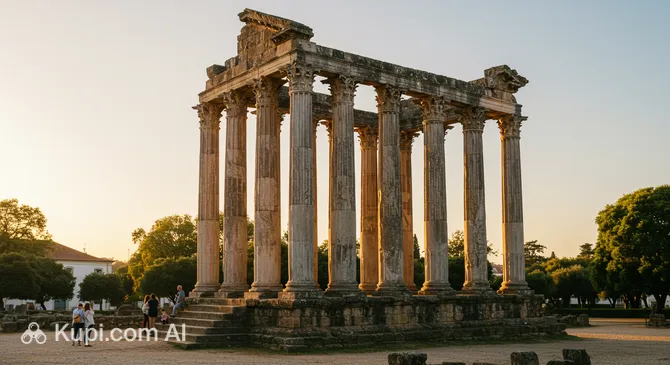
Temple of Diana. Illustration.
Source: Kupi.com AI

Traveller photos:

The architectural style of the temple is a classic example of Roman masonry. The structure stands on a massive stone base, and its main pride is the 14 surviving granite columns of the Corinthian order, which reach about three meters in height. Originally, the temple was surrounded by an artificial pond that created an impressive mirror effect, emphasizing the grandeur of the building.

Despite its established name, modern historians believe the temple was dedicated not to the goddess of the hunt, Diana, but to the first Roman emperor, Augustus, who was worshiped as a god. The name "Temple of Diana" only appeared in the 17th century thanks to a local legend and became firmly rooted in popular culture, even though it lacks historical confirmation. This misconception adds another interesting layer to the rich history of this unique monument.

Contacts

The Temple of Diana is an open-air historical monument, so it does not have specific contact details for visitors, such as a phone number or email. You can explore the ancient ruins freely and for free at any time of day. The landmark is located in the heart of Évora, at Largo do Conde de Vila Flor.

How to contactContact
AddressLargo do Conde de Vila Flor, 7000-863 Évora, Portugal
Phone+351 266 769 450
Websitewww.cultura-alentejo.pt

What to Do

Visiting the Temple of Diana is, above all, an opportunity to touch ancient history and soak up the antique atmosphere. For anyone interested in architecture and history, it is a must-see in Évora. Tourists can wander freely around the majestic granite columns, examine the elegant details of the Corinthian capitals preserved on some of them, and take memorable photos against the backdrop of one of the city's main symbols. The ruins look particularly impressive at dawn or sunset, when the soft light highlights the texture of the ancient stones.

Next to the temple is the small but charming Garden of Diana (Jardim de Diana), where you can relax on a bench and have a coffee. It's the perfect spot for a short break before continuing your exploration of the historic center. Other key landmarks of Évora are located in the immediate vicinity: the Évora Museum, where you can delve deeper into the region's history, and the monumental Cathedral, where you can climb to the roof for a panoramic view of the city.

The space around the temple often serves as a venue for cultural events and open-air tours, allowing for an even deeper connection with the spirit of the place. A walk through the picturesque streets of the Old Town surrounding the temple will round out your experience, leading you to discover many charming corners, local restaurants, and souvenir shops.

Getting There

The Temple of Diana is located in the heart of Évora's historic center, at Largo do Conde de Vila Flor, making it easily accessible for tourists. The historic part of the city is compact and perfect for exploring on foot, so the walk to the temple from the station or a parking lot turns into a fascinating introduction to the picturesque streets.

For those traveling from Lisbon, the most convenient way to reach Évora is by train or bus. The trip takes approximately 1.5–2 hours. From the city's railway station, the temple is just a 15–20 minute walk away, allowing you to enjoy the atmosphere of old-world Portugal.

Travelers by car can reach the city from Lisbon in about 1.5 hours via the A6 motorway. Paid parking is available in the center of Évora, where you can leave your car and head out on a walking tour of the historic district.

Nearest city: Evora

History & Facts

The history of the Temple of Diana dates back to the 1st–3rd centuries AD, when the city of Évora was an important center of the Roman Empire. Originally, the temple was part of the Roman forum and, despite its popular name, was dedicated not to the goddess of the hunt, but to Emperor Augustus, who was venerated as a deity. This makes it more than just an ancient monument; it is a testament to the imperial cult that spread throughout the empire.

The temple has had a turbulent history. In the 5th century, following the invasion of Germanic tribes, the structure was partially destroyed. However, it was the subsequent centuries that saved it from total disappearance. During the Middle Ages, the surviving structures were incorporated into a tower of the city fortress, and later, until the 19th century, the site served a much more mundane purpose—as a slaughterhouse and meat market. Paradoxically, this practical use helped preserve the ancient columns and base for future generations.

The temple acquired its modern appearance thanks to a large-scale restoration project begun in 1871. During the work, all medieval additions were demolished, the columns were cleared, and the monument was restored to its historical state. The restorers' efforts were not in vain: in 1986, the unique historic center of the city, including the Temple of Diana, was inscribed on the UNESCO World Heritage List, confirming its exceptional value to global culture.

Time Needed

When planning a visit to the Temple of Diana, keep in mind that the time needed for viewing can vary depending on your interests. If you just want a quick look at the monument and to take a few photos, 30–40 minutes will be enough. This time is sufficient to walk around the ruins, appreciate their preservation, and enjoy the ancient atmosphere, as the temple is outdoors and accessible for viewing at any time.

However, to get a more complete understanding of the site's historical significance, it's worth allocating more time. If you plan not only to see the temple itself but also to walk through the adjacent garden and visit nearby attractions like the Cathedral and the Évora Museum, set aside about 1.5–2 hours for your visit. This approach will allow you to immerse yourself in the rich history of one of Portugal's most iconic sites without rushing.

Working Hours

The Temple of Diana is an open-air monument located in a public square in Évora. Because of this, it is accessible 24/7 and all year round. You don't need to buy tickets or book a visit in advance, as access to the square and the ruins is completely free.

For the best experience and photos, it is recommended to view the temple during daylight hours—at sunrise or sunset—when the soft lighting beautifully highlights the ancient stonework. Since the landmark is in the very heart of the city, access is not restricted by any fencing, allowing tourists to stroll freely around the majestic columns at any time.

Open 24/7

Nearby

A visit to the Temple of Diana is just the starting point for exploring Évora's rich heritage. Perched on the highest point in the city, the temple is surrounded by many other iconic sites just a few minutes' walk away. Exploring the surroundings will allow you to dive deeper into the atmosphere of this unique Portuguese city, a UNESCO World Heritage site.

A stroll through the picturesque streets radiating from the temple will reveal not only architectural masterpieces but also cozy restaurants, museums, and viewpoints. Each nearby attraction complements the overall picture, telling its own piece of Évora's centuries-old history.

NameDistance
Cathedral of Évora0.1 km
BarUe0.2 km
Taberna Típica Quarta-feira0.2 km
Clock Museum of Évora0.3 km
Historic Centre of Évora0.3 km
Giraldo Square Fountain0.3 km
Chapel of Bones0.4 km

Reached the bottom of the page?

Looks like you know this route inside out