Support

Metropol Parasol

About

In the heart of Seville's historic quarter, at Plaza de la Encarnación, stands one of the most unusual and bold attractions in modern SpainMetropol Parasol. Locals and tourists often call the structure "Setas de Seville," or the "Mushrooms of Seville," because of its whimsical shape. This futuristic construction has become a striking symbol of the city, blending harmoniously with its ancient character.

Metropol Parasol is a massive, wavy structure made of wood and concrete, which claims to be the largest wooden structure in the world. The complex consists of six giant "mushrooms" or "umbrellas" joined together. It reaches a height of 28 meters and its base covers an area of 150 by 75 meters, providing extensive shade for those relaxing in the square. Architect Jürgen Mayer was inspired by the vaults of Seville Cathedral when creating this design.
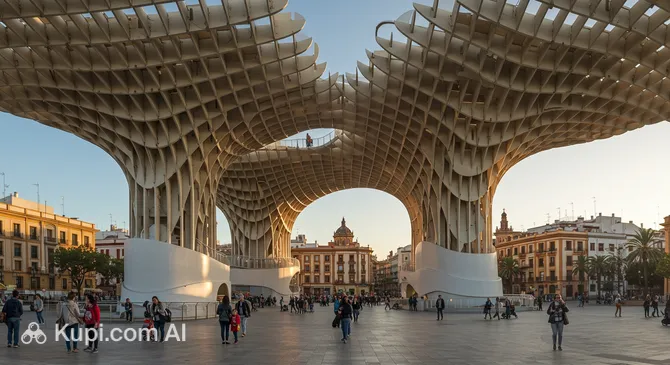
Metropol Parasol. Illustration.
Source: Kupi.com AI

Traveler photos:

This complex is not just an architectural object, but a multi-functional space. Below ground is the Antiquarium archaeological museum, where you can see Ancient Roman and Moorish ruins found during construction. The ground level houses the central market, and the roof features walking paths and viewing platforms that offer breathtaking panoramic views of Seville.

Contacts

For the most up-to-date information regarding opening hours, ticket prices, and scheduled events, it is best to consult official sources. All necessary details are typically published on the attraction's website.

How to contactContact
AddressPl. de la Encarnación, s/n, Casco Antiguo, 41003 Sevilla, Spain
Phone number+34 954 56 15 12
Websitewww.setasdesevilla.com

What to Do

The main reason to visit Metropol Parasol is, without a doubt, a walk on its roof. Taking the elevator to the top brings you to winding pedestrian walkways that offer some of the best panoramic views of Seville. From here, you can see the historic center in detail, spot the famous Cathedral, and take impressive photos against the backdrop of the cityscape, especially at sunset. A walk along the aerial terraces, totaling 250 meters in length, gives the sensation of floating above the city.

Beyond the spectacular views, the complex offers other interesting activities. On the underground level, the Antiquarium archaeological museum allows you to dive into the city's ancient history. It showcases well-preserved ruins from the Roman and Moorish eras discovered on-site during construction. You will see ancient mosaics and the remains of houses and streets that tell the story of life in Seville many centuries ago.

On the ground floor of the "Mushrooms of Seville" is the vibrant Mercado de la Encarnación city market. It is an excellent place to get to know local products, try Andalusian delicacies, or simply observe the daily life of Sevillanos. Numerous cafes and restaurants are located near the market, where you can relax and enjoy traditional cuisine. The square itself, beneath the "umbrellas," often serves as a stage for city events, concerts, and exhibitions, making Metropol Parasol an important center for the city's cultural and social life.

Getting There

Metropol Parasol is located right in the heart of Seville at Plaza de la Encarnación, making it easily accessible from most tourist areas. The simplest way to reach this impressive structure is on foot while soaking in the atmosphere of the old city. If you are arriving by train, the walk from the main Santa Justa station takes about 20–25 minutes. Alternatively, you can take a city bus to get closer to the square.

For those preferring public transport, several bus routes stop near the square, specifically No. 27 and No. 32. The nearest metro station is Puerta de Jerez (Line 1), though it is about a 15-minute walk to the "Mushrooms of Seville," so a bus or walking may be more convenient. There are also tram stops and taxi stands nearby, making Metropol Parasol easy to visit for all types of travelers.

Nearest city: Seville

History & Facts

The history of Metropol Parasol is a prime example of how a bold modern idea can transform a historic space. In the early 2000s, Seville's city council decided to reconstruct the old Plaza de la Encarnación. Originally, an underground parking lot was planned, but priceless ruins from the Roman and Moorish periods were discovered during excavation. This discovery completely changed the plans, and in 2004, an international architectural competition was announced to create a new public space that would preserve the archaeological finds. The winner was the project by German architect Jürgen Mayer, who drew inspiration from the vaults of Seville Cathedral and ficus trees.

Construction, which began in 2005, proved to be challenging. The project faced numerous technical difficulties, delays, and a significant budget overrun, which sparked much public debate. For instance, engineers encountered issues calculating the structural integrity of the giant wooden frame, requiring new solutions such as a special glue for reinforcement. Ultimately, construction stretched over six years and was only completed in April 2011.

Despite all the difficulties and initial criticism, Metropol Parasol quickly won the hearts of locals and tourists after its opening. From a controversial project, it transformed into one of the main architectural symbols of modern Spain and a striking example of successfully integrating futuristic design into a historic urban landscape. Today, the "Mushrooms of Seville" are more than just a landmark; they are a vibrant multi-functional space that proves bold architectural choices can breathe new life into ancient city quarters.

Time Needed

When planning a visit to Metropol Parasol, you should expect to spend between 1.5 and 2.5 hours to fully explore the complex. This is usually enough time to enjoy all the main elements of this unique Seville landmark and take in its unusual atmosphere without rushing.

Your time might be divided as follows: allow about 45–60 minutes for a walk along the winding panoramic roof paths, which offer the best views of the city. If you are interested in history, set aside another 30–45 minutes to visit the Antiquarium archaeological museum on the underground level. The remaining time can be spent browsing the lively market on the ground floor or simply relaxing in the shade of the "mushrooms" in Plaza de la Encarnación.

Working Hours

Metropol Parasol is open to visitors year-round, though opening hours may vary by season. Generally, the viewpoint is open daily from 9:30 AM. On regular days, it stays open until late in the evening, around 11:00 PM to 12:30 AM, allowing you to enjoy both day and night views of Seville. Hours are often extended in the summer. Nevertheless, it is highly recommended to check the official website for the current schedule before your visit, as it may change, especially on holidays.

While it is possible to buy tickets on-site, it is recommended to book tickets online in advance for Metropol Parasol. This is particularly relevant if you plan to visit during peak season, on weekends, or at sunset—these are the most popular times, and tickets for the next available slots may sell out. Pre-booking not only guarantees entry at your desired time but also helps you avoid the ticket office queues.

9:30 – 23:45

Nearby

Visiting Metropol Parasol is just the start of exploring the rich cultural heritage of central Seville. Located in the heart of the old town, this modern complex is surrounded by many other points of interest just a few minutes' walk away. Strolling through the surrounding area will allow you to dive deeper into the Andalusian atmosphere, discovering both famous monuments and cozy, hidden corners.

Exploring nearby attractions will enrich your experience and help you form a more complete picture of Seville's many facets, where futuristic architecture stands alongside centuries-old flamenco traditions and ancient churches. Below is a list of places located very close by that you should consider including in your itinerary.

NameDistance
Casa de la Memoria Flamenco Cultural Center0.2 km
Casa de Pilatos0.5 km
Dos de Mayo Bar0.5 km
Flamenco Dance Museum0.5 km
Alameda de Hércules0.6 km
Filo0.7 km
Museum of Fine Arts of Seville0.7 km

Have you reached the end of the page?

So the route has been studied inside and out