Support

Cave of the Treasure

About

The Treasure Cave (Cueva del Tesoro) is a unique natural attraction located near the city of Malaga, in the resort area of Rincón de la Victoria in southern Spain. This cave is one of the few marine caves in Europe and, most notably, the only such cave on the continent that is fully equipped and open to the public.
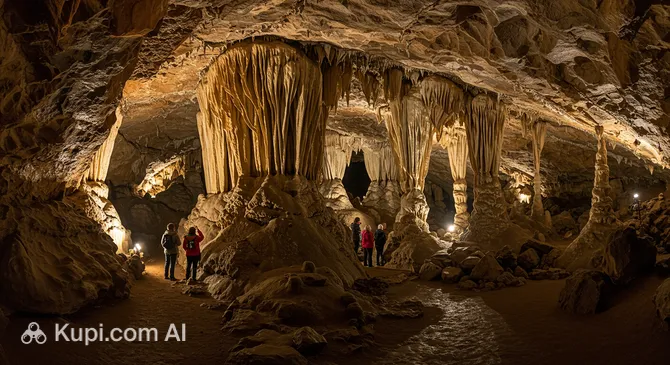
Cave of the Treasure. Illustration.
Source: Kupi.com AI

Traveler photos:

The uniqueness of the Treasure Cave lies in its origin. It was formed millions of years ago underwater on an ancient seabed, rather than through karst processes like most well-known caves. This marine past gave it stunning internal galleries, halls, and columns shaped by waves and underwater currents. Visitors can admire the unusual shapes carved into the rock by water, creating truly fantastic landscapes.

The site earned its intriguing name—the Treasure Cave—thanks to numerous legends. According to local lore, the treasures of Moorish rulers or pirates were hidden within its labyrinthine passages. Although no real hoards have been found yet, the aura of mystery and romance consistently draws curious travelers here.

Beyond its geological uniqueness and legendary status, the Treasure Cave also holds significant archaeological and historical value. Traces of prehistoric settlements and cave paintings have been discovered here, proving that the cave served as a shelter for humans for thousands of years. This makes it more than just a beautiful natural site; it is a true window into the region's distant past.

Contacts

To find up-to-date information on opening hours, ticket prices, and visiting conditions for the Treasure Cave, we recommend visiting the attraction's official website or checking with tourist information centers in the city of Malaga. You can usually find contact phone numbers or email addresses there as well, if provided.

How to contactContact
AddressAv. de Picasso, 21, 29730 La Cala del Moral, Málaga, Spain
Phone number+34 952 40 61 62
Websitewww.turismoenrincon.es

What to Do

A visit to the Treasure Cave offers a fascinating journey deep into the earth. The primary way to experience this natural wonder is through a guided tour. Experienced guides will tell you about the cave's unique marine origin, its geological features, as well as the flora, fauna, and valuable archaeological finds discovered here. While tours are primarily conducted in Spanish, guides strive to provide key information in English so every guest can appreciate the site's significance.

Inside the cave, you'll find specially equipped paths and thoughtful lighting that make the walk safe and comfortable. You can explore whimsical chambers, mysterious grottoes, and even see small underground lakes, admiring the forms created by seawater over millions of years. For those who prefer to explore at their own pace, information boards with detailed descriptions are placed along the route.

Don't rush to leave after exploring the underground beauty. The complex features an archaeological park offering magnificent views of the Mediterranean Sea, where you can walk among typical Andalusian vegetation. It's a great spot for a family outing, stunning photos, or simply enjoying nature. Visiting the Treasure Cave is especially pleasant on a hot summer day, as the interior stays refreshingly cool, offering a welcome break from the heat.

Getting There

The Treasure Cave is conveniently located in the municipality of Rincón de la Victoria, approximately 10 kilometers east of central Malaga. For those traveling by car, this is one of the easiest ways to reach the site. You will need to follow the A-7 motorway (also known as the Autovía del Mediterráneo) and take the exit for Cala del Moral. A pleasant bonus is the free parking available for visitors directly at the cave, making the drive even more comfortable.

If you prefer public transport, buses run regularly from Malaga to Rincón de la Victoria. Upon arrival in Rincón de la Victoria, the cave entrance is within walking distance. This is an excellent option for those who want to enjoy the local scenery without worrying about navigation or parking. It is recommended to check the current bus schedule in advance to find the stop closest to the cave.

Overall, the route to the Treasure Cave is well-organized. Road signs and information boards are placed on the approaches to the attraction to help you find your way easily. Thanks to its good accessibility, the cave is easy to reach for both independent travelers and organized tour groups planning to visit this unique site.

Nearest city: Malaga

History & Facts

The history of the Treasure Cave dates back to ancient times, when the modern appearance of our planet was still being formed. Its origins go back to the Jurassic period, more than 145 million years ago. In that distant era, a significant part of Europe was covered by sea, and it was unique marine processes—rather than the karst phenomena typical of many caves—that caused the formation of these remarkable underground galleries. This makes it one of the few marine caves of such scale available for study.

For millennia, the Treasure Cave served as a reliable shelter for ancient humans. Archaeological research confirms its active use during the Paleolithic and Neolithic eras. Inside, researchers have discovered not only tools and everyday items of ancient settlers but also important evidence of Neanderthal presence, giving this site special scientific value and offering a glimpse into the earliest stages of human history on the Iberian Peninsula.

The cave earned its famous name for a reason, and it is closely tied to numerous legends. Tales surrounding this place tell of immense wealth allegedly hidden in its mysterious depths. Although there is no definitive proof of the treasure's existence, these stories, passed down through generations, gave the cave its intriguing name. It is believed that at various historical periods, it may have served not only as a shelter for people but also as a place to store valuables, which only fuels interest in its secrets.

The modern fame of the Treasure Cave and its transformation into a popular tourist attraction are largely linked to the story of a Swiss man named Antonio de la Nari. In the 19th century, inspired by ancient legends, he dedicated many years of his life to a persistent and determined search for treasure within its complex depths. While his efforts did not lead to the discovery of the legendary hoard, his activities drew widespread attention to the cave, contributed to further exploration, and ultimately played a vital role in its popularization.

Time Needed

When planning a visit to the Treasure Cave, located near Malaga, it is recommended to set aside about 1.5 to 2 hours. This period is generally sufficient for a full experience of this amazing natural monument, as noted in the general information about the attraction.

During these couple of hours, you can leisurely walk through the entire tour route inside the cave, carefully observe its unique chambers and galleries, and read the provided information materials. You will also have time for a short walk around the surrounding area to enjoy the views and take beautiful photos, which fits within the recommended visiting time.

Of course, if you are particularly passionate about geology or archaeology, or simply want to spend more time soaking up the atmosphere, you might stay longer. However, for most visitors, an hour and a half to two hours will be quite sufficient to enjoy the highlights of the Treasure Cave, including the tour and a walk.

Working Hours

The Treasure Cave is typically open to visitors daily; however, please note that it may close for the traditional Spanish siesta in the middle of the day. The schedule can vary depending on the season and public holidays. Therefore, to plan your visit accurately, it is highly recommended to check the current opening hours on the official website or at tourist information centers in Malaga before heading out.

While the cave is generally accessible year-round, confirming the schedule in advance will help you avoid any surprises. You can also check official resources to see if advance booking is required, especially if you plan to visit during the peak tourist season or as part of a large group.

10:30 – 14:00, 4:30 – 20:00

Nearby

Visiting the Treasure Cave is undoubtedly a highlight, but you shouldn't stop there. Exploring the surrounding area can significantly enrich your experience of Malaga. Near this unique natural attraction, there are many other interesting spots that allow for a deeper look into the culture, history, and natural beauty of the region.

From ancient watchtowers to picturesque beaches and cultural centers, the area around the Treasure Cave offers a variety of options to continue your journey. The short distances between sites make them easily accessible, allowing you to create a full itinerary even for a single day.

NameDistance
El Cantal Watchtower0.7 km
Villa Antiopa3.6 km
El Palo Beach5.6 km
Pedregalejo Beach7.6 km
Gibralfaro Castle10.1 km
Centre Pompidou Málaga10.2 km
El Pimpi10.7 km

Have you reached the end of the page?

So the route has been studied inside and out