Support

Alameda de Hércules

About

Alameda de Hércules is one of the most iconic and oldest public squares in Seville, located in the northern part of the historic city center in Spain. Created back in 1574, it is considered the oldest public garden not only in the country but in all of Europe. This place is not just a park but a true cultural and social hub that attracts both locals and tourists.

The square is a wide and long pedestrian promenade, perfect for leisurely strolls. Its appearance is shaped by rows of shady trees, fountains, and famous monumental columns. Two of these columns, located in the southern part, were taken from the ruins of an ancient Roman temple and are topped with statues of Hercules and Julius Caesar.
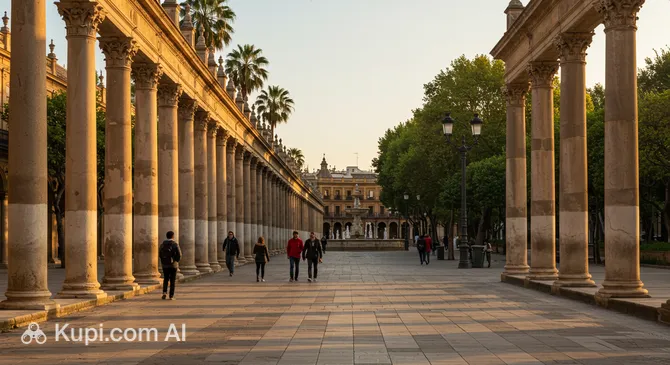
Alameda de Hércules. Illustration.
Source: Kupi.com AI

Traveler photos:

Today, Alameda de Hércules is famous for its vibrant atmosphere. The square is surrounded by numerous cafes, traditional tapas bars, and restaurants where you can experience Andalusian cuisine. As evening falls, this place turns into one of the city's main centers for nightlife, offering entertainment for every taste—from cozy gatherings to live music and flamenco.

Contacts

Alameda de Hércules is a public space open to visitors 24/7, so it does not have a single contact center like a museum or a theater. This spacious square is located in the historic center of Seville, making it easily accessible on foot from many tourist areas. You can also reach the square via city bus routes 13 and 14, which have stops located nearby.

How to contactContact
AddressAlameda de Hércules, s/n, Casco Antiguo, 41002 Sevilla, Spain
Websitewww.sevilla.org

What to Do

Every visitor will find something to do at Alameda de Hércules. During the day, it is a wonderful place for leisurely walks along shady alleys, where you can admire the monumental columns with statues of Hercules and Julius Caesar, as well as the sculptures of lions representing Seville and Spain. The square often serves as an open stage for street concerts, art exhibitions, and food fairs, making it a living center of urban culture.

The surrounding area is famous for its vibrant nightlife and is one of the city's entertainment epicenters. There is a concentration of cafes, tapas bars, and restaurants for every taste, where you can sample modern Andalusian cuisine and simply have a good time. It is a great place to relax with friends or soak in the dynamic atmosphere of the city at night.

Alameda de Hércules is not only a historical site but also a hub for experiencing the contemporary culture of Seville. The square is ideal for family walks, meeting friends, and serves as a convenient starting point for exploring other city attractions such as the Metropol Parasol, Seville Cathedral, and the Alcázar palace, all located nearby.

Getting There

Alameda de Hércules is conveniently located in the center of Seville, making it easy to reach from most of the city's historic districts. If you are staying nearby, the best way to get to the square is a pleasant walk. The Alameda itself is a spacious pedestrian area, perfect for a leisurely exploration of this vibrant neighborhood. Additionally, the square can be reached by public transport: bus routes pass nearby, connecting it with other parts of the city. Of course, taxis are always available for quick and comfortable travel.

For those arriving in Seville from the airport or the train station, getting to Alameda de Hércules is also straightforward. You can take a taxi or a bus, transferring in the city center. Travelers with cars should note that there are several paid parking lots nearby where you can leave your vehicle. It is important to note that the entire square is fully accessible to people with disabilities, making it welcoming for everyone.

Nearest city: Seville

History & Facts

The history of Alameda de Hércules dates back to a time when this site was not a busy promenade but a swampy pond. Until the 16th century, one of the branches of the Guadalquivir River flowed here. Everything changed in 1574, when, at the initiative of the Count of Barajas, the area was drained, irrigation channels were laid, and rows of white poplars—"álamos" in Spanish—were planted, giving the square its current name. Thus, the abandoned land was transformed into Europe's first public garden.

One of the most remarkable features of Alameda de Hércules is its monumental columns. Two of them, located in the southern part, are of ancient Roman origin—they were moved here from the ruins of a temple on Calle Mármoles. These columns are topped with sculptures of Hercules, the mythical founder of Seville, and Julius Caesar, who is considered its restorer in the Roman era. The other two columns, installed in the northern part of the square later, are exact replicas, and statues of lions holding coats of arms proudly sit atop them.

Throughout its long history, the square has seen different eras. In the 17th and 18th centuries, it was a favorite strolling spot for the city's elite, but it later fell into decline. However, in recent decades, Alameda de Hércules has experienced a true revival and once again become one of the main cultural centers of Spain and the heart of the city's nightlife. Today, it is a bright and dynamic space where history blends harmoniously with modernity, attracting both residents and numerous tourists.

Time Needed

When planning a visit to Alameda de Hércules in Seville, you should consider your interests. For a general overview of the atmosphere, a leisurely stroll, and a look at the famous columns, 1 to 2 hours is quite enough. This time will be sufficient to feel the spirit of the oldest public garden in Spain and take a few souvenir photos.

If your plans include a deeper immersion into local life, allow more time. Alameda de Hércules is a hub of activity with many cafes, tapas bars, and restaurants. Lunch or dinner can take a few hours. In the evening, the square comes alive, becoming the epicenter of nightlife, so if you want to enjoy its bohemian atmosphere, you can easily plan to spend the entire evening here.

Working Hours

Alameda de Hércules is a public space, so the square itself is open to visitors 24 hours a day, all year round. Admission is completely free, and no prior booking or ticket purchase is required to stroll along its shady alleys or relax by the fountains.

It should be noted that the many establishments located around the square—cafes, tapas bars, restaurants, and shops—operate on their own schedules. Their opening hours may vary depending on the day of the week and the season. If you plan to visit a specific place on the Alameda, it is recommended to check for up-to-date information on its official website or in local tourist guides beforehand.

Open 24 hours

Nearby

The area surrounding Alameda de Hércules is not just a backdrop for the famous promenade, but a treasure trove of experiences in its own right. A stroll through its lively streets will allow you to dive deeper into Seville's authentic atmosphere, discovering hidden courtyards, ancient churches, and cozy spots favored by locals.

By taking the time to explore the surroundings, you can gain a fuller understanding of life in this dynamic district. Just a few steps from the square, you will find colorful markets, impressive examples of architecture, and places where you can enjoy authentic flamenco. Below is a list of nearby attractions that will make your trip even more rewarding.

NameDistance
Espacio Eslava0.3 km
Dos de Mayo Bar0.5 km
Church of Saint Louis of the French0.5 km
Kaminature Aquarium0.6 km
Metropol Parasol0.6 km
Casa de la Memoria Flamenco Cultural Center0.7 km
Tempa Museo Holiday Apartments0.8 km

Have you reached the end of the page?

So the route has been studied inside and out