Support

Museum of Fine Arts of Seville

About

The Museum of Fine Arts (Museo de Bellas Artes) is a true treasure trove for lovers of beauty, located in the heart of the colorful city of Seville. This museum is rightfully considered one of the most important art galleries in Spain, second in significance perhaps only to Madrid's Prado. A visit here is a unique opportunity to immerse yourself in the rich history of Spanish painting.

The museum's collection spans from the Gothic period to the 20th century, but its crown jewels are the works by masters of the Seville school of the Baroque era. Here you will find extensive collections of paintings by great artists such as Francisco de Zurbarán, Juan de Valdés Leal, and, of course, Seville's famous native son, Bartolomé Esteban Murillo. His canvases, including the renowned "Saints Justa and Rufina," take center stage in the exhibition. The halls also feature masterpieces by El Greco and Diego Velázquez.

The museum building itself deserves special attention. It is housed in the former Convent of La Merced Calzada, built in the early 17th century. Its grand architecture, cozy inner courtyards decorated with traditional Sevillian tiles, and the ancient church create a unique atmosphere where history and art merge. A walk through its halls is an aesthetic pleasure in its own right, perfectly complementing the experience of the painted masterpieces.
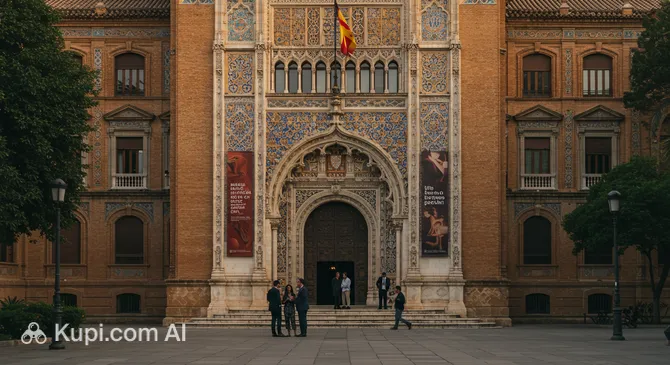
Museum of Fine Arts of Seville. Illustration.
Source: Kupi.com AI

Traveler photos:

A visit to the Museum of Fine Arts will be an unforgettable part of your journey, allowing you to better understand the rich cultural heritage of Andalusia and the entire country.

Contacts

To plan your visit to the Museum of Fine Arts of Seville, you can use the contact information below. We recommend checking the official museum website for all the latest information regarding temporary exhibitions, exact opening hours, and ticket prices.

How to contactContact
AddressPl. del Museo, 9, Casco Antiguo, 41001 Sevilla, Spain
Phone number+34 954 78 64 98
Websitewww.museosdeandalucia.es

What to Do

To make your visit to the Museum of Fine Arts in Seville truly meaningful rather than just a stroll through halls, it is worth planning your route in advance. Start your tour with the Gothic and Renaissance art exhibitions on the ground floor. This will allow you to trace the evolution of painting and prepare you for the masterpieces of Spain's "Golden Age," which occupy the main part of the museum.

Be sure to linger in the former monastery church—it is undoubtedly the museum's most impressive room. Here, under a high painted dome, a special atmosphere reigns, enhancing the impact of the monumental canvases. Pay special attention to Francisco de Zurbarán's masterpiece, "The Apotheosis of Saint Thomas Aquinas." This enormous painting is striking not only for its scale but also for its complex composition, where the earthly and heavenly worlds merge into one.

Next, your path leads to the halls dedicated to the work of Bartolomé Esteban Murillo. Here you can fully experience the lyricism and softness of his painting style. Among the many works, take time for the painting "Saints Justa and Rufina," depicting the patron saints of Seville. The canvas is interesting for how the artist conveys not only the religious subject but also the features of real city residents. No less touching is his famous "Virgin of the Napkin," known for its tenderness and warmth.

As you finish your visit, don't miss the collection of Baroque sculpture, featuring expressive works by Juan de Mesa. Also, take a walk through the inner courtyards of the former monastery. Their walls are decorated with ancient azulejos ceramic tiles, creating a unique Andalusian vibe and offering coolness on a hot day. This will be the perfect conclusion to your immersion into the world of Spanish art.

Getting There

The Museum of Fine Arts of Seville boasts an excellent location in the heart of the city at Plaza del Museo, 9. Because of this, reaching it is quite simple. If you are staying in the historic center or just wandering through its picturesque streets, the most pleasant way to visit the museum is on foot. The walk allows you not only to soak in the atmosphere of the ancient city but also to easily find the square where this cultural treasure of Spain stands.

For those who prefer public transport or are coming from further away, city buses are the best choice. The bus network in Seville is very well-developed. Several stops are just a few minutes' walk from the museum, such as Marques de Paradas, Plaza de Armas, or Plaza del Duque. You can take one of the many routes passing through the city center to arrive comfortably almost at the museum's doors.

Of course, you can always use a taxi, which is a fast and convenient way to reach your destination directly. A taxi ride from most central districts will be short and quite affordable. While the city does have a metro, keep in mind that its stations are not located in the immediate vicinity of the old town or the Museum of Fine Arts, so the bus or walking remain more direct and convenient options.

Nearest city: Seville

History & Facts

The history of the Museum of Fine Arts of Seville is as fascinating as its collection and is closely intertwined with the historical events of Spain. It was established by royal decree in 1835 and opened its doors to visitors in 1841. Interestingly, the museum's initial collection was formed from works of art confiscated from local monasteries as a result of the political reforms of that time. Thus, what was once hidden behind cloistered walls became public heritage.

The building housing the museum is a priceless historical exhibit in its own right. Its history dates back to the 13th century when King Ferdinand III allocated these lands for the construction of the monastery for the Order of Mercy (La Merced). However, the grand structure we see today was built much later—construction began in 1602 and lasted nearly half a century. Before becoming a repository for art, this building underwent several renovations while preserving the historical charm that perfectly complements the masterpieces displayed here.

Since its founding, the museum's collection has grown and been enriched continuously. Over time, numerous works donated by individuals and churches, as well as pieces acquired at auctions, were added to the original assembly. Today, the Museum of Fine Arts in Seville is one of the country's most important art galleries, attracting around 290,000 visitors annually, which underscores its immense cultural significance.

Time Needed

When planning a visit to the Museum of Fine Arts, it is worth allowing 1.5 to 2 hours for the tour. This time is sufficient to explore the main exhibition across the museum's 14 halls, see the most famous masterpieces of the Seville school of painting—including works by Murillo and Zurbarán—and get a general impression of the collection. This format is suitable for those with limited time who still want to see one of the main cultural gems of Seville.

However, if you are a true art lover or simply want to dive deeper into the atmosphere of Spain's "Golden Age," feel free to set aside 3–4 hours or even half a day. This will allow you to leisurely walk through all the halls, including the Gothic and Renaissance exhibitions, carefully study the details of monumental canvases, and enjoy the architecture of the building itself—the former monastery—and relax in its picturesque inner courtyards. Such a relaxed visit will provide the most complete and vivid experience.

Working Hours

The Museum of Fine Arts in Seville is open to visitors year-round, but its schedule may change depending on the season. Generally, from Tuesday to Saturday, the museum can be visited from 09:00 to 21:00. On Sundays and public holidays, the hours are reduced to 09:00 to 15:00. It is important to remember that the museum is closed on Mondays. Additionally, the museum doors are closed to visitors on January 1 and 6, May 1, and December 24, 25, and 31.

While tickets can be purchased directly at the museum's box office on-site, it is recommended to book them online in advance, especially if you plan to visit during the height of the tourist season. This will help you avoid queues and guarantee entry. Since opening hours can change, we strongly advise checking the most up-to-date information on the official museum website listed in the contacts section before your visit.

DayOpening hours
MondayClosed
Tuesday9:00 – 21:00
Wednesday9:00 – 21:00
Thursday9:00 – 21:00
Friday9:00 – 21:00
Saturday9:00 – 21:00
Sunday9:00 – 15:00

Nearby

A visit to the Museum of Fine Arts is a wonderful opportunity to see the masterpieces of Spanish painting, but you shouldn't limit yourself to its halls alone. Thanks to its prime location in the heart of Seville, the museum is an ideal starting point for further exploration of the city. A stroll through the surrounding area will allow you to dive deeper into the unique atmosphere of Andalusia and make your journey even more rewarding.

The neighborhood around the museum is full of life and offers many interesting spots. Here you will find other cultural sites, cozy tapas bars, and authentic shops. Just a few steps from the majestic museum building, you can discover hidden courtyards, enjoy a passionate flamenco show, or simply have a coffee while observing the city's leisurely pace. Below is a list of nearby attractions to help you plan your itinerary.

NameDistance
Tempa Museo Holiday Apartments0.1 km
Dos de Mayo Bar0.4 km
Casa de la Memoria Flamenco Cultural Center0.6 km
Espacio Eslava0.6 km
Metropol Parasol0.7 km
Filo0.8 km
Plaza de Toros de la Maestranza0.8 km

Have you reached the end of the page?

So the route has been studied inside and out