Support

Casa de Pilatos

About

Casa de Pilatos, or the House of Pilate, is a magnificent palace in Seville, Spain, representing a unique architectural ensemble. It wonderfully combines elements of Gothic style, refined Mudejar, elegant Renaissance, and Romantic motifs. This palace is one of the most significant in Seville and is also known as the Palace of the Adelantados Mayores de Andalucía.
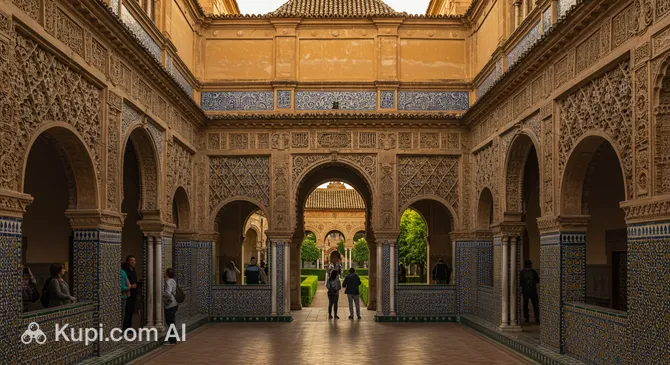
Casa de Pilatos. Illustration.
Source: Kupi.com AI

Traveler photos:

A special feature of Casa de Pilatos is the amazing combination of architectural elements: its facade is designed in the Italian Renaissance style, while the interior decoration showcases all the richness and sophistication of the Mudejar style. The central element of the palace is a spacious inner courtyard with a magnificent Renaissance-style fountain. This courtyard connects the living rooms and the picturesque gardens stretching out on both sides of the building, creating an atmosphere of peace and harmony.

The interior rooms of the palace house true art treasures. Of particular value are the unique ceiling paintings by Francisco Pacheco, an impressive series of bullfighting images created by Francisco Goya, and three magnificent canvases by Luca Giordano that decorate the library. These works make a visit to the palace an unforgettable experience for all lovers of history and art.

Contacts

For the most up-to-date information on opening hours, ticket prices, and how to contact the Casa de Pilatos administration, we recommend visiting the attraction's official website, if available. Useful information can also often be found at tourist information centers in Seville or on the official tourism portals of Spain.

How to contactContact
AddressPl. de Pilatos, 1, Casco Antiguo, 41003 Sevilla, Spain
Phone number+34 954 22 52 98
Websitewww.fundacionmedinaceli.org

What to Do

Immerse yourself in the unique atmosphere of Casa de Pilatos by exploring its magnificent halls and inner courtyards. The main attraction for visitors is a detailed look at the rich Mudejar-style decoration, which is striking in its complexity and elegance. Equally interesting are the ceiling paintings by Francisco Pacheco, as well as the opportunity to see original works of art, including paintings by such outstanding masters as Francisco Goya and Luca Giordano, which adorn the palace walls.

Besides admiring the interiors, an integral part of the visit is a walk through the palace's famous gardens. The Large Garden, designed in the Renaissance style and decorated with an elegant fountain, is an ideal place for a leisurely rest and enjoying the silence. Additionally, visitors can learn more about the history of Casa de Pilatos and its important role in the religious life of Seville. Especially noteworthy is the fact that since the 1520s, it was from here that the Stations of the Cross procession began during Holy Week, adding special historical depth to your visit.

Getting There

Casa de Pilatos is located in Seville, making it relatively accessible for tourists exploring this beautiful Andalusian city. The palace is situated in the historic Santa Cruz neighborhood, known for its narrow streets and authentic atmosphere, so it can be reached in several ways.

One of the most convenient ways to reach Casa de Pilatos is by public transport. Seville has a well-developed bus network, and several routes pass near the palace. It is recommended to check the current routes and nearest stops on the official website of Seville's transport company or use popular mapping apps. The nearest bus stops are usually within a few minutes' walk. While the city also has a tram line (MetroCentro), it mainly serves the central tourist area, and a short walk might be required from its stops.

For those who prefer comfort or are traveling with limited time, a taxi or ride-sharing service is an excellent option. A trip from central Seville hotels or from the Santa Justa train station to Casa de Pilatos usually doesn't take long, depending on traffic conditions. Additionally, if you are staying in the historic center, walking to the palace can be a wonderful opportunity to enjoy the beauty of Seville's ancient streets and squares.

Nearest city: Seville

History & Facts

The history of Casa de Pilatos dates back to the late 15th century, specifically to 1483. It was then that Pedro Enríquez de Quiñones, Adelantado Mayor of Andalusia, and his wife Catalina de Ribera, founders of the Andalusian branch of the Enríquez family, began the construction of this magnificent palace. The building's initial appearance was a harmonious blend of Gothic style and refined Mudejar, which were characteristic of Seville's architecture at the time.

The palace underwent its most significant transformations in the early 16th century thanks to the founders' son, Fadrique Enríquez de Ribera, the first Marquis of Tarifa. He completed the construction and, according to legend, gave the palace its current name. This happened after his pilgrimage to Jerusalem in 1519. Family legend has it that the distance from the ruins of Pontius Pilate's palace in Jerusalem to Golgotha amazingly coincides with the distance between the Seville palace and the Cruz del Campo chapel located outside the city walls. This pilgrimage also inspired the Marquis to introduce elements of the Italian Renaissance, which he encountered during his travels through Italy, into the architecture of Casa de Pilatos.

Later, by order of the Viceroy of Naples, the famous architect Benvenuto Tortello erected a new palace while carefully preserving the ancient rooms built in the Mudejar style. Over time, after the decline of the Dukes of Alcalá, who lived in Casa de Pilatos for a long period, the palace was inherited by the Dukes of Medinaceli. Remarkably, it serves as their residence to this day, continuing to preserve centuries-old traditions and a unique atmosphere.

Time Needed

To fully enjoy the beauty and unique atmosphere of Casa de Pilatos, most visitors will need about 1.5-2 hours. This time is usually enough to see the magnificent courtyards decorated with the famous azulejo tiles, walk through the halls admiring the blend of Mudejar and Renaissance styles, and enjoy the tranquility of the gardens.

If you plan a deeper immersion, for example, with an audio guide or as part of a guided tour, or if you wish to visit the upper floors of the palace, where separate tours of the private apartments are sometimes conducted (when available), then you should set aside up to 3 hours. Architecture, history, and art lovers wanting to examine every element of decor, paintings, and sculptures in detail will undoubtedly find enough of interest here to spend more time.

Overall, Casa de Pilatos offers a rich experience, and the length of your visit will largely depend on your individual pace and the depth of your interest in the details of this historic treasure of Seville.

Working Hours

Casa de Pilatos is usually open to visitors year-round; however, opening hours may vary depending on the season or special events. Generally, such attractions in Seville operate from morning until evening, but to get the most accurate and up-to-date information regarding visiting times, it is strongly recommended to check the official Casa de Pilatos website or contact the city's tourist information centers immediately before your visit.

Regarding ticket booking, for popular attractions—especially during the peak tourist season—it is always wise to purchase tickets online in advance if available. This will help avoid queues and guarantee your visit at a time convenient for you. Check the palace's official resource for pre-booking requirements.

9:00 – 18:00

Nearby

After experiencing the splendor of Casa de Pilatos, don't rush to leave this historic district of Seville. Exploring the surrounding area will allow you to dive deeper into the city's atmosphere, discover other gems of Andalusian architecture and culture, and gain a more complete understanding of Spain's rich heritage. Many interesting sites are within walking distance, making a stroll through this area particularly pleasant and informative.

Every street and square around Casa de Pilatos holds its own stories and secrets. Allow yourself to get a little lost in the labyrinth of the old quarters, and you will surely discover something that will enrich your travel experience and leave unforgettable memories of your stay in Seville.

NameDistance
Flamenco Dance Museum0.4 km
Metropol Parasol0.5 km
Casa de la Memoria Flamenco Cultural Center0.6 km
Filo0.6 km
Royal Alcázar of Seville0.8 km
General Archive of the Indies0.8 km
Bar Postiguillo Tapas0.9 km

Have you reached the end of the page?

So the route has been studied inside and out