Support

Mosque–Cathedral of Córdoba

About

The Mezquita—the Mosque-Cathedral of Cordoba—is not just a landmark, but a true symbol of the city and all of Spain. This unique architectural monument, located in the historic center, represents an extraordinary blend of cultures and eras. Originally, a Visigothic church stood on this site, upon whose foundations a mosque was built in the 8th century. Following the Reconquista, it was converted into a Catholic cathedral while preserving its rich Islamic heritage.

Visitors are struck by the famous "forest" of more than 850 columns made of jasper, onyx, marble, and granite, topped with striking double-tiered red-and-white striped arches. This legacy of the Emirate of Cordoba creates a unique and mesmerizing atmosphere. As you walk through the halls, you will notice how the Moorish architecture harmoniously transitions into a magnificent Renaissance cathedral built right into the center of the former mosque. This blend of styles makes the Mezquita one of the most prominent examples of architectural symbiosis in the world.
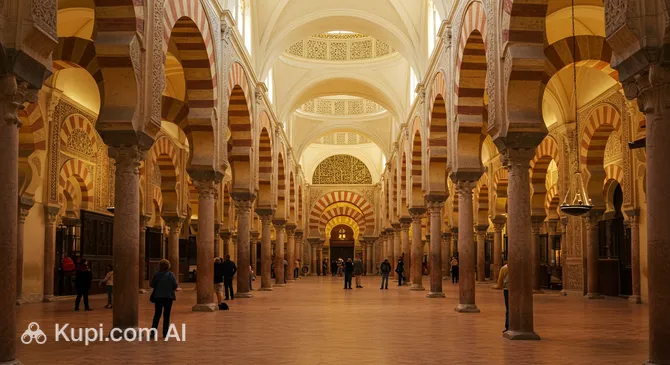
Mosque–Cathedral of Córdoba. Illustration.
Source: Kupi.com AI

Traveler photos:

In the Middle Ages, the Mezquita was considered the second-largest mosque in the world and the largest in Europe, testifying to its former greatness and significance. Today, this architectural masterpiece is included in the UNESCO World Heritage list and attracts more than one and a half million travelers annually, all eager to see this wonder with their own eyes. A visit to the Mezquita is a mandatory part of the itinerary for anyone coming to Andalusia to touch centuries of history and enjoy its unique beauty.

Contacts

When planning a visit to the Mezquita, it is important to keep in mind that opening hours and ticket prices may change. For the most up-to-date information, it is recommended to check reliable sources directly before your trip.

Since exact contact details, including the official website and phone number, are not always readily available, the best way to obtain verified information is to contact the official tourist information centers in Cordoba. It is also helpful to explore the city's tourism portals, which frequently publish current data for travelers. This will help you plan your visit in advance and avoid any potential inconveniences.

How to contactContact
AddressC. Cardenal Herrero, º 1, Centro, 14003 Córdoba, Spain
Phone number+34 957 47 05 12
Websitemezquita-catedraldecordoba.es

What to Do

A visit to the Mezquita begins with a walk through its picturesque courtyard, which is surrounded by orange trees. This courtyard, known as the Patio de los Naranjos, served as a place for ritual washing for the faithful before prayer. Passing through it, you will enter the famous prayer hall, where you will be greeted by an endless "forest" of more than 850 columns. These columns, crafted from jasper, onyx, marble, and granite, support the famous double-tiered red-and-white arches, creating a mesmerizing and almost hypnotic space.

The main thing to look for inside is the unique combination of Islamic and Christian art. You can see the richly decorated mihrab—the prayer niche, which is considered one of the greatest masterpieces of Moorish art. Just a few steps away is the central nave, where a magnificent Christian cathedral with Gothic, Renaissance, and Baroque elements was built after the Reconquista. This proximity allows you to witness the centuries-old history and the succession of cultures within a single building.

To get a full sense of the complex's scale and enjoy unforgettable views of Cordoba, be sure to climb the bell tower. It was rebuilt from a former minaret, and today its height offers a stunning panorama of the city's historic center. For those who want to dive deeper into the history of this amazing place, audio-guided tours are available, providing detailed information about every corner and hidden detail of the Mezquita.

Getting There

Thanks to its location in the heart of the historic center of Cordoba, getting to the Mezquita is very easy. The most convenient and pleasant way is a stroll through the charming streets of the old town. If you are arriving in the city by train or bus, the walk from the station to the Mosque-Cathedral takes approximately 20–25 minutes at a leisurely pace.

For those who prefer public transport, city buses run to the Mezquita. Routes No. 3 and No. 12 will take you to the "Puerta del Puente" stop, which is located in the immediate vicinity of the landmark. Additionally, you can always use a taxi, which will drop you off right at the main entrance—especially convenient if you are short on time.

Travelers arriving by car should remember that traffic and parking options in the historic city center are strictly limited. To avoid complications, it is recommended to leave your car in one of the paid or free city parking lots located outside the old quarter and walk to the Mezquita from there while enjoying the views. Convenient parking facilities, such as Parking La Ribera or the station parking lot, are within walking distance.

Nearest city: Cordoba

History & Facts

The history of the Mezquita is a true journey through the centuries, reflecting the complex and multifaceted destiny of all Spain. Its roots date back to around 600 AD, when the Visigothic Basilica of Saint Vincent of Saragossa was built on this site. However, following the Umayyad conquest, in 784, Emir Abd al-Rahman I ordered the construction of a grand mosque in its place. Notably, the land for the construction was purchased from the Christian community rather than seized by force, after which the mosque became part of the emir's palace complex.

Over the following centuries, during the reigns of several emirs, the mosque was constantly expanded and decorated, becoming one of the largest and most impressive in the Islamic world. Its size and splendor were meant to rival the great mosques of Damascus. This period of prosperity ended with the Reconquista. In 1236, after Cordoba was captured by Christian forces, the mosque was consecrated as a Catholic cathedral.

The most amazing fact in the history of the Mezquita is that it was not destroyed. Instead, in the 16th century, a magnificent Renaissance cathedral was erected right in the center of the vast prayer hall. Thanks to this decision, today we can witness a unique architectural symbiosis: elegant Moorish arches and columns stand alongside a Christian altar and choir stalls. This harmonious coexistence of two great cultures in one building makes the Mezquita not just a landmark, but a living testament to the region's rich history.

Time Needed

To fully and leisurely explore the Mezquita, it is recommended to allow between 1.5 and 3 hours. This time will be sufficient to immerse yourself in the unique atmosphere of the site, admire the famous "forest" of columns, examine in detail the Christian cathedral built into the heart of the mosque, and stroll through the picturesque Orange Courtyard.

If you are limited on time, an hour and a half is enough for a brief introduction to the main halls. However, to get a truly complete impression—especially if you plan to use a guide or audio guide, or to climb the bell tower—it is worth planning for a longer visit of up to three hours. This will allow you to explore all the architectural and historical details of this amazing monument without rushing.

Working Hours

The Mezquita—the Mosque-Cathedral of Cordoba—is open to visitors year-round, but its opening hours may vary. This is because the schedule depends on the season and religious services. For example, from March to October, the cathedral is usually open longer than during the winter period from November to February. On major church holidays or during Sunday masses, tourist access may be temporarily restricted. Therefore, for your visit to go smoothly, it is highly recommended to check the current schedule on the official website of the attraction directly before your trip.

To avoid long lines, especially during the peak tourist season, tickets should be purchased online in advance. This will not only save you time but also guarantee entry. It is also worth knowing about a pleasant opportunity: in the early morning, from Monday to Saturday from 8:30 to 9:30, entry to the Mezquita is usually free, though it's important to note that this time is intended for individual visitors rather than tourist groups.

Nearby

Visiting the Mezquita is undoubtedly the highlight for any traveler in Cordoba. However, to truly feel the spirit of this Andalusian city, it is worth spending time in its surroundings. The historic center, where the Mosque-Cathedral is located, is a UNESCO World Heritage site in its own right and holds many other treasures within walking distance.

Walking through the narrow streets surrounding the Mezquita will allow you to dive deeper into the rich history of Spain and discover charming courtyards, ancient buildings, and cozy squares located just a few steps from the city's main symbol. Below is a list of interesting places located nearby.

NameDistance
Puerta del Puente0.1 km
Gate of Forgiveness of the Mosque–Cathedral of Córdoba0.1 km
Calleja del Pañuelo0.1 km
Bodegas Mezquita (Céspedes)0.1 km
Calleja de las Flores0.2 km
Patio de la Judería Restaurant0.2 km
Jewish Quarter of Córdoba0.2 km

Have you reached the end of the page?

So the route has been studied inside and out