Support

Santiago Bernabéu Stadium

About

Santiago Bernabéu Stadium is not just a sports arena but a true temple of football and one of Madrid's most famous landmarks. Located in the capital of Spain, it is the home stadium of the legendary Real Madrid club and a pilgrimage site for football fans from around the world. With a capacity of over 81,000 spectators, the arena is considered one of the most prestigious in Europe and holds the highest UEFA Category 4 rating.
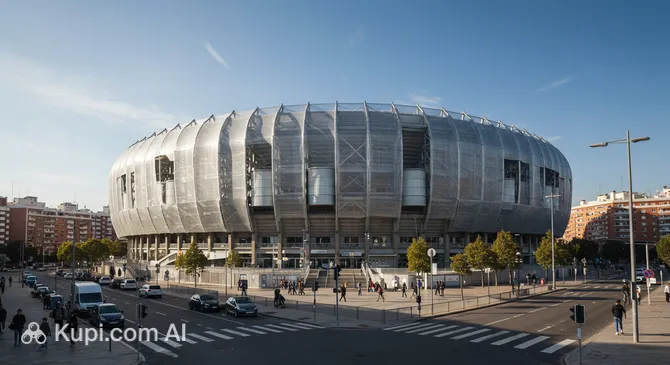
Santiago Bernabéu Stadium. Illustration.
Source: Kupi.com AI

Traveler photos:

The stadium was named after Santiago Bernabéu, the club's outstanding president, under whose leadership Real Madrid reached incredible heights and won numerous trophies. Opened in 1947, the arena has been modernized several times and is now an ultra-modern complex that has hosted World Cup and European Championship finals, as well as Champions League finals.

Visiting the Santiago Bernabéu will be interesting for more than just die-hard fans. Even tourists far removed from football will be impressed by the scale of the structure and its history. Tours allow a peek into the most interesting corners of the stadium: visit the players' locker rooms, walk through the tunnel onto the pitch, sit on the bench, and see the impressive collection of awards in the trophy room. It is a unique opportunity to feel the atmosphere of great victories and touch the history of world sports.

Contacts

For the most accurate and up-to-date information regarding opening hours, tour prices, or match schedules, it is recommended to contact Madrid's official tourist information centers or check the details directly before your visit. This will ensure you have the latest information, especially on event days at Spain's premier stadium.

How to contactContact
AddressAv. de Concha Espina, 1, Chamartín, 28036 Madrid, Spain
Phone number+34 913 98 43 00
Websitebernabeu.realmadrid.com

What to Do

A visit to the Santiago Bernabéu Stadium is much more than just watching a football match. The main attraction for thousands of tourists is the stadium tour. During the tour, you can immerse yourself in the history of Real Madrid by visiting the impressive museum with its numerous trophies, historical photographs, and unique exhibits. It’s a unique opportunity to walk through the famous players' tunnel, feeling like a football star as you head out to the pitch.

The tour offers a glimpse into the most fascinating parts of the stadium. Visitors can see the players' locker rooms where their idols prepare for matches, sit in the press room where the famous post-match conferences are held, and even head up to the observation decks. From there, you get a breathtaking panoramic view of the entire stadium and parts of the city.

In addition to sporting events, the Santiago Bernabéu regularly serves as a venue for large-scale concerts, exhibitions, and other mass events. After an eventful tour, guests can stop by the official store to pick up club merchandise or relax in one of the cafes on-site, taking home unforgettable memories of visiting the legendary arena.

Getting There

The Santiago Bernabéu Stadium is conveniently located in the business district of Madrid, on Paseo de la Castellana, making it easily accessible for tourists. The simplest and fastest way to reach the arena is by metro. The Santiago Bernabéu station, served by Line 10, is right at the stadium entrance. A metro trip from the city center takes no more than 10–15 minutes, allowing you to avoid traffic and reach your destination quickly.

In addition to the metro, numerous city bus routes serve the stadium, providing an alternative way to travel. For those planning to arrive by car, there are parking lots nearby, though keep in mind that finding a space can be difficult on match days. Thanks to the well-developed transport network and the many hotels, cafes, and shops in the vicinity, visiting the stadium is a convenient and pleasant experience for any traveler.

Nearest city: Madrid

History & Facts

The history of the legendary Santiago Bernabéu Stadium began in the 1940s, when it became clear that the old Chamartín stadium could no longer accommodate all the fans wanting to support Real Madrid. The project was initiated by the club's visionary president, Santiago Bernabéu, who in 1944, together with Rafael Salgado, secured funding to purchase the land and begin this grand project. The first stone of the future football temple was laid on October 27, 1944, based on a design by architects Manuel Muñoz Monasterio and Luis Alemany Soler.

The grand opening took place on December 14, 1947, when Real Madrid played a friendly match against the Portuguese club Belenenses and won 3-1. Initially, the stadium had a capacity of 75,145 spectators, with most of the areas being standing-only—only 27,500 fans could watch the game seated. The arena didn't get its current name immediately: it was renamed in 1955 in honor of President Santiago Bernabéu, whose ambition and efforts made its existence possible.

Since its opening, the stadium in Madrid has been modernized multiple times to meet the highest global standards. The first major renovation took place as early as 1954, increasing capacity to an impressive 102,000 spectators. Throughout its history, the arena has been constantly improved, hosting World Cup finals, European Championships, and Champions League finals, cementing its status as one of the most prestigious football venues not only in Spain but in the entire world.

Time Needed

When planning a visit to the Santiago Bernabéu, expect a full tour of the stadium to take between 1.5 and 3 hours. This is generally enough time to walk through the entire tour route without rushing, which includes the stands and many other interesting locations. A standard tour allows you to see the locker rooms, the press room, the players' tunnel, and, of course, sit on the substitutes' bench.

The duration of your visit will largely depend on your personal interest. If you are a devoted Real Madrid fan, you might spend significantly more time in the trophy museum, exploring cups, historical photos, and interactive exhibits. For those who just want a general overview of the arena, an hour and a half may suffice. Meanwhile, guided tours, which offer a deeper dive into history and detail, usually last about 2-3 hours.

Working Hours

When planning a visit to the Santiago Bernabéu Stadium, it's important to remember that its operating hours may vary. Generally, stadium tours in Madrid run daily, but the schedule depends directly on the match calendar and other events. For example, on match days, tours usually end 5 hours before kickoff, and access to certain areas, such as the locker rooms, may be restricted. The stadium is closed to visitors on December 25 and January 1.

On regular non-match days, tours are available from morning until evening. However, it is highly recommended to check the latest information and opening hours on the official stadium website before your visit. This will also allow you to book tickets online in advance to avoid potential queues and guarantee your spot on a tour. Overall, the stadium is open to tourists year-round, making it one of the most accessible and popular attractions in Spain.

Nearby

A visit to the Santiago Bernabéu Stadium is undoubtedly a highlight for any guest in Madrid. However, your introduction to the city would be incomplete if limited to just one, albeit world-famous, attraction. The stadium's surroundings and nearby neighborhoods offer many interesting spots that help you better understand the culture and daily life of Spain's capital.

A stroll through the adjacent blocks will allow you to discover cozy restaurants, art galleries, and other iconic sites. Exploring the surrounding area will enrich your journey and provide new impressions, complementing the excitement of visiting the legendary football arena.

NameDistance
PezVerde Aquarium1.7 km
Aventurico Prosperidad1.8 km
Sorolla Museum2 km
La Taberna de Peñalver2.4 km
Bel Mondo3 km
National Archaeological Museum3.3 km
Madrid Arena3.5 km

Have you reached the end of the page?

So the route has been studied inside and out