Support

National Archaeological Museum

About

The National Archaeological Museum is one of the primary cultural treasures of Madrid and all of Spain. Housed in the majestic Palace of Libraries and Museums on Calle de Serrano, it attracts anyone interested in ancient history and art. This museum is one of the country's four main national museums, highlighting its exceptional importance.

The museum is located in the heart of the city, next to the bustling Plaza de Colón, and shares its building with the National Library of Spain. This proximity makes it part of an important cultural quarter of the capital, easily accessible for visitors.
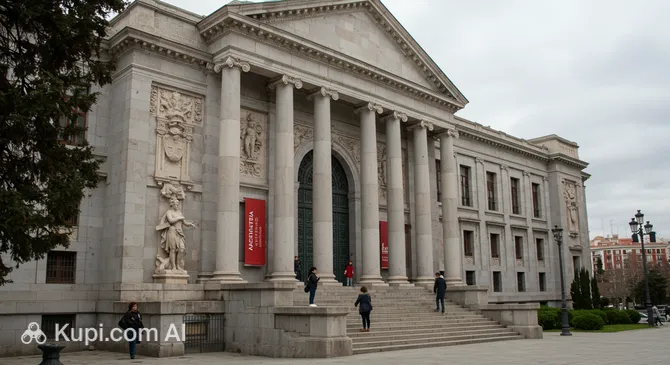
National Archaeological Museum. Illustration.
Source: Kupi.com AI

Traveler photos:

The museum's collection represents an impressive journey through the ages. It houses unique archaeological finds spanning a vast period: from prehistoric and Neolithic times to the legacy of Ancient Egypt, Greece, and the Roman Empire. Visitors can also explore artifacts from the era of Arab rule and the Renaissance, making the exhibition truly comprehensive.

Contacts

To get the most up-to-date information regarding the museum's operation, special exhibitions, or to ask any questions, it is best to consult official sources. All necessary details, including the inquiry phone number, address, and official website, are provided below.

How to contactContact
AddressC. de Serrano, 13, Salamanca, 28001 Madrid, Spain
Phone number+34 915 77 79 12
Websiteman.es

What to Do

Visiting the National Archaeological Museum is a unique opportunity to journey through millennia of history. Here, you can see firsthand how Spain and other great civilizations evolved. The exhibition leads you from prehistoric times to the Renaissance, showcasing unique artifacts that once filled the private collections of Spanish monarchs.

True treasures of world history await you in the museum's halls. Without a doubt, the crown jewel of the collection is the mysterious Lady of Elche—a masterpiece of Iberian art whose beauty and mystery attract visitors from all over the world. Equally noteworthy are the Treasure of Guarrazar, featuring magnificent examples of Visigothic goldwork, and one of the world's best collections of Ancient Greek vases. You can also appreciate the fine craftsmanship of Hispano-Arab artisans while examining the Pyxis of Zamora and exploring the extensive numismatic collection.

Beyond viewing priceless artifacts, the museum offers other experiences. Thanks to the recent renovation, the exhibition is interactive and modern, using videos and scale models to make the immersion into history even more engaging. A special experience awaits visitors in the museum garden, which houses an exact replica of the famous Altamira Cave with its prehistoric cave paintings. This allows you to touch the art of the Stone Age without leaving the center of Madrid.

Getting There

The National Archaeological Museum is ideally located in the heart of Madrid, making it easily accessible for tourists. It is situated on Calle de Serrano, right next to the famous Plaza de Colón, within the Palace of Libraries and Museums. This central location allows you to reach it effortlessly from any part of the city.

The most convenient and fastest way to get to the museum is by using the Madrid Metro. The nearest stations are Serrano and Colón (Line 4), as well as Retiro (Line 2). From any of these stations, the museum is just a few minutes' walk away. The stroll will allow you to enjoy the architecture of this elegant district.

Additionally, numerous city buses serve the area. The "Biblioteca Nacional" stop is located nearby, where bus routes 5, 14, 27, 45, 53, 150, and others stop. The museum is also a designated stop on the Madrid City Tour hop-on hop-off bus route, which is very convenient for those wishing to combine their visit with a general city tour. Of course, you can always use a taxi, and the ride from the city center will take very little time.

Nearest city: Madrid

History & Facts

The history of the National Archaeological Museum is inextricably linked to the Spanish monarchy. It was founded on March 20, 1867, by decree of Queen Isabella II. The primary goal was to create a single repository for the numerous archaeological and ethnographic finds, decorative art objects, and ancient coins that had been collected by the kings of Spain over centuries and brought to the empire from various corners of the world.

The museum officially opened to the public on July 9, 1871. Initially, its collection was housed in a building on Calle de Embajadores, but as the collections grew, there was a need for more spacious and prestigious premises. In 1895, the museum moved to its current magnificent home—the Palace of Libraries and Museums on Calle de Serrano, where it remains today. This building was specifically designed to house the country's main cultural treasures.

The museum's recent history was marked by a grand modernization. Between 2008 and 2014, it was closed for a large-scale reconstruction that breathed new life into it. As a result of these works, the exhibition was completely transformed, becoming more interactive and visitor-friendly. Today, visitors can expect more than just a look at artifacts; it's a true immersion into history through modern technology, making a visit to this Madrid museum even more exciting.

Time Needed

When planning a visit to the National Archaeological Museum, you should expect to spend two to four hours for a tour. This will be enough time for a leisurely look at the main halls and the most famous exhibits, such as the Lady of Elche and the Treasure of Guarrazar. The museum's collection is vast, covering periods from prehistoric times to the 19th century, so the duration of your visit will largely depend on your interests.

If you are short on time, you can focus on specific eras or take a guided highlights tour, which usually lasts about 90 minutes. This format provides a general overview of the museum's main treasures. However, for a deeper dive into the history of Spain, a detailed study of Ancient Roman mosaics, Visigothic art, or the unique replica of the Altamira Cave, it is better to set aside half a day. The modern and interactive presentation of the material also encourages a longer and more thoughtful visit.

Working Hours

The National Archaeological Museum is open to visitors year-round, but it has a specific schedule and closing days. The museum is open Tuesday to Saturday from 9:30 AM to 8:00 PM, and on Sundays and public holidays from 9:30 AM to 3:00 PM. Mondays are the official closing day. The museum is also closed on certain public holidays, such as January 1 and 6, May 1, and December 24, 25, and 31.

While tickets can be purchased directly at the museum box office, you can book them online to save time, especially if you plan to join a guided tour. It is worth noting that there are hours for free admission: on Saturdays after 2:00 PM and on Sunday mornings. It is always recommended to check the museum's official website before your visit to confirm any schedule changes, information on temporary exhibitions, and ticket purchasing rules.

DayOpening hours
MondayClosed
Tuesday9:00 – 20:00
Wednesday9:00 – 20:00
Thursday9:00 – 20:00
Friday9:00 – 20:00
Saturday9:00 – 20:00
Sunday9:00 – 15:00

Nearby

A visit to the National Archaeological Museum is just the starting point for exploring the rich cultural heritage of Madrid. The museum is located in the prestigious Salamanca district, right next to the famous Plaza de Colón, making it an ideal start for an engaging walk. Exploring the surrounding area will allow you to dive deeper into the atmosphere of the Spanish capital and see how history intertwines with modernity.

Just a few minutes' walk away are other iconic city landmarks. You can continue your journey through the "Golden Triangle of Art," which includes famous museums, or relax in the shaded alleys of a magnificent park. The proximity to key attractions makes this part of the city especially appealing to tourists who want to see as much as possible in one day.

NameDistance
Bel Mondo0.5 km
Cibeles Fountain0.6 km
Metropolis Building0.9 km
Thyssen-Bornemisza National Museum1 km
Prado National Museum1.1 km
Crystal Palace1.2 km
Calle 365 Madrid1.3 km

Have you reached the end of the page?

So the route has been studied inside and out