Support

Cibeles Fountain

About

The Cibeles Fountain (Fuente de Cibeles) is not just a fountain, but one of the most recognizable and revered symbols of Madrid and all of Spain. This magnificent historical landmark is located on the square of the same name in the heart of the Spanish capital, serving as a magnet for tourists and locals alike. The fountain was designed in 1782 and has since become an integral part of the city landscape.
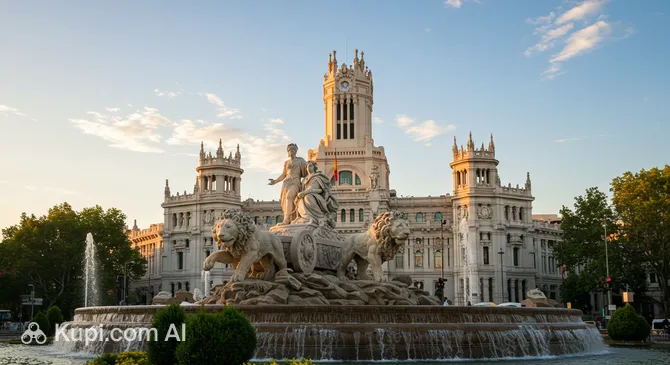
Cibeles Fountain. Illustration.
Source: Kupi.com AI

Traveler photos:

The central sculptural composition depicts the goddess of fertility, Cybele, sitting majestically in a chariot drawn by two lions. According to mythology, Hippomenes and Atalanta were transformed into these lions. In her hands, the goddess holds a scepter and the keys to the city, symbolizing her power and patronage over Madrid. Every detail of this marble sculpture is executed with striking craftsmanship and conveys a sense of power and grandeur.

Plaza de Cibeles, where the fountain is located, is an impressive architectural ensemble in its own right. The fountain is surrounded by four monumental buildings: the Bank of Spain, the Buenavista Palace (now the Army Headquarters), the Linares Palace (known as Casa de América), and the majestic Palace of Communication, which now houses Madrid City Hall. This location is also famous as the traditional gathering point for Real Madrid fans to celebrate their team's victories.

Contacts

Since the Cibeles Fountain is a public historical monument located on the square of the same name in Madrid, it has no specific contact details such as a phone number or email address. This magnificent monument is freely accessible around the clock. Getting there is very simple, as it is located in the heart of the city at Plaza de Cibeles.

Near the square is the Banco de España metro station (Line L2), as well as numerous bus stops serving dozens of routes. Thanks to this convenient location, the fountain is an easily accessible attraction for all guests and residents of the capital of Spain.

How to contactContact
AddressPlaza Cibeles, S/N, Centro, 28014 Madrid, Spain
Websitewww.esmadrid.com

What to Do

Visiting the Cibeles Fountain is a great opportunity to fully immerse yourself in the lively atmosphere of central Madrid. Here you can enjoy a stroll and take magnificent photos against the backdrop of the monumental sculpture and its surrounding architectural masterpieces, such as the Cibeles Palace and the Bank of Spain. It is a popular spot for meeting and relaxing for both tourists and locals who come here to admire one of the city's main symbols.

The Cibeles Fountain is not just a historical monument, but also the heart of the cultural and sporting life of the capital of Spain. It regularly becomes the epicenter of mass celebrations, especially after major victories by the Real Madrid football club, when thousands of enthusiastic fans gather in the square to share the joy of triumph. After dark, the fountain and surrounding buildings are transformed by spectacular lighting, making this place particularly attractive for an evening visit and creating an unforgettable, almost fairy-tale setting.

Getting There

The Cibeles Fountain is located in the heart of Madrid, on the square of the same name, making it one of the capital's most accessible landmarks. The most convenient way to get here is by public transport. The nearest metro station, Banco de España (Line 2), is located right on the square. Also nearby is the Retiro station (Line 2). Additionally, many city bus routes pass through Plaza de Cibeles, so the fountain can be reached from almost any part of the city.

For those who prefer walking, the fountain's location is ideal. It is within walking distance of other iconic Madrid sites, such as the famous Prado Museum, the lively Gran Vía, and the picturesque Retiro Park. A walk from any area in the city center will take no more than 10–20 minutes. Of course, you can always use a taxi—a trip to Plaza de Cibeles from the central districts will be quick and inexpensive.

Nearest city: Madrid

History & Facts

The history of the Cibeles Fountain is inextricably linked to the Age of Enlightenment in Spain. The monument was created by order of King Charles III, who sought to transform Madrid and give it capital elegance. The project was designed by the famous architect Ventura Rodríguez, and the fountain was completed in 1782. However, it was not originally located in its current spot but at the beginning of the Paseo de Recoletos. It was only in 1895 that it was moved to the center of the square, where it became one of the city's primary symbols.

The central sculptural group, carved from marble, is full of mythological references. The goddess of fertility, Cybele, sits majestically on a chariot drawn by two lions. According to ancient Greek myth, these are not just wild beasts, but the mythological characters Atalanta and Hippomenes. As punishment for desecrating a temple, the goddess turned them into lions and condemned them to pull her carriage for eternity, giving the composition a special dramatic flair.

In addition to its rich history, the fountain is surrounded by modern legends. One of the most intriguing states that a sophisticated security system lies beneath it, connected to the Bank of Spain's gold reserves located nearby. It is said that in the event of a robbery attempt, the vault would be immediately flooded with water directly from the fountain. At the end of the 20th century, the monument was renovated: new water jets were added, and colorful lighting was installed, making it particularly breathtaking at night.

Time Needed

Exploring the Cibeles Fountain typically doesn't require a lot of time. Usually, 20–40 minutes is sufficient for a tourist to fully enjoy this famous symbol of Madrid. This is enough time to leisurely admire the details of the skillful sculptural composition, take several memorable photos from different angles, and simply soak up the lively atmosphere of one of the central squares of the capital of Spain. Since the fountain is a public open-air monument, there is no need to stand in line or follow a strict schedule.

However, the duration of your visit can easily increase if you decide to pay attention to the magnificent buildings surrounding the square: the monumental Cibeles Palace, which now houses the City Hall, the Bank of Spain, the Linares Palace, and the Buenavista Palace. Additionally, the fountain is within walking distance of other key attractions, such as Retiro Park and the Prado Museum, so many travelers combine its viewing with a longer city walk that can take half a day. The place takes on a special charm in the evening when the lights come on, creating a truly magical atmosphere.

Working Hours

One of the main advantages of the Cibeles Fountain is its complete accessibility. As a public monument located in an open city square, it is open to visitors 24 hours a day, year-round. You don't need to buy tickets or book a time in advance—you can come here at any moment that is convenient for you. This makes the fountain an ideal point on any tourist itinerary through Madrid.

The place takes on a special charm in the evening. After dark, spectacular lighting is turned on, transforming the fountain and the buildings around it, creating a magical atmosphere. Many tourists and locals specifically come here after sunset to enjoy this sight and take impressive photographs. Therefore, when planning your day, be sure to consider visiting Plaza de Cibeles in the evening.

Open 24 hours

Nearby

After seeing the Cibeles Fountain, don't rush to leave this area of Madrid. Its central location makes it the perfect starting point for exploring other iconic spots in the Spanish capital. A stroll through the surroundings will allow you to dive deeper into history and culture, as many key attractions are literally just a few steps away.

The area around Plaza de Cibeles is a true cultural hub where history meets modernity. Here you will find world-famous museums, majestic architectural monuments, and bustling streets full of life. To help you plan your further route, we have compiled a list of interesting places located nearby.

NameDistance
Metropolis Building0.4 km
Thyssen-Bornemisza National Museum0.4 km
Prado National Museum0.6 km
National Archaeological Museum0.6 km
Calle 365 Madrid0.7 km
Rosi La Loca0.9 km
Inclán Brutal Bar0.9 km

Have you reached the end of the page?

So the route has been studied inside and out