Support

Thyssen-Bornemisza National Museum

About

The Thyssen-Bornemisza Museum is one of the main artistic gems of Madrid and all of Spain. Located on the famous Paseo del Prado, it forms the so-called "Golden Triangle of Art" along with the Prado Museum and the Reina Sofía Art Center—a must-visit destination for every lover of beauty. Once the world's largest private collection, it is now a state museum that perfectly complements the collections of its illustrious neighbors.
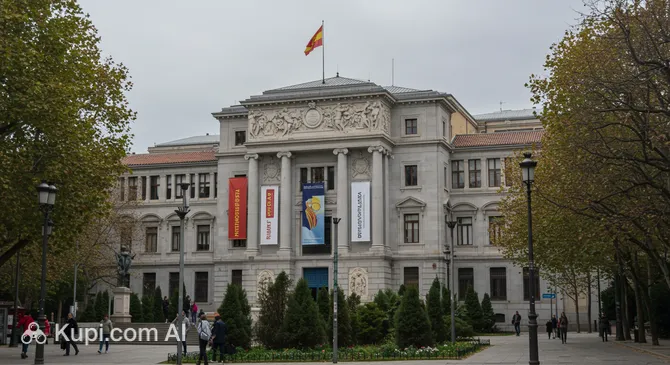
Thyssen-Bornemisza National Museum. Illustration.
Source: Kupi.com AI

Traveler photos:

The museum's primary value lies in its unique and extensive collection, which spans eight centuries of European and American painting—from the 13th to the 20th century. Unlike other Madrid galleries, here you can see art movements that are practically unrepresented elsewhere. It is at the Thyssen-Bornemisza Museum that you will find rich collections of Impressionism, German Expressionism, Russian Constructivism, and 19th-century American landscape painting.

The exhibition offers a true journey through art history, featuring masterpieces by Dürer, Caravaggio, Rubens, Van Gogh, Dalí, Picasso, and many other great masters in one place. It presents everything from Italian Primitives to Pop Art of the second half of the 20th century, making a visit to the museum incredibly educational and immersive.

The museum itself is housed in the elegant Villahermosa Palace, the interiors of which have been meticulously reconstructed. The architects managed to preserve the spirit of the old palace while creating an ideal space for displaying works of art. This combination of historical architecture and modern museum design makes the visit even more pleasant and memorable.

Contacts

To plan your visit, check opening hours, or purchase tickets, we recommend referring to the museum's official sources. Below are the primary contact details for communication.

How to contactContact
AddressP.º del Prado, 8, Centro, 28014 Madrid, Spain
Phone number+34 917 91 13 70
Websitewww.museothyssen.org

What to Do

Visiting the Thyssen-Bornemisza Museum is a unique opportunity to trace the development of Western art in chronological order. The exhibition will lead you through eight centuries, beginning with 13th-century works and ending with 20th-century pieces. You can see for yourself how styles, techniques, and subjects changed as you move from room to room, observing the evolution of painting from the Middle Ages to modern art.

The main things to look out for are the collections that make the museum special. Here you will find extensive holdings of Impressionism, German Expressionism, and American landscape painting—movements that are rarely found in other Madrid galleries. Must-see masterpieces include the famous "Portrait of Giovanna Tornabuoni" by Ghirlandaio and the enigmatic "Young Knight in a Landscape" by Carpaccio. These works are the hallmarks of the collection.

As you explore the exhibits, remember that you are experiencing one of the greatest private collections in the world. Each painting was chosen with love and expertise by the Thyssen-Bornemisza family. Thanks to Baron Hans Heinrich Thyssen-Bornemisza's decision to make this treasure a public asset, visitors have a rare chance to see a cohesive collection reflecting the personal tastes and passion of the collectors. This lends the visit a special, almost intimate atmosphere that sets the museum apart from many other major galleries.

Getting There

Getting to the Thyssen-Bornemisza Museum is easy, as it is located in the very heart of Madrid's cultural life on the famous Paseo del Prado. Thanks to this central location, the museum is easily accessible from anywhere in the city. If you are staying in the center, for example, near Puerta del Sol or Gran Vía, a pleasant walk to the museum will take no more than 15–20 minutes and will allow you to enjoy the city's architecture.

The most convenient way to reach the museum by public transport is the Metro. The nearest station, Banco de España (Line 2), is just a few minutes' walk away. You can also travel to the Atocha station, which serves both long-distance trains and commuter rail (Cercanías), and walk to the museum from there in about 10–15 minutes.

Additionally, numerous city buses stop near the museum. The Neptuno and Cibeles stops serve dozens of routes, including Nos. 1, 2, 9, 10, 14, 27, 34, 45, and many others, making this a very convenient option. Of course, you can always use a taxi or ride-sharing services to quickly reach the entrance of the Villahermosa Palace, where the museum is housed. For those traveling by private car, there is a paid underground parking lot, Las Cortes, located directly across from the museum.

Nearest city: Madrid

History & Facts

The history of the Thyssen-Bornemisza Museum is a fascinating saga of one family's passion for art. It all began in the 1920s when Baron Heinrich Thyssen-Bornemisza laid the foundation for the future collection. Demonstrating remarkable business acumen during the Great Depression, he acquired masterpieces from American millionaires who were forced to sell their treasures due to financial difficulties. This allowed him to gather unique works that might otherwise have remained in private hands.

His son, Baron Hans Heinrich Thyssen-Bornemisza, continued his father's work with even greater scale. He not only united works from his relatives' collections but also actively acquired new paintings, ranging from Gothic to Avant-garde. For a long time, this grand collection was kept at the family estate in Lugano, Switzerland. A decisive role in the collection's fate was played by the Baron's wife, Carmen "Tita" Cervera. It was she who convinced her husband to move the treasures to Spain, and in 1989, the elegant Villahermosa Palace in Madrid was chosen to house them.

The museum officially opened in 1992, and a landmark event occurred in 1993: the government of Spain purchased 775 works for $350 million. This amount was significantly below the market value, but it was fundamentally important for the Baron to keep the collection together and make it a public asset. Later, Carmen Cervera further enhanced the display by lending hundreds of works from her personal collection to the museum, making the assembly even richer and more diverse.

Time Needed

When planning a visit to the Thyssen-Bornemisza Museum, you should allow for 2.5–3 hours. This is generally enough time for a leisurely tour of the main permanent collection, which takes you chronologically through eight centuries of European art. You will be able to enjoy the masterpieces without feeling rushed and gain a holistic view of the development of painting from early Italian masters to the 20th-century Avant-garde.

If you are a great art lover or wish to delve deeper into specific movements such as Impressionism, Expressionism, or 19th-century American painting, feel free to allocate up to 4–5 hours for your visit. This amount of time will allow you to study not only the permanent exhibition in detail but also explore the Carmen Thyssen-Bornemisza collection and visit the temporary exhibitions frequently held at the museum. For those with limited time, a shorter visit is also possible: seeing the main highlights of the collection will take approximately 1.5–2 hours.

Working Hours

The Thyssen-Bornemisza Museum is open to visitors year-round, except for a few holidays (January 1, May 1, and December 25). Standard opening hours for the permanent collection are Tuesday to Sunday from 10:00 to 19:00. On Mondays, the museum operates on a reduced schedule from 12:00 to 16:00, and during this time, entry to the permanent collection is free for everyone. On special dates, December 24 and 31, the museum closes earlier at 15:00.

To avoid queues, especially during the high tourist season, it is recommended to purchase tickets in advance online via the museum's official website. This is particularly relevant if you plan to visit temporary exhibitions, as their hours may differ from the main collection. It is also worth noting that tickets for the free hours on Mondays must be booked in advance online, as capacity is limited. Buying a ticket online not only saves you time but also guarantees entry to the museum on your chosen date and time.

DayOpening hours
Monday12:00 – 16:00
Tuesday10:00 – 19:00
Wednesday10:00 – 19:00
Thursday10:00 – 19:00
Friday10:00 – 19:00
Saturday10:00 – 19:00
Sunday10:00 – 19:00

Nearby

A visit to the Thyssen-Bornemisza Museum is just one part of an exciting journey through the cultural heart of Madrid. The museum's location on the famous Paseo del Prado makes it the perfect starting point for exploring other iconic landmarks of the Spanish capital. A stroll through the surrounding area will allow you to dive deeper into the city's atmosphere and see how history and modernity harmoniously intertwine on its streets.

Due to its central position, the museum is surrounded by many other attractions that can be easily reached on foot. This allows you to combine a visit to the gallery with a tour of famous squares, parks, and architectural masterpieces, enriching your travel experience and creating a complete full-day itinerary. Below is a list of interesting places located in the immediate vicinity of the museum.

NameDistance
Prado National Museum0.3 km
Cibeles Fountain0.4 km
Metropolis Building0.4 km
Calle 365 Madrid0.4 km
Inclán Brutal Bar0.6 km
Rosi La Loca0.7 km
Museo Reina Sofía0.9 km

Have you reached the end of the page?

So the route has been studied inside and out