Support

Albacete Museum

About

In the heart of the shaded Abelardo Sánchez Park lies the Albacete Museum—the primary treasure house of the region's historical and artistic heritage. This landmark site, representing the city of Albacete, is rightfully considered one of the finest provincial museums Spain has to offer travelers passionate about the past.
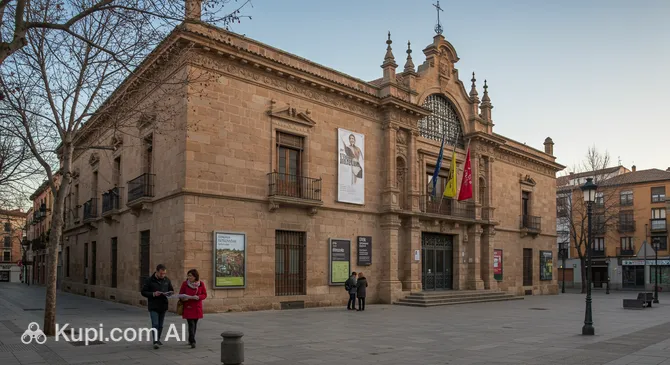
Albacete Museum
Albacete Museum. Иллюстрация. Источник: Kupi.com AI

The museum building itself is a work of art. Built in 1978 in a modernist style, it was designed to blend as naturally as possible into the surrounding greenery. Inside, visitors will find 13 permanent exhibition halls where archaeological finds sit alongside canvases by masters of fine arts, creating a comprehensive picture of the local culture's development from the Paleolithic era to the present day.

Among the museum's most valuable exhibits is the famous Iberian Sphinx of Haches, often called the "Iberian Mona Lisa" because of her enigmatic smile. It also houses unique Roman bone and amber dolls found in Ontur, and an extensive collection of works by the artist Benjamín Palencia. This museum is not just a collection of antiquities, but a living testament to the evolution of human civilization in these lands.

Contacts

To plan your visit, it is helpful to know the exact coordinates and ways to reach the administration. The Albacete Museum is always open for inquiries regarding current programs and special events via the contact details provided below.

How to contactContact
AddressParque de Abelardo Sánchez, s/n, 02002 Albacete, Испания
Phone+34 967 22 83 07
Websitecultura.castillalamancha.es

What to Do

A visit to the museum turns into an exciting journey through the millennia. In the archaeology halls, you can examine ancient tools from the Paleolithic era, delicate Neolithic ceramics, and formidable Bronze Age weapons in detail. The Iberian sculptures and unique Roman dolls, which have retained their charm centuries later, provide a special aesthetic pleasure.

Art lovers should linger in the fine arts halls. These feature one of the most significant collections of works by Benjamín Palencia, whose creativity became a major milestone in 20th-century Spanish art. In addition to the permanent exhibition, the museum frequently hosts temporary exhibitions and educational workshops that will interest both adults and children.

If you want to better understand the context of each discovery, it is recommended to book a tour with a professional guide in advance. A pleasant bonus for budget-conscious travelers is the free admission on Thursdays, allowing you to enjoy the cultural riches in the most tranquil atmosphere.

Getting There

The cultural complex is located in the heart of the city, within Abelardo Sánchez Park. Thanks to its central location, it is easily reachable on foot from most iconic landmarks, such as the Plaza Virgen de los Llanos. A walk through the park's shaded alleys is the most pleasant way to begin your introduction to the region's history.

If you are arriving at the Albacete-Los Llanos station, the journey to the museum is about 1.5 kilometers. This distance can be covered in a 20-minute leisurely walk or just a few minutes by taxi. City buses also stop near the park, making the site accessible from any part of the city.

For those who prefer a private car, parking zones are available around the park and on adjacent streets. Using a navigator will help you quickly find the most convenient approach to the main entrance via the park paths.

Ближайший город: Albacete

History & Facts

The history of this collection began in the mid-19th century, when the Provincial Monuments Commission was established in 1844. The organization received its first official status as the Museum of Fine Arts and Antiquities in 1876, located in the civil government building. However, the museum acquired its modern appearance and structure much later, passing through decades of transformations and relocations.

The current building, recognized as a masterpiece of modernism, was designed by architect Antonio Escario and opened its doors in 1978. The project was developed following strict UNESCO recommendations, creating a unique space where the architecture does not dominate the exhibits but harmoniously complements them, blending with the natural landscape of the surrounding park.

A significant milestone was 1962, when the museum's collections were officially declared an Asset of Cultural Interest (Bien de Interés Cultural). Today, the archaeological halls bear the name of Joaquín Sánchez Jiménez—a distinguished director who dedicated his life to enriching the collections with priceless artifacts discovered during excavations throughout the province.

Time Needed

To leisurely explore all thirteen permanent halls and temporary exhibitions, a typical visitor will need between 1.5 and 2.5 hours. The archaeological section is the most extensive, so it is worth setting aside at least one hour for it.

If you plan to study the fine arts collection in detail or use the services of a guide, the total visit time may increase to half a day. It is also worth leaving some time for a leisurely stroll through Abelardo Sánchez Park, where the museum building is located, to discuss what you've seen in the fresh air.

Working Hours

The museum follows a classic Spanish working schedule with a siesta break. From Tuesday to Saturday, the doors are open from 10:00 AM to 2:00 PM and from 4:30 PM to 7:00 PM. On Sundays and public holidays, the museum operates only in the morning—from 9:30 AM to 2:00 PM. Please note that the museum is closed to visitors on Mondays.

As the schedule may change due to public holidays or special events, we highly recommend checking for the latest information on the official website before your visit. We suggest stopping by on a Thursday, when admission for all visitors becomes free.

DayWorking hours
понедельникЗакрыто
вторник10:00–14:00, 16:30–19:00
среда10:00–14:00, 16:30–19:00
четверг10:00–14:00, 16:30–19:00
пятница10:00–14:00, 16:30–19:00
суббота10:00–14:00, 16:30–19:00
воскресенье09:30–14:00

Nearby

After immersing yourself in the region's history within the museum walls, it is worth taking time for the surrounding attractions. Its location in the central park makes the Albacete Museum an ideal starting point for further exploration of the city.

Many interesting sites are within walking distance, allowing you to create a rich walking itinerary. You can see both modern monuments and magnificent examples of architecture from past centuries that Albacete is so proud of.

NameDistance
Bar Cheers0.3 km
Mesón El Sol0.4 km
La Bonita Cocktail Bar0.6 km
Castilla-La Mancha Museum of Education and Childhood0.6 km
El Callejón de los Gatos Restaurant0.6 km
Pasaje de Lodares0.7 km
Circo Albacete Centro0.8 km

Reached the end of the page?

That means the route is fully explored