Support

catedral de Albacete

About

Albacete Cathedral, also known as the Cathedral of San Juan Bautista, is the heart of the spiritual life of the city of Albacete and one of the most impressive architectural monuments that Spain is proud of. This majestic temple is dedicated to Saint John the Baptist, the city's patron saint, and represents a fascinating fusion of eras and styles.
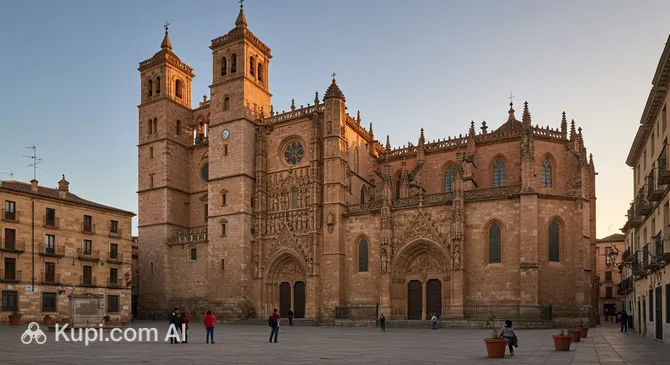
Albacete Cathedral
Albacete Cathedral. Иллюстрация. Источник: Kupi.com AI

Inside, visitors are greeted by a grand Gothic-Renaissance interior, the main feature of which is four massive columns over 13 meters high. They support the vaults, creating a sense of incredible spaciousness. The exterior of the temple, by contrast, is designed in Neo-Romanesque and Neo-Gothic styles, making the building a unique example of a long construction process that stretched from the 16th to the 20th century.

Of particular value are the interior paintings—large-scale frescoes by artist Casimiro Escribá García, covering about 1,000 square meters. The cathedral is not only an important religious site but also a true open-air art gallery, attracting the attention of both the faithful and connoisseurs of fine art.

Contacts

For information regarding mass times or special events, you can contact the cathedral administration directly.

How to contactContact
AddressPl. la Catedral, s/n, 02001 Albacete, Spain
Phone+34 967 21 53 42
Websitediocesisalbacete.org

What to Do

Begin your visit to the cathedral by exploring its grand interior space. Note the massive Renaissance columns with Ionic capitals—their scale is truly breathtaking. Be sure to look up to admire the Baroque vaults, which replaced the collapsed Gothic structures in the 17th century.

Pay special attention to the details: look into the Chapel of the Virgen de los Llanos, which houses an ancient retablo, and visit the sacristy. There, you can see rare 16th-century grisaille—monochrome paintings depicting biblical scenes. Don't forget to closely examine the frescoes by Casimiro Escribá García: interestingly, the faces of many characters in these paintings belong to real residents of the neighboring town of Ayora.

Outside the cathedral, look for the ancient relief depicting the Virgin of Los Llanos—it is the oldest element of the complex, remaining from the first 13th-century building. If you are lucky, you will hear the ringing of the temple's four bells, each of which has its own name. The cathedral is a wonderful place for quiet contemplation, where you can temporarily escape the hustle and bustle of the city and immerse yourself in an atmosphere of peace.

Getting There

Located in the heart of the historic center at Plaza de la Catedral, the cathedral is a central focal point for all walking routes. If you are already strolling through the city, the walk from the main square, Plaza del Altozano, or the main bus station takes no more than 10–15 minutes at a leisurely pace.

For those arriving from other regions, it is most convenient to take the AVE high-speed train from Madrid (the journey takes about 1.5 hours) to Albacete-Terminal station. From the station, you can reach the cathedral in just 5 minutes by taxi or by taking city buses No. 1 or No. 2. There is also a Catedral stop located in the immediate vicinity of the church, served by routes 1, 2, and 5.

If you are traveling by car, bear in mind that parking in the very center can be difficult. It is recommended to leave your car in paid parking lots on the adjacent streets and continue on foot, enjoying the architecture of the old city.

Ближайший город: Albacete

History & Facts

The history of this majestic structure began in the late 13th century, when a modest Mudéjar temple stood on this site. It was not until 1515 that construction began on a new, grander church. The process spanned centuries: the original Gothic design was gradually supplemented with Renaissance features, worked on by masters such as Diego de Siloé and Jerónimo Quijano.

The fate of the cathedral hung in the balance more than once: in the 16th century, the Gothic vaults failed and collapsed, after which they were replaced with Baroque structures under the guidance of architect Gregorio Díaz de Palacios. The building's final appearance only took shape in the mid-20th century, when the facade and side portals were completed, blending Neo-Romanesque and Neo-Gothic styles.

The cathedral received its cathedral status relatively recently—in 1949, with the formation of the Diocese of Albacete. One of the most remarkable modern additions is the colossal frescoes created by artist Casimiro Escribá García between 1958 and 1962. These paintings cover an area of 1,000 square meters and are considered one of the largest works by a single author in all of Europe.

Despite numerous reconstructions, the cathedral carefully preserves the memory of the past. An ancient relief of the Virgen de los Llanos is built into one of its walls—the only surviving fragment of that very first 13th-century temple, serving as a reminder of the centuries-old continuity of traditions in this region.

Time Needed

Most tourists need between 1 and 2 hours to leisurely explore the interiors and appreciate the cathedral's architectural grandeur. Most of your time should be dedicated to studying the unique frescoes and examining the Renaissance columns, which are the cathedral's signature feature.

If you plan to visit the sacristy and carefully study the ancient grisaille murals, allow an additional 20 minutes. The remaining time is perfect for walking around the exterior of the building, taking photos of the Neo-Romanesque facade, and stopping by the square in front of the cathedral, which often has a lively atmosphere.

Working Hours

The cathedral doors are open to visitors on weekdays; however, it is worth considering the midday break typical for this region.

Opening hours: Monday – Friday from 8:30 AM to 1:00 PM and from 6:00 PM to 9:00 PM. On Saturdays and Sundays, the church is usually closed for tourist visits, as only private services may be held at those times. It is recommended to check the current schedule before your visit, as working hours may change on religious holidays.

DayWorking hours
Понедельник8:30 – 13:00, 6:00 – 21:00
Вторник8:30 – 13:00, 6:00 – 21:00
Среда8:30 – 13:00, 6:00 – 21:00
Четверг8:30 – 13:00, 6:00 – 21:00
Пятница8:30 – 13:00, 6:00 – 21:00
СубботаЗакрыто
ВоскресеньеЗакрыто

Nearby

The cathedral's location in the historic center makes it an ideal starting point for further exploration of the city. A stroll through the surrounding streets will allow you to feel the rhythm of local life and see how classical architecture sits alongside modern leisure spaces.

Exploring the neighborhood is sure to bring plenty of pleasant impressions: here you can find cozy squares for relaxation as well as unique architectural monuments of the Art Nouveau era.

NameDistance
Zenit Tea & Shisha Lounge0 km
Albacete Municipal Museum of Cutlery0.1 km
Municipal Museum of Albacete0.2 km
Altozano Garden0.2 km
Pasaje de Lodares0.3 km
Circo Albacete Centro0.3 km
La Bonita Cocktail Bar0.5 km

Reached the end of the page?

That means the route is fully explored