Support

Museo Pedagógico y del Niño de Castilla-La Mancha

About

Imagine a place where memories of the first school desks, inkwells, and forgotten games come to life. The Pedagogy and Childhood Museum of Castile-La Mancha is a unique cultural space located in the city of Albacete, which invites visitors on a touching journey through the history of education and the daily lives of Spanish children. Founded in 1987, it is rightfully considered one of the most comprehensive and significant institutions of its kind in Spain.
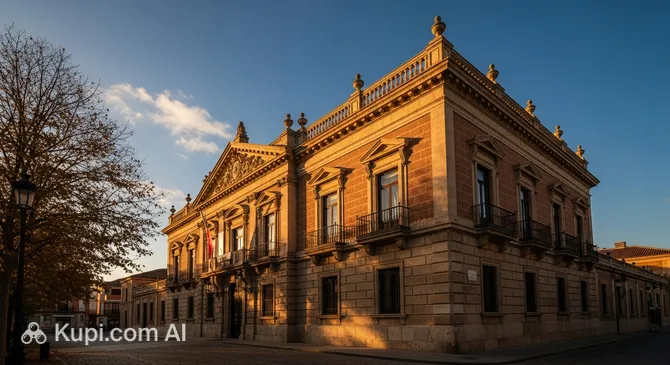
Castilla-La Mancha Museum of Education and Childhood
Castilla-La Mancha Museum of Education and Childhood. Иллюстрация. Источник: Kupi.com AI

The exhibition is housed in a historic former school building, constructed in the middle of the last century, which creates a special atmosphere of intergenerational continuity. Across two floors, there are 12 demonstration rooms, each dedicated to a specific era or aspect of childhood. The museum is often called the "Juan Peralta Museum" in honor of its founder—a passionate teacher who dedicated his life to preserving the pedagogical heritage of the region.

Of particular value are the recreated classroom interiors from different periods: from the Bourbon Restoration to the Franco dictatorship. In addition to educational materials, there is a massive collection of toys, comics, and dolls, as well as a unique archive of documents, audio, and video recordings dedicated to the world of childhood, family, and school, making it interesting not only for tourists but also for researchers from all over the world.

Contacts

To check current information about special events or group tours, you can use the official contact details of the institution.

How to contactContact
AddressC. del Amparo, 14, 02002 Albacete, Испания
Phone+34 967 24 00 04
Websitewww.museodelnino.es

What to Do

A visit to the museum is a true interactive adventure, where each room offers a new perspective on familiar things. On the first floor, guests can find masterfully recreated historical classrooms: you can see the conditions in which children studied at the end of the 19th century, during the Second Republic, or during the Franco era. Take note of the vintage physics and natural science cabinets—their equipment looks like real art objects from the past.

For those seeking vivid visual impressions, there is a gallery featuring the works of the famous artist Teo Puebla, displaying about 50 original paintings. On the second floor, the territory of nostalgia begins: rooms filled with vintage toys, puppets, comics, and even magic lanterns—the predecessors of modern cinema. It is an ideal place for family leisure, where children can marvel at the "gadgets" of the past, and adults can reminisce about their own childhood games.

Don't miss the important and profound exhibition "Stolen Childhoods", which raises questions about children's rights and the difficulties children faced during various periods of history. If the weather permits, be sure to stop by the inner courtyard at the "Fairytale Square"—a cozy space designed for play and relaxation, which is especially popular with the museum's youngest visitors.

Getting There

The museum is conveniently located in the heart of the city at C. del Amparo, 14. Thanks to its central location, it is easy to reach on foot from almost anywhere in the historic center. For example, a pleasant walk from the main square or the central bus station (Estación de Autobuses) will take only 10–15 minutes.

If you prefer public transport, use the city buses. The nearest stops are located in the Plaza del Altozano area, from where you can reach the museum building in just a few minutes. For those traveling by car, there is paid parking available around the center of Albacete, though it is worth noting that finding a free space during peak hours can be challenging.

Tourists arriving from major cities like Madrid or Valencia can take advantage of high-speed trains or intercity buses. The trip to Albacete takes about 2–3 hours, after which you can quickly reach the museum by taxi or by taking a stroll and enjoying the atmosphere of the Spanish streets.

Ближайший город: Albacete

History & Facts

The history of this unusual place began in 1987 thanks to the initiative of school teacher Juan Peralta. His goal was to create an innovative educational space that could save and preserve the rich heritage of school life and childhood in the Castile-La Mancha region. For a long time—nearly 28 years—the collection was housed in the basement of a local school until it found its current grand home in 2015.

The building that houses the exhibition today is an architectural monument in its own right. It was built between 1956 and 1958 based on a project by Agustín Morcillo and was originally intended for the separate education of boys and girls. The linear structure of the building and its large south-facing windows reflect advanced school construction principles for the mid-20th century. Today, the site is managed by the regional government and is recognized by experts as the most comprehensive pedagogical museum in all of Spain.

The Association of Friends (AMUNI), also founded by Juan Peralta, plays an important role in the museum's life. Thanks to their support, the museum does not just store dusty exhibits but actively thrives: it hosts presentations, scientific research, and cultural events. In 2018, after a major move and renovation, the museum reopened, presenting an even deeper and more systematic collection to the public, including a unique Documentation Center.

Time Needed

To leisurely explore all 12 thematic rooms and two galleries, an average visitor will need between 1.5 to 2 hours. This time is quite sufficient to carefully examine the details of the recreated historical classrooms and get acquainted with the rich collection of toys and documents.

If you are planning a family visit or are interested in the history of education more professionally, it is worth allowing about 2.5 hours. This will let children engage with interactive elements, while adults can explore the Documentation Center materials and temporary exhibitions without rushing. The museum is designed so that time flies by quickly thanks to the frequent change of thematic zones.

Working Hours

The museum welcomes visitors from Tuesday to Sunday, with Monday being a closed day. From Tuesday to Friday, the doors are open from 09:00 to 14:00 and after a break from 16:00 to 19:00. On weekends (Saturday and Sunday), the museum operates on a reduced schedule—only from 10:00 to 14:00. Admission to the museum is free, making it accessible to every guest of the city.

Please note that the museum is closed on public holidays such as January 1 and 6, June 24, September 8, as well as during the Christmas holidays (December 25 and 31). Since the working schedule may change slightly depending on the season or special events, it is recommended to check the information on the institution's official website before your visit.

DayWorking hours
понедельникЗакрыто
вторник09:00–14:00, 16:00–19:00
среда09:00–14:00, 16:00–19:00
четверг09:00–14:00, 16:00–19:00
пятница09:00–14:00, 16:00–19:00
суббота10:00–14:00
воскресенье10:00–14:00

Nearby

A stroll around the museum's surroundings is a great way to continue exploring the cultural code of the region. Within walking distance, you will find both modern entertainment centers and iconic historical locations that will help you get a more complete picture of the city's life.

Exploring the central squares and architectural monuments nearby will allow you to feel the unhurried rhythm of Castile-La Mancha and discover cozy corners hidden from the eyes of hurried tourists.

NameDistance
Mesón El Sol0.4 km
Albacenter0.4 km
Trampoline Park Albacete0.5 km
Bar Cheers0.5 km
Albacete Museum0.6 km
El Callejón de los Gatos Restaurant0.6 km
La Bonita Cocktail Bar0.7 km

Reached the end of the page?

That means the route is fully explored