Support

Museo Municipal de la Cuchillería de Albacete

About

In the heart of the city of Albacete lies an extraordinary place celebrating one of the region's oldest crafts—the Municipal Museum of Cutlery. It is housed in the magnificent Casa de Hortelano, built in the Art Nouveau style at the beginning of the 20th century. The house's architecture, with its turquoise facades and elegant turrets, resembles a fairy-tale castle, making it one of the most photographed spots in the city.
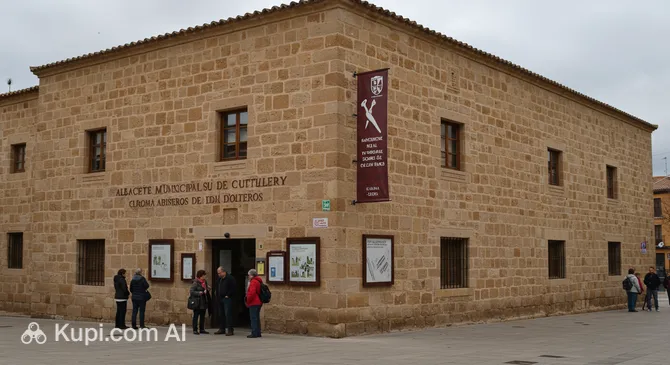
Albacete Municipal Museum of Cutlery
Albacete Municipal Museum of Cutlery. Иллюстрация. Источник: Kupi.com AI

This unique museum in Spain is dedicated to the rich tradition of manufacturing bladed weapons and cutlery, for which Albacete is famous worldwide. Inside, visitors will find an impressive collection of exhibits: from delicate lady's scissors and antique straight razors to massive folding knives decorated with intricate engravings. The exhibition spans from the 15th century to the present day, demonstrating the evolution of the local blacksmiths' skill.

The museum is a monographic institution where history is closely intertwined with art. Since admission to many halls is often free, it has become a popular spot for both blade enthusiasts and family tourists. The combination of Daniel Rubio's unique architecture and the rich collection makes this site a must-visit for anyone who wants to understand the true spirit of the Castilla-La Mancha region.

Contacts

For information about special exhibitions or to book group tours, you can use the official contact channels. The museum maintains active contact with visitors through its information service.

How to contactContact
AddressPl. la Catedral, s/n, 02001 Albacete, Spain
Phone+34 967 61 66 00
Websitewww.museocuchilleria.es

What to Do

A visit to the museum invites guests to immerse themselves in a world of filigree work and sharp metal. Strolling through the halls, you will see not just tools, but true masterpieces: knives with handles made of deer antler, bone, and precious woods, as well as unique cutlery collections. Be sure to pay attention to the section on traditional folding knives (navajas), which became a symbol of the city due to their reliability and beauty.

One of the most interesting parts of the museum is the reconstruction of an old workshop. Here you can see the conditions in which craftsmen of past centuries worked and the tools they used for forging, hardening, and grinding blades. Multimedia installations and video projections complete the experience, clearly explaining modern industrial knife-making processes.

In addition to the permanent exhibition, the museum often hosts temporary exhibitions dedicated to foreign craftsmanship or unusual types of tools, such as artistic scissors. After exploring the halls, stop by the museum shop—it is an excellent place to purchase a high-quality locally-made item as a memorable gift. The atmosphere of the palace-like building and the silence of the halls allow you to spend your time educationally and with aesthetic pleasure.

Getting There

Located at Plaza de la Catedral, s/n, the museum is in the heart of the historic center. It is easy to find thanks to its location next to the main city cathedral. If you are already walking through the central streets, the walk from the popular Plaza del Altozano will take only a few minutes at a leisurely pace.

For those arriving in the city by public transport, it is most convenient to use local buses that stop near the cathedral square. If you are traveling from other regions, such as Madrid, a high-speed train will take you to Albacete station in about an hour and a half to two hours, from where you can reach the museum by taxi or walk through the city center.

Travelers by car should note that parking directly at the square is limited. It is recommended to leave your car in one of the paid underground parking lots a few blocks from the museum to continue on foot while enjoying the architecture of the old city.

Ближайший город: Albacete

History & Facts

The history of knife-making in this region is rooted deep in the past. The city has been famous for its craftsmen for centuries, and folding knives—navajas de Albacete—became a true symbol of regional craftsmanship. Historical documents confirm the existence of a guild of knife-makers here, whose products were valued throughout Europe for their reliability and elegant inlay.

The museum itself was officially opened in 2004 to preserve and pass on this unique ethnographic heritage to future generations. One of the city's most beautiful buildings, Casa de Hortelano, was chosen to house the exhibitions. This eclectic early 20th-century mansion is an architectural monument in its own right, reflecting the city's cultural flourish during that era.

The museum's collection spans a vast period of time, starting with artifacts from the 15th century. Here you can trace the path from simple tools to true works of art created by court masters. The Municipal Museum of Cutlery does more than just store old items; it maintains a bridge between eras by collaborating with modern knife-making schools and organizing educational programs for residents and visitors of the region.

Time Needed

To leisurely explore all the thematic halls, watch the video materials, and study the details of the ancient tools, it usually takes 1 to 2 hours. If you plan to examine the temporary exhibitions in detail or stop by the souvenir shop, it is better to set aside a bit more time.

Organized groups visiting the museum with a guide may spend about 2.5–3 hours here, as the program often includes detailed stories about production technology and the history of individual family workshops. For independent travelers, a visit to the museum is an excellent addition to a morning walk through the city center before the siesta.

Working Hours

The museum follows a traditional Spanish schedule with an afternoon break. When planning your visit, keep in mind that the establishment is closed to visitors on Mondays.

Working hours:

  • Tuesday – Saturday: from 10:00 to 14:00 and from 17:00 to 20:00.
  • Sunday: from 10:00 to 14:00.
Please note that on Wednesdays, admission for all categories of citizens is often free, making this day particularly popular among tourists.

DayWorking hours
ПонедельникЗакрыто
Вторник10:00 – 14:00, 5:00 – 20:00
Среда10:00 – 14:00, 5:00 – 20:00
Четверг10:00 – 14:00, 5:00 – 20:00
Пятница10:00 – 14:00, 5:00 – 20:00
Суббота10:00 – 14:00, 5:00 – 20:00
Воскресенье10:00 – 14:00

Nearby

The museum's excellent location in the historical core of the city allows tourists to create a rich itinerary without spending much time on travel. A walk through the surroundings will reveal the architectural diversity and cozy atmosphere of this Spanish corner.

In the immediate vicinity, you will find both majestic religious buildings and unique shopping arcades, which are considered gems of local architecture. Be sure to stop by the nearby squares to see monuments to famous city natives and enjoy the shade of the trees.

NameDistance
Zenit Tea & Shisha Lounge0.1 km
Albacete Cathedral0.1 km
Pasaje de Lodares0.3 km
Municipal Museum of Albacete0.3 km
Circo Albacete Centro0.3 km
Altozano Garden0.3 km
La Bonita Cocktail Bar0.5 km

Reached the end of the page?

That means the route is fully explored