Support

Museo Reina Sofía

About

The Queen Sofia National Museum Art Center (Museo Nacional Centro de Arte Reina Sofía) is one of the main cultural jewels of Madrid and all of Spain. Located in the heart of the capital, it forms the famous "Golden Triangle of Art" alongside the Prado and Thyssen-Bornemisza museums. This museum is a must-see for anyone interested in modern art.

The museum's primary focus is art from the 20th and 21st centuries. Its collection includes over 21,000 works, but the main treasure attracting visitors from around the world is undoubtedly Pablo Picasso's monumental canvas "Guernica." This work, dedicated to the tragic events of the Spanish Civil War, became a powerful anti-war symbol and holds a central place in the exhibition.

Beyond "Guernica," the museum's halls house a vast collection of works by other geniuses who defined modernism. Surrealist masterpieces by Salvador Dalí and avant-garde works by Joan Miró are widely represented. The collection features not only paintings but also sculptures, prints, photographs, and multimedia installations, offering visitors a total immersion into the world of contemporary art. Visiting the museum is a unique opportunity to trace the development of artistic thought over recent centuries.
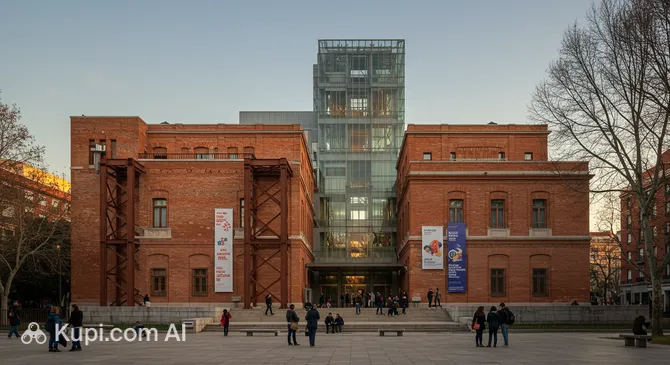
Museo Reina Sofía. Illustration.
Source: Kupi.com AI

Traveler photos:

Contacts

To plan your visit and check current opening hours, ticket prices, and special events, it is recommended to contact the museum directly. All necessary information can be found on the official website or by calling.

How to contactContact
AddressC. de Sta. Isabel, 52, Centro, 28012 Madrid, Spain
Phone number+34 917 74 10 00
Websitewww.museoreinasofia.es

What to Do

Visiting the Reina Sofia Museum in Madrid is a fascinating journey through 20th-century art. The main focus should be the permanent collection, which is logically divided into several major thematic blocks. One covers the period from 1900 to 1945, focusing on avant-garde movements, utopias, and the conflicts of that era. Other sections explore post-war art and its evolution from rebellion to postmodernism. Along with Picasso's famous "Guernica," you can see iconic works such as Salvador Dalí's "The Great Masturbator" and Joan Miró's "Snail, Woman, Flower, Star." The galleries feature not only Spanish masters but also international artists, providing a complete picture of global art development.

The museum is more than just a static display. It regularly hosts temporary exhibitions dedicated to both recognized classics and new names in contemporary art, providing a great chance to see current artistic practices. Furthermore, the art center organizes a rich cultural program including lectures, film screenings, performances, and dance shows. For those wanting to delve deeper, the museum houses a library with over 40,000 volumes on art, as well as archives and research centers.

In addition to exploring the art, visitors can appreciate the museum building itself—an impressive blend of the former 18th-century hospital's neoclassical architecture and modern additions designed by renowned architect Jean Nouvel. The external glass elevators, which have become a hallmark of the building, and the spacious inner courtyard with sculptures deserve special attention. After touring the exhibits, you can relax in one of the cafes, browse the souvenir shop, or head up to the terrace to enjoy city views.

Getting There

Getting to the Reina Sofia Museum in Madrid is easy thanks to its convenient location in the central Atocha district. The museum is located at Calle Santa Isabel, 52, within walking distance of the famous Atocha station and other key attractions that make up the "Golden Triangle of Art." This location makes it easily accessible for tourists exploring the capital of Spain.

The most convenient way to reach the museum is by public transport. The nearest metro station is Atocha (Line 1), which is just a few minutes' walk from the entrance. Additionally, numerous city buses stop in the area, with routes covering the entire city center, making it easy to arrive from anywhere.

If you prefer walking, the route to the museum from central squares like Puerta del Sol or from Atocha station itself is pleasant and won't take much time. Signs along the way help with navigation. For those traveling by car, there are several underground parking lots nearby. However, keep in mind that traffic in central Madrid can be restricted, so using public transport is often a faster and more convenient option.

Nearest city: Madrid

History & Facts

The history of the Reina Sofia Museum stretches back centuries and is much older than the museum itself. The building, which now houses modern art masterpieces, has a rich and sometimes somber past. Its story began in the second half of the 16th century by decree of King Philip II, who decided to consolidate Madrid's scattered hospitals into one location. Originally, it served as a shelter and hospital for the poor. Over the years, many people were buried within its walls and cellars, giving rise to urban legends about ghosts wandering the corridors.

The building acquired its grand neoclassical appearance in the 18th century. King Charles III commissioned the hospital's expansion, and outstanding architects worked on the project, with the Italian Francesco Sabatini playing a key role. His design formed the basis of the structure we see today, and in his honor, the main historical part of the museum is called the "Sabatini Building." The hospital operated here until 1965. After its closure, the building was threatened with demolition but was saved in 1977 when it was granted historical-artistic monument status.

New life for the old hospital began in the 1980s. After restoration, an exhibition hall opened here in 1986, and on September 10, 1992, it was officially established as the National Museum "Queen Sofia Art Center." The grand opening ceremony was attended by King Juan Carlos I and Queen Sofia, after whom the cultural center was named. Today, it is one of the most visited art museums in the world, where the history of ancient walls blends harmoniously with the avant-garde art of Spain and the entire globe.

Time Needed

When planning a visit to the Reina Sofia Museum, consider how much time you're willing to dedicate to modern art. For a thorough and leisurely viewing of the permanent collection—including Picasso's famous "Guernica" and works by Dalí and Miró—as well as temporary exhibitions, it is recommended to set aside at least 3–4 hours. This should be enough time to immerse yourself in the atmosphere and the main concepts presented in the galleries.

If your time is limited, you can focus on the key masterpieces. An express tour covering the most famous works takes about 1.5–2 hours. However, for true art lovers wishing to study the collections more deeply, visit the specialized library, or attend cultural events like lectures or film screenings, you could easily spend half a day at the museum.

Working Hours

The Reina Sofia Museum is open to visitors year-round, but operating hours may vary. Typically, the museum is open from Monday to Saturday from 10:00 AM to 9:00 PM, with Tuesday being the closing day. Sunday has shortened hours, and the museum closes earlier; some galleries may also be inaccessible. On public holidays, the schedule can change, so it is highly recommended to check current information on the museum's official website before your visit.

To avoid long queues, especially during peak tourist season, it is recommended to purchase tickets online in advance. This will save you time and guarantee entry to see world masterpieces, including Pablo Picasso's famous "Guernica." There are also free admission hours, usually in the evening, but these periods can be particularly crowded.

DayOpening hours
Monday10:00 – 21:00
TuesdayClosed
Wednesday10:00 – 21:00
Thursday10:00 – 21:00
Friday10:00 – 21:00
Saturday10:00 – 21:00
Sunday10:00 – 14:30

Nearby

A visit to the Reina Sofia Museum is a highlight in itself, but its prime location in the cultural heart of Madrid offers excellent opportunities for further city exploration. A walk around the neighborhood will allow you to dive deeper into the atmosphere of the Spanish capital and discover other iconic landmarks, many of which are just a few steps away.

The district where the museum is located is part of the famous "Golden Triangle of Art," making it an ideal starting point for a cultural itinerary. Nearby, you'll find not only world-famous galleries but also charming parks, historic buildings, and lively bars to complement your travel experience.

NameDistance
Casa de Campo0.5 km
Prado National Museum0.7 km
Thyssen-Bornemisza National Museum0.9 km
Calle 365 Madrid0.9 km
Inclán Brutal Bar1 km
Rosi La Loca1.1 km
Metropolis Building1.2 km

Have you reached the end of the page?

So the route has been studied inside and out