Support

Madrid Arena

About

Madrid Arena is one of the key multi-functional complexes in the Spanish capital, located in the picturesque Casa de Campo park. Built in 2002, this modern venue is an important center of attraction for residents and visitors of Madrid. Its futuristic glass facade and impressive dome make the arena a prominent architectural landmark.

The complex is used for a wide variety of events, from sports competitions like basketball and boxing to large-scale concerts by world stars, exhibitions, and other mass events. Thanks to its versatility and modern equipment, Madrid Arena can be transformed for any format, making it one of the most sought-after venues in the city.
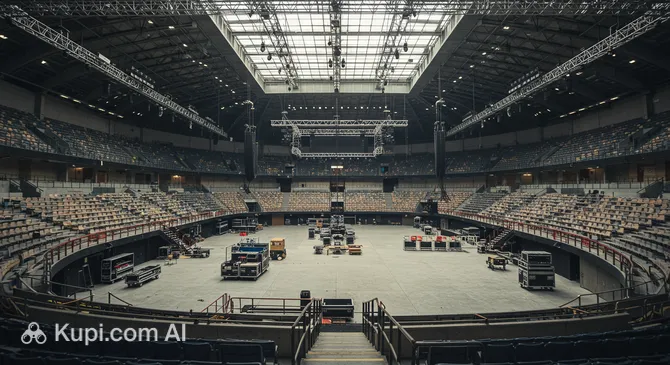
Madrid Arena. Illustration.
Source: Kupi.com AI

Traveler photos:

Attending an event at Madrid Arena can be a fantastic addition to your trip. If you are planning a visit, it's worth checking the event calendar in advance—your trip might coincide with a concert by your favorite artist or an exciting sports match, providing you with unforgettable memories.

Contacts

For detailed information about upcoming events, ticket availability, or event management at Madrid Arena, it is recommended to reach out through official channels. All matters are managed by the municipal company Madrid Destino.

How to contactContact
AddressAv. de Felipe II, s/n, Salamanca, 28009 Madrid, Spain
Phone number+34 914 44 99 49
Websitewww.movistararena.es

What to Do

The main reason to visit Madrid Arena is, of course, the events held here. The venue is famous for its rich and diverse calendar. Visitors can attend world-class sports competitions, including basketball, tennis, and boxing, as well as witness grand concerts by famous performers. Additionally, Madrid Arena regularly hosts large-scale exhibitions, fairs, and cultural festivals, making it a hub for a wide range of audiences. The atmosphere of the modern complex and the scale of the events give guests unforgettable impressions.

In addition to the event itself, a visit to the arena offers other leisure opportunities. The complex is located within the vast Casa de Campo park, which is Madrid's largest green space. Before or after a concert or match, you can take a pleasant walk through the park's scenic paths and enjoy the nature and fresh air. Casa de Campo also houses other popular recreational spots, such as the Madrid Zoo Aquarium and the Amusement Park, making it easy to combine several activities into one day.

Getting There

Getting to Madrid Arena is quite simple, as it is conveniently located in the famous Casa de Campo park, in the western part of Madrid. Thanks to an extensive public transport system, the journey to the complex won't take long. Guests can use the metro, buses, or suburban trains, making the arena easily accessible from anywhere in the city.

One of the most convenient ways is the Madrid Metro. The nearest stations to the arena are Alto de Extremadura (Line 6) and Puerta del Ángel (Line 6), which are a 10–15 minute walk from the entrance. You can also travel to the major transport hub Príncipe Pío (Lines 6, 10, and R), where the metro, buses, and suburban trains (Cercanías) meet. From there, a stroll through the park takes about 15 minutes.

Numerous bus routes also pass close to Madrid Arena. For example, bus No. 31 departs from Plaza Mayor and will drop you off almost right at the site. Additionally, routes No. 33, 39, and 65 stop nearby. This is an excellent option for those who want to enjoy city views on their way to an event.

If you prefer comfort, you can always use taxi services or arrive by private car. A trip from the city center takes about 15–20 minutes, depending on traffic. Parking spaces are available near the arena, but keep in mind that finding a spot can be difficult during major concerts and sports matches, and traffic jams are possible near the complex.

Nearest city: Madrid

History & Facts

The history of Madrid Arena is inextricably linked with the ambitious Olympic aspirations of the Spanish capital. The complex was built in 2002 in Casa de Campo park as part of Madrid's bid to host the Olympic Games. The project was designed by the renowned architectural studio Cano Lasso, which created the arena's futuristic look. It was originally conceived as one of the flagship venues to demonstrate the city's readiness to host high-level international competitions.

Interestingly, this modern structure rose on the site of a dilapidated rock-climbing wall, which was radically rebuilt in record time. Madrid Arena was given a classic circular shape, a three-tier stand structure, and an impressive dome that became its signature feature. This multi-functional complex was designed as a versatile venue capable of transforming for various sports, from basketball and tennis to boxing and handball.

Despite the fact that Madrid's Olympic bid was unsuccessful, Madrid Arena has not lost its significance. On the contrary, it quickly became one of the city's main centers for sports and culture. Today, it hosts not only major sports tournaments but also concerts by global stars, exhibitions, and all kinds of shows, making the arena an important part of the Spanish capital's modern infrastructure.

Time Needed

The duration of a visit to Madrid Arena depends directly on the type of event you are attending. Generally, for a standard concert or sports match, you should allow 2 to 4 hours. This time includes not only the show or competition itself but also entering the complex, finding your seats, and exiting after the event.

If you plan to attend a larger-scale event, such as an exhibition or festival, you may need significantly more time. In such cases, you can easily allocate half a day to browse the exhibits or participate in various activities. In any case, it is recommended to check the schedule in advance and arrive a bit early. This will allow you to go through security smoothly, find the right section, and take your seats without missing the start of the action.

Working Hours

Madrid Arena does not have standard opening hours, as it functions as a venue for specific events. The complex is open to visitors year-round, but its schedule depends entirely on the event calendar—concerts, sports matches, or exhibitions. Typically, doors open for spectators 1.5–2 hours before the start of the event. This time allows guests to go through security, find their seats, and get oriented without rushing.

To find out the exact start time of the event you are interested in and plan your visit, it is highly recommended to check the official schedule on the Madrid Arena website or on the websites of organizers and ticket operators. It is best to purchase tickets for popular concerts and major sports competitions in advance, as they can sell out quickly. Pre-booking is the best way to guarantee your spot at an anticipated show.

DayOpening hours
Monday9:00 – 14:00, 3:00 – 18:00
Tuesday9:00 – 14:00, 3:00 – 18:00
Wednesday9:00 – 14:00, 3:00 – 18:00
Thursday9:00 – 14:00, 3:00 – 18:00
Friday9:00 – 15:00
SaturdayClosed
SundayClosed

Nearby

Visiting such an iconic venue as Madrid Arena is a highlight in itself. However, to make your trip to Madrid truly complete, it’s worth taking some time to explore the surrounding areas. A walk through the nearby neighborhoods will allow you to better feel the city's atmosphere and discover cozy spots and interesting places hidden from most tourists.

Combining an event at the arena with a small self-guided tour is a great way to diversify your leisure time. Whether it’s dinner at an authentic restaurant before a concert or visiting the famous park after a sports match, exploring nearby attractions will enrich your visit to the Spanish capital. Below is a list of interesting places located nearby.

NameDistance
La Taberna de Peñalver1.1 km
Bel Mondo1.1 km
Crystal Palace1.4 km
National Archaeological Museum1.4 km
Cibeles Fountain1.9 km
PezVerde Aquarium2 km
Prado National Museum2.1 km

Have you reached the end of the page?

So the route has been studied inside and out