Support

Royal Palace of Madrid

About

The Royal Palace of Madrid (Palacio Real de Madrid), also known as the Orient Palace, is one of the most impressive landmarks in the capital of Spain. As the official residence of the Spanish monarchs, it is striking in its scale and luxury, making it one of the largest functioning royal palaces in Europe. Visiting this grand complex is an opportunity to touch the history and greatness of the Spanish crown in the heart of Madrid.
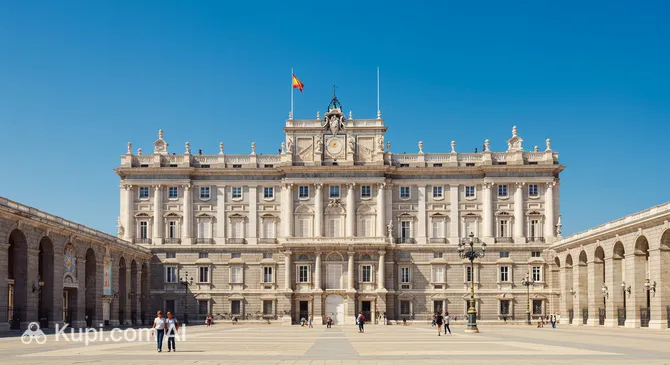
Royal Palace of Madrid. Illustration.
Source: Kupi.com AI

Traveler photos:

The palace is a magnificent example of architecture, harmoniously blending Baroque, Rococo, and Neoclassical styles. It is located in the western part of the city on the picturesque Plaza de Oriente. The building has a strict square shape with a spacious inner courtyard, accessible through the majestic Prince's Gate. Each facade and interior of the palace is richly decorated, reflecting the tastes and eras of different rulers.

Despite its official status, the royal family does not reside in the palace permanently. Today, the Palacio Real de Madrid is used primarily for state ceremonies and official receptions. For tourists, a significant portion of its halls is open, where one can see priceless collections of artwork, antique furniture, tapestries, and unique weapons in the Royal Armoury. It is not just a palace, but a true museum housing the treasures of Spanish history.

Contacts

To plan your visit to the Royal Palace of Madrid and obtain the most up-to-date information on opening hours, special events, and ticket prices, it is recommended to consult official sources. All necessary visitor information is available on the official website of the National Heritage of Spain.

Below are the main contact details for the palace.

How to contactContact
AddressCentro, 28071 Madrid, Spain
Phone number+34 914 54 87 00
Websitewww.patrimonionacional.es

What to Do

Visiting the Royal Palace of Madrid is a unique opportunity to immerse yourself in the grandeur of the Spanish monarchy. Two floors are open for viewing, preserving luxurious interiors and original furnishings that allow you to feel the spirit of 18th-century royal life. The tour will take you through a suite of more than 50 rooms, each of which is stunning in its splendor. You will see valuable works of art, including frescoes by famous artists such as Tiepolo, as well as exquisite furniture, antique clocks, tapestries, and unique porcelain from the royal collection.

During your visit, special attention should be paid to the most significant rooms of the palace. Among them is the majestic Throne Room (Salón del Trono) with a ceiling painted by Tiepolo, and the magnificent Gasparini Room (Salón de Gasparini), which is considered one of the most beautiful. The Mirror Hall, the Royal Chapel, and even the historical Royal Kitchen are also open to visitors. Equally impressive is the Royal Armoury (Real Armería), which houses one of the most significant collections of armor and weapons in the world.

In addition to touring the inner chambers, it is worth setting aside time to walk through the surrounding grounds. Nearby are other important attractions that will perfectly complement your visit. Directly opposite, on the Plaza de la Armería, is the Cathedral of Santa María la Real de la Almudena. Also nearby, you can visit the Royal Monastery of La Encarnación and stroll through the picturesque Sabatini Gardens and Campo del Moro, which offer magnificent views of the palace's western facade.

Getting There

Thanks to its location in the heart of Madrid, getting to the Royal Palace is very easy. It is located at Calle de Bailén, s/n, making it easily accessible for tourists from anywhere in the city. Its central position allows you to combine a visit to the palace with other iconic sites in the Spanish capital.

The most convenient and fastest way to reach the palace is by public transport. Madrid has an excellent metro network, and the nearest station to the attraction is Ópera, served by Line 2 (red) and Line 5 (green). It's a pleasant five-minute walk from the metro exit to the palace. You can also take city buses; routes 3, 25, 39, 148, and others stop nearby.

If you are staying in the city center, walking is a wonderful alternative. The route to the palace can be a mini-tour through historical streets. Additionally, you can always use taxis or ride-hailing services, which is especially convenient if you are traveling with family or are short on time. However, it is worth noting that the palace does not have its own parking, so arriving by private car might not be the best option.

Nearest city: Madrid

History & Facts

The history of the Royal Palace of Madrid dates back to the Middle Ages, when a Moorish fortress built by the emirs of Cordoba and Toledo stood on this site. Later, the Old Alcázar of the Habsburgs was built here, serving as the residence of Spanish monarchs. The fate of this building ended tragically on Christmas night in 1734, when a terrible fire completely destroyed it, leaving only ashes and opening a new chapter in the history of this iconic location.

Following the devastating fire, King Philip V, the first representative of the Bourbon dynasty on the Spanish throne, decided not to rebuild the old fortress. Inspired by the splendor of the Palace of Versailles, built by order of his grandfather, King Louis XIV of France, he envisioned building a new, even more grand palace in Madrid. This ambitious project was intended to symbolize the power and greatness of the new dynasty in Spain. Construction began in 1738 under the guidance of talented Italian architects, which defined its future appearance.

Italian masters undertook the realization of this grand vision. The initial project was developed by Filippo Juvarra, and after his death, the work was continued by his student, Giovanni Battista Sacchetti. The main construction work was completed by 1751, though the final decoration of the interiors and facades continued for much longer. The first monarch to move into the new palace in 1764 was Charles III. It was during his reign that the architect Francesco Sabatini, another outstanding Italian, completed the southeast wing of the building and designed the famous Grand Staircase, which became one of the masterpieces of the palace complex.

Time Needed

For a full experience of the Royal Palace of Madrid, it is recommended to plan a visit lasting 2 to 3 hours. This time is usually sufficient to explore the main state rooms without rushing, including the Throne Room and the Gasparini Room, as well as to visit the Royal Armoury and the Royal Pharmacy. Guided tours that cover the most important rooms of the palace also typically last about 2 hours.

If you want to dive deeper into history and art, examine the details of the rich interiors, or visit temporary exhibitions, you should allow more than 3 hours for your visit. You should also consider that other significant Madrid attractions are located near the palace, such as the Almudena Cathedral, the Sabatini Gardens, and Campo del Moro. If you plan to include these in your itinerary, visiting the entire palace complex and the surrounding grounds may take half a day or even longer.

Working Hours

The Royal Palace of Madrid is open to visitors year-round, but its schedule may change. Opening hours depend on the season and may be adjusted due to official state events, as the palace is an active residence of the Spanish monarchs. Before planning your visit, it is strongly recommended to check the current opening times on the official website of the National Heritage of Spain.

The adult entrance fee is 14 euros, for children aged 5 to 16 and students up to 25, it is 7 euros, and children under 5 enter for free. To avoid long lines, especially during the peak tourist season, it is recommended to purchase tickets in advance online. You should also note the possibility of free admission, which is available for EU and Latin American citizens from Monday to Thursday during evening hours. All detailed information on prices, discounts, and possible schedule changes should be verified on the official website before your trip to Madrid.

DayOpening hours
Monday10:00 – 18:00
Tuesday10:00 – 18:00
Wednesday10:00 – 18:00
Thursday10:00 – 18:00
Friday10:00 – 18:00
Saturday10:00 – 18:00
Sunday10:00 – 15:00

Nearby

A visit to the Royal Palace is just the beginning of your acquaintance with the rich historical center of Madrid. Located in the heart of the capital, the palace is surrounded by many other iconic sites within walking distance. Strolling through the surrounding area will allow you to immerse yourself deeper into the city's atmosphere, discover new architectural masterpieces, and feel the rhythm of life in Madrid.

Exploring nearby attractions will not only enrich your experience but also help you create a more complete and interesting itinerary through Madrid. From grand cathedrals and lively squares to authentic markets — all the most interesting sites are close by. Below is a list of places worth visiting after your palace tour.

NameDistance
San Miguel Market0.5 km
Plaza Mayor0.6 km
Temple of Debod0.7 km
Rosi La Loca1 km
Inclán Brutal Bar1.1 km
Calle 365 Madrid1.3 km
Metropolis Building1.4 km

Have you reached the end of the page?

So the route has been studied inside and out