Support

Baños del Alcázar Califal

About

An immersion into the atmosphere of the medieval Orient begins in the heart of the ancient city of Cordoba, where the legendary Caliphate Baths are hidden beneath the ground. This impressive archaeological complex, dating back to the 10th century, was once part of the Moorish Alcázar. Today, it is a unique museum that allows you to experience the culture and daily life of the Caliphate era, when Spain was a center of enlightenment and architectural innovation.
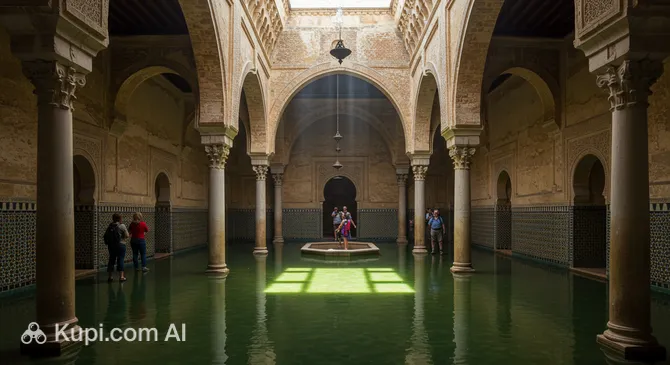
Caliphal Baths
Caliphal Baths. Иллюстрация. Источник: Kupi.com AI

The Caliphate Baths of the Alcázar (Baños del Alcázar Califal) represent a rare surviving example of the hammams that once numbered in the hundreds during the city's peak. Walking through this underground labyrinth, you will see the classic layout of Arabic baths: cold, warm, and hot rooms. The interior is given special elegance by horseshoe arches and slender marble columns characteristic of the Andalusian style.

One of the most recognizable features of the complex is the star-shaped openings in the vaulted ceilings. They not only created soft, mystical lighting but also served as a sophisticated ventilation system. Here, you can also see the remains of the ancient underfloor heating system, which ensured a comfortable temperature for the resting caliphs and their retinue, turning the bathing process into a true ritual of luxury and peace.

Contacts

For more information or to book group tours, you can use the official contact details of the archaeological complex.

How to contactContact
AddressPl. Campo Santo de los Mártires, s/n, Centro, 14004 Córdoba, Spain
Phone+34 608 15 88 93
Websitebanosdelalcazarcalifal.cordoba.es

What to Do

A visit to the Caliphate Baths is a sensory journey into the past. Begin your exploration by watching the multimedia presentation at the entrance, which clearly explains how the various halls functioned and the role the baths played in the social life of Muslim Cordoba. This will help you better navigate the space and understand the purpose of each room.

The main pleasure here is walking through the restored halls. Be sure to look up to appreciate the beauty of the vaulted ceilings: rays of light filtering through the eight-pointed star-shaped openings create a unique play of shadows on the ancient walls. Notice the marble capitals and arches—their elegance is a testament to the high level of craftsmanship of 10th-century artisans.

Engineering enthusiasts will find it interesting to study the remains of the hypocaust system—an ancient method of heating floors and walls. Imagine hot air circulating through ceramic pipes, turning these stone halls into cozy steam rooms. After exploring the underground rooms, it is pleasant to stroll through the Campo Santo de los Mártires square, breathing in the scent of orange trees, which provides a harmonious end to your cultural excursion.

Getting There

Reaching this historical monument is easy, as it is located in the heart of the tourist area, right across from the famous Alcázar of the Christian Monarchs. If you are staying in the historic center, the best way to get there is on foot. From the legendary Mosque-Cathedral, the walk takes no more than 10–15 minutes through picturesque narrow streets.

For those who prefer public transport, bus lines C1, C2, or N2 are suitable. You should get off at the "Alcázar" or "Campo Santo de los Mártires" stop. The entrance to the baths is located below ground level; a convenient ramp leads down to it directly from the square, which is surrounded by fragrant orange trees.

If you plan to arrive by car, keep in mind that traffic in the city center is restricted, and parking spaces are difficult to find. It is recommended to leave your car in one of the municipal parking lots, such as Parking Alcázar, and walk the rest of the way, enjoying the atmosphere of the ancient city.

Ближайший город: Cordoba

History & Facts

The history of this site is rooted in the golden age of the Caliphate of Cordoba. It is believed that the baths were built in the 10th century during the reign of Caliph Al-Hakam II or his predecessor Abd ar-Rahman III. At that time, they were adjacent to the majestic Umayyad palace and were considered some of the most luxurious in a city that boasted around 600 such establishments.

In Moorish culture, hammams were of immense importance. They were not just places for hygiene but also centers for ritual ablutions required before prayer, as well as vital venues for social gatherings and political discussions. The walls of the complex, made of massive stone blocks, still hold traces of the former greatness and refined taste of the Andalusian rulers.

The fate of the complex changed in the 14th century. In 1328, during the reign of the Christian King Alfonso XI, the baths were partially destroyed and intentionally buried. This occurred during the large-scale construction of the new Alcázar. For centuries, this unique architectural monument remained hidden underground, becoming a legend buried beneath the city's cobblestones.

The monument's rebirth only happened in 1903, when workers accidentally stumbled upon it, though full-scale research began much later. Only between 1961 and 1964 did Cordovan archaeologists conduct extensive excavations, allowing the world to see the magnificent halls, marble columns, and the ingenious systems of ancient engineers once again.

Time Needed

Exploring the complex won't take much time, making it an ideal stop on a busy itinerary through the city center. Visitors usually need about 30 to 45 minutes to leisurely walk through all the halls and watch the introductory video presentation that provides the historical context.

If you enjoy studying architectural elements in detail, photographing the play of light through the star-shaped skylights, or want to spend more time at the information boards, we recommend allocating 1 hour for your visit. This is more than enough time for a full immersion into the atmosphere of the ancient hammam without any rush.

Working Hours

When planning your visit, it is important to take the complex's schedule into account, as visiting hours vary depending on the day of the week. Please note that Monday is a day off, when the museum is closed to the public.

On other days, the baths operate according to the following schedule:

  • Tuesday – Friday: 08:15 – 20:15
  • Saturday: 09:30 – 17:30
  • Sunday: 08:15 – 14:15
Keep in mind that opening hours may change on public holidays, so it is recommended to arrive no later than half an hour before closing.

DayWorking hours
ПонедельникЗакрыто
Вторник8:15 – 20:15
Среда8:15 – 20:15
Четверг8:15 – 20:15
Пятница8:15 – 20:15
Суббота9:30 – 17:30
Воскресенье8:15 – 14:15

Nearby

The location of the complex in the city's historic core allows tourists to create a rich itinerary without spending much time traveling. A walk through the surrounding area will help you experience the centuries-old history of this place, where Muslim, Christian, and Jewish traditions have merged into a single architectural ensemble.

NameDistance
Royal Stables of Córdoba0.1 km
Alcázar of the Christian Monarchs0.2 km
Córdoba Synagogue0.2 km
Jewish Quarter of Córdoba0.2 km
Mosque–Cathedral of Córdoba0.3 km
Patios of Córdoba0.3 km
Puerta del Puente0.3 km

Reached the end of the page?

That means the route is fully explored