Support

Roman Temple

About

In the very heart of Cordoba, next to the City Hall, lie the impressive ruins of the Roman Temple—one of the city's most valuable and ancient architectural monuments. This ancient structure, built in the 1st century AD, is a striking testament to Spain's rich Roman past and transports visitors back thousands of years.
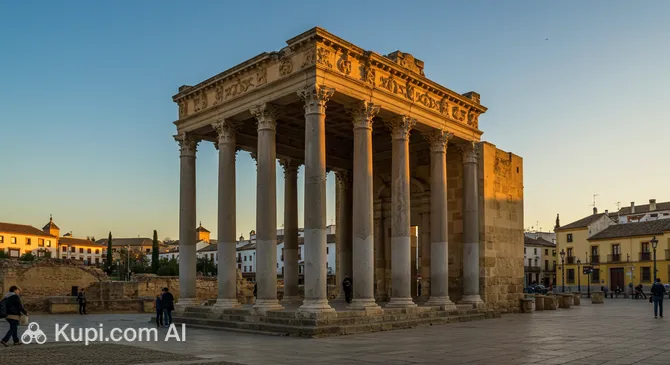
Roman Temple. Illustration.
Source: Kupi.com AI

Traveler photos:

A massive podium made of large hewn stones and several majestic columns crafted in the elegant Corinthian style have been preserved to this day. At one time, the entire temple was faced with marble, emphasizing its high status and importance to the city during the Roman period. Historians suggest it was dedicated to the imperial cult, which was a common practice in the provinces of the Roman Empire.

The Roman Temple is one of three key Roman-era monuments preserved in the city, along with the famous Roman Bridge and the amphitheater. Today, these ruins are not just an archaeological site but an atmospheric place where you can touch ancient history and imagine the grandeur of ancient Cordoba. It is a must-visit spot for anyone interested in history and architecture.

Contacts

The Roman Temple in Cordoba is an open-air archaeological site, so it does not have its own website or contact phone number. For the most up-to-date information on access hours or organized tours, it is recommended to contact the city's tourist offices. Finding the ruins is easy, as they are located in the center, right next to the City Hall building.

How to contactContact
AddressC. Capitulares, 1, Centro, 14002 Córdoba, Spain
Phone number+34 957 46 97 07
Websitewww.turismodecordoba.org

What to Do

Visiting the Roman Temple in Cordoba is a unique opportunity to experience ancient history without leaving the modern city center. The main activity here is contemplation and exploration of the ruins. You can take a leisurely stroll around the majestic podium where the sanctuary once stood and examine the surviving Corinthian columns. This place is perfect for taking impressive photos against the backdrop of ancient stones that serve as silent witnesses to the city's Roman past.

The temple makes a particularly strong impression in the evening. At twilight, special lighting is turned on, skillfully highlighting the monumental forms of the ruins and creating a mystical and solemn atmosphere. This play of light and shadow allows for a fresh perspective on the ancient architecture and a sense of its grandeur.

A visit to the temple can easily be included in a walking route through the historic center of Cordoba. The City Hall and the picturesque streets of the old town are in the immediate vicinity. For those who want to delve deeper into the region's history, it is recommended to combine a visit to the temple with a trip to the Archaeological Museum of Cordoba. There, you can see artifacts found during the excavations and gain a more complete understanding of city life during the Roman era and other periods of its rich history.

Getting There

The Roman Temple is conveniently located in the heart of Cordoba, making it easily accessible for tourists. You will find it at Plaza de las Tendillas, right next to the City Hall. If you are staying in the historic city center, the ruins of the ancient temple are within easy walking distance, allowing you to enjoy the atmosphere of the Andalusian streets along the way. A walk from other key attractions, such as the famous Mezquita or the Alcázar, will also not take much time.

For those who prefer public transport, the most convenient way to reach the temple is by bus. The nearest stop is called "Plaza de las Tendillas". Many city routes stop here, so you can easily get there from any district of Cordoba. This is an excellent option if you want to save time and energy for visiting other points of interest.

If you are traveling by car, keep in mind that private vehicle access to the historic part of the city is limited. It is recommended to leave your car in one of the parking lots on the edge of the center and continue on foot. Additionally, taxis or rental bikes are convenient for getting around the city, allowing you to reach your destination quickly and comfortably. Thanks to its central location, the journey to the Roman Temple will be simple and pleasant regardless of your choice.

Nearest city: Cordoba

History & Facts

The Roman Temple in Cordoba is more than just ruins; it is an impressive testament to the city's former greatness during the Roman Empire. Its construction began in the 1st century AD, presumably during the reign of Emperor Claudius, and lasted for about 40 years. The monumentality of the structure is highlighted by its material—the temple was built entirely of marble, which was a great luxury at the time. Most likely, it was dedicated to the imperial cult, confirming its high status. By the 2nd century, the temple underwent reconstruction, reflecting its enduring importance to Roman Corduba.

One of the most intriguing details of the temple's history is its complete disappearance for many centuries. After the fall of the Roman Empire, the grand structure gradually fell into decay, was dismantled, and eventually hidden under later buildings. The world might never have known of its existence if not for chance. The temple was rediscovered only in 1950 during construction work to expand the City Hall. This discovery became a true archaeological sensation for the city and all of Spain.

Today, visitors can see the result of painstaking archaeological work. Eleven majestic columns with Corinthian capitals and the high podium on which the temple once stood have been restored. These imposing remains, rising against the backdrop of modern buildings, allow one to imagine the scale and beauty of the original structure. The Roman Temple serves as vivid proof that Cordoba was not just an ordinary city, but the thriving capital of the Roman province of Baetica, one of the most important centers of the empire on the Iberian Peninsula.

Time Needed

A visit to the Roman Temple in Cordoba usually doesn't take much time. Since mainly the impressive columns and foundation of the ancient structure remain, 20–30 minutes is sufficient for most tourists to see the ruins and take memorable photos. This is an ideal option if you have a tight schedule and want to quickly experience the city's ancient history.

However, to get a fuller sense of the site's significance, you should plan for more time. The temple is located in the historic center, and visiting it is easily combined with a leisurely walk through the surrounding streets. If you are interested in archaeology, it is also recommended to stop by the Archaeological Museum of Cordoba, where finds from the temple's excavation site are displayed. In this case, it is better to set aside 1–2 hours for a route that includes both the ruins and the museum.

Working Hours

The Roman Temple in Cordoba is an open-air attraction, so it does not have strict opening hours. You can admire the majestic ruins at any time of day, making it easily accessible to all travelers. Since it is a public space, admission is free and does not require advance booking or ticket purchases.

Although the temple is accessible 24/7, for the best view, it is recommended to visit during daylight hours to see the details of the ancient architecture. The site takes on a special charm in the evening when the lighting comes on, creating a truly magical atmosphere. This is the perfect time for impressive photography.

Nearby

After admiring the majestic columns of the Roman Temple, don't be in a hurry to leave the area. Cordoba is a city that reveals itself gradually, and its historic center is perfect for leisurely strolls. Exploring the surroundings will allow you to dive deeper into the atmosphere of Andalusian life, where ancient ruins sit alongside lively squares, cozy taverns, and picturesque streets.

The temple's location is very advantageous: many iconic sites are within walking distance. This is a great opportunity to plan a short walking route and discover other treasures of Cordoba located just nearby.

NameDistance
Jazz Cafe0.1 km
Plaza de la Corredera0.2 km
Taberna La Montillana0.3 km
Viana Palace0.5 km
Calleja de las Flores0.6 km
Calleja del Pañuelo0.6 km
Patio de la Judería Restaurant0.6 km

Have you reached the end of the page?

So the route has been studied inside and out