Support

Basilica of the Most Holy Trinity

About

The Basilica of the Most Holy Trinity is one of the most significant and modern Catholic churches, located in the city of Fátima, Portugal. It is a key part of the famous architectural complex of the Sanctuary of Our Lady of Fátima, which attracts millions of pilgrims and tourists from all over the world every year. The church was built in 2007 to accommodate the massive number of believers that the old basilica could no longer hold.

The temple impresses with its unique architectural style, combining Neo-Byzantine motifs with elements of modernism. The project was designed by the Greek architect Alexandros Tombazis. The building, 20 meters high, has a circular shape and is decorated with elements inspired by Orthodox Byzantine architecture, which creates a special atmosphere. Thirteen bronze doors lead inside, symbolizing Jesus and the apostles, and the walls are inscribed with Bible quotes in 23 languages.
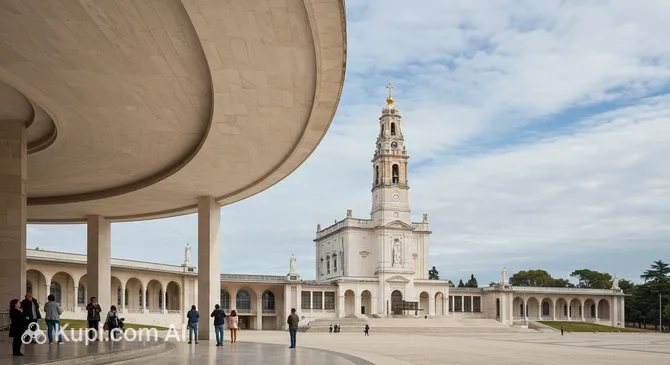
Basilica of the Most Holy Trinity. Illustration.
Source: Kupi.com AI

Traveler photos:

This monumental church, capable of seating about 9,000 people, is considered one of the largest Catholic churches in the world. Its interior decoration resembles a museum of sacred art, where you can see golden mosaics, artistic depictions on the main altar, and unusual crucifixes. In 2012, the church's significance was officially highlighted when the Pope granted it the honorary status of a Minor Basilica.

Contacts

The Basilica of the Most Holy Trinity is part of the larger Sanctuary of Fátima complex. For up-to-date information regarding opening hours, service schedules, or special events, it is recommended to contact the general administration of the sanctuary. The most accurate and recent data is always available on the official website.

How to contactContact
AddressAv. de Dom José Alves Correia da Silva, 2496-908 Fátima, Portugal
Phone number+351 249 539 600
Websitewww.fatima.pt

What to Do

A visit to the Basilica of the Most Holy Trinity offers guests a variety of experiences—from deeply spiritual to culturally informative. First and foremost, it is a place for prayer and solitude, where visitors can participate in religious services or simply experience the special spiritual atmosphere of this holy site. The spacious and cool halls of the basilica also serve as a wonderful place to escape the summer heat, rest, and gather your thoughts in a calm setting.

For connoisseurs of architecture and art, the basilica is of equal interest, with its decor resembling a modern museum. Visitors can freely explore the monumental interior space, studying the artworks and unusual architectural solutions that blend modern trends with Byzantine motifs. This is a wonderful opportunity to get acquainted with contemporary sacred art and appreciate the scale of the vision of the architects and artists who created this impressive temple.

Getting There

Getting to the Basilica of the Most Holy Trinity in Fátima is quite simple, especially if you are traveling from major cities in Portugal, such as Lisbon or Porto. The most popular and convenient way is by intercity bus. Companies like Rede Expressos offer regular services from Lisbon to Fátima, departing from several of the capital's bus stations, including Sete Rios and Oriente. The journey takes an average of about an hour and a half and is an excellent choice for its price-to-comfort ratio. Alternatively, renting a car can provide more flexibility in planning your itinerary.

Buses arrive at the Fátima Central Bus Station (Terminal Rodoviário de Fátima), which is within walking distance of the city's main shrine. The Basilica of the Most Holy Trinity is an integral part of the vast architectural complex of the Sanctuary of Fátima. From the bus station, you can take a leisurely walk to the basilica in about 10–15 minutes. The city itself is very compact, and most hotels and guesthouses are also nearby, so you likely won't need additional transport to get around Fátima.

Upon arriving at the Sanctuary complex, you will easily find the Basilica of the Most Holy Trinity—it is a modern circular building located on the plaza opposite the older Basilica of Our Lady of the Rosary. The entire area is designed for the convenience of pilgrims and tourists, so walking across its massive esplanade becomes a part of your journey in itself. If you have a lot of luggage or prefer not to walk, taxis are always available at the bus station and around town to quickly take you to the desired entrance of the sanctuary.

Nearest city: Fatima

History & Facts

The history of the Basilica of the Most Holy Trinity is closely intertwined with the transformation of Fátima into one of the world's most important pilgrimage centers. It all began in 1917, when three shepherd children—Lúcia, Jacinta, and Francisco—witnessed the apparitions of the Virgin Mary in a place called Cova da Iria. Since then, the quiet pastoral village began to develop rapidly, attracting millions of believers from all over the world. Over time, the older churches could no longer accommodate all the visitors, creating an urgent need for a new, more spacious building.

The decision to build was made at the beginning of the 21st century, and the first stone was laid on June 6, 2004. The project was entrusted to the renowned Greek architect Alexandros Tombazis, who created a unique modern building. Construction was completed in 2007, and the grand opening coincided with the 90th anniversary of the apparitions of Our Lady. Thus, the emergence of this monumental basilica was a response to the needs of the growing number of pilgrims and a new chapter in the sanctuary's history.

Interestingly, the Basilica of the Most Holy Trinity is not just a religious structure but a symbol of Fátima's own evolution. It demonstrates how a humble site of apparitions turned into a global spiritual center capable of receiving millions of people. The new church, designed for nearly 9,000 worshippers, complemented the historical ensemble of the sanctuary without overshadowing the old basilica, but rather harmoniously coexisting with it. This fact highlights a deep respect for history combined with a desire to keep pace with the times, creating comfortable conditions for modern pilgrims.

Time Needed

A typical visitor should set aside approximately 45 minutes to 1.5 hours to tour the Basilica of the Most Holy Trinity itself. This time will be quite enough to walk around this grand modern structure without rushing and appreciate its unique circular shape and minimalist architecture. You can examine interesting interior details, such as the golden mosaic behind the altar, the unusual crucifix, and the 13 bronze doors, as well as simply sit in silence to feel the special atmosphere of this place. If you are very pressed for time, a quick introduction to the basilica will take about 20–30 minutes.

When planning your visit, it is important to remember that the time can vary significantly depending on your interests. For example, if you wish to attend a Mass, which are regularly held in the basilica, this will add at least an hour to your visit. Furthermore, the Basilica of the Most Holy Trinity is only part of the vast architectural complex of the Sanctuary of Fátima. If you also plan to visit the older Basilica of Our Lady of the Rosary, the Chapel of the Apparitions, and walk across the monumental plaza, it is better to allocate at least 3-4 hours for a full tour of the shrines of Fátima.

Working Hours

The Basilica of the Most Holy Trinity, as part of the Sanctuary of Fátima complex, is open to visitors year-round, and entry to the grounds and the church itself is free. You can visit the basilica daily. While there may not be strict hours for tourist sightseeing, it is important to remember that this is an active church. The main events here are the religious services, which take place several times a day. For example, Masses in the Basilica of the Most Holy Trinity are usually held at 09:00, 12:30, and 15:00. It is recommended to check the current schedule, as it may change.

For a standard visit to view the architecture and interior, no advance booking or ticket purchase is required. You can freely enter the basilica during hours when services are not being held. To avoid disturbing worshippers, it is better to plan your tour between Masses. As the schedule of services and events can change, especially on religious holidays, it is highly recommended to check the latest information on the official website of the Sanctuary of Fátima before your trip.

9:00 – 19:00

Nearby

A visit to the Basilica of the Most Holy Trinity is undoubtedly a highlight, but your acquaintance with Fátima would be incomplete without exploring its surroundings. The city and its nearby areas are closely linked to the history of the apparitions and pilgrimages, and each site here complements the overall picture, allowing for a deeper immersion into the unique atmosphere of this place.

Walking around the basilica will allow you to discover other iconic sites, both religious and cultural. Many of them are within walking distance, making their exploration a convenient and pleasant addition to your visit. This is a wonderful opportunity to see more than just the main church and form a complete impression of the spiritual heart of Portugal.

NameDistance
O Benfiquista0.2 km
Wax Museum of Fátima0.3 km
Sanctuary of Our Lady of Fátima0.3 km
Chapel of the Apparitions0.3 km
Basilica of Our Lady of the Rosary of Fatima0.4 km
A Cave1 km
Hungarian Calvary (Valinhos)1.3 km

Have you reached the end of the page?

So the route has been studied inside and out