Support

Immanuel Kant's Tomb

About

Immanuel Kant's Tomb is an iconic memorial site located at the northeastern wall of the Königsberg Cathedral in Kaliningrad, Russia. This is the final resting place of the great German philosopher whose ideas had a profound impact on world thought. Initially, Immanuel Kant was buried in the professor's crypt, which adjoined the northern wall of the cathedral.
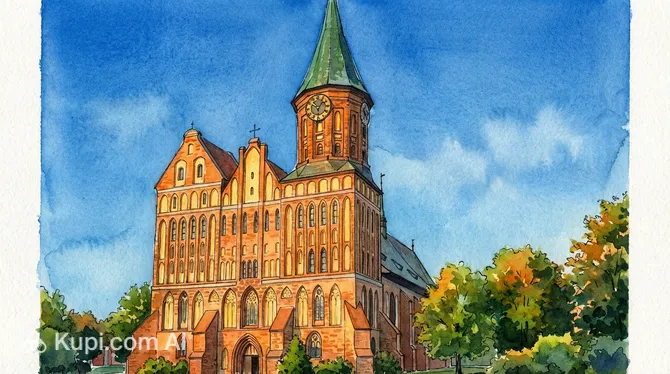
Immanuel Kant's Tomb. Illustration.
Source: Kupi.com AI

Traveler photos:

Today, Kant's Tomb is a memorial complex recognized as a cultural heritage site of federal significance. It is not just a headstone, but a carefully designed architectural structure that emphasizes the importance of the person resting here. The memorial itself consists of a tomb surrounded by a wrought-iron fence, giving the place a special sense of solemnity and importance.

For those wishing to reach the tomb itself, please note that access is limited. It opens only twice a year: on the philosopher's birthday, April 22, and on the anniversary of his death, February 12. Despite this, the memorial is always open for external viewing and consistently attracts tourists and admirers of Kant's legacy who wish to pay tribute to one of the greatest thinkers in human history.

Contacts

Since Immanuel Kant's Tomb is a memorial site, there is no dedicated contact information for it. For up-to-date information regarding visits to the Königsberg Cathedral, where the memorial is located, it is recommended to contact the cathedral administration directly.

Additional information and travel advice can also be obtained from the Kaliningrad Tourist Information Center.

How to contactContact
Addressulitsa Kanta, Kaliningrad, Kaliningradskaya oblast', Russia, 236039

What to Do

Visiting Immanuel Kant's Tomb is an opportunity to touch history and pay respects to one of humanity's greatest thinkers. The main thing visitors can do is explore the memorial complex itself, which is a significant monument. You can take a thoughtful walk around, soak in the atmosphere of the site, and, of course, take commemorative photos. Although direct access to the tomb behind the wrought-iron fence is restricted, this does not diminish the significance of the visit or the opportunity to honor the philosopher's memory.

Special attention should be paid to the architectural features of the memorial. Designed by architect Friedrich Lars in 1924, it is an interesting example of memorial art. Take a look at the construction details, the materials, and the overall composition, which reflects deep respect for Kant's personality. This site is frequently included in tour routes through Kaliningrad's historical center, highlighting its status as one of the city's key landmarks.

While at Immanuel Kant's Tomb, you will likely encounter other visitors—both tourists and locals interested in philosophy and history. This place draws people in all seasons and weather, testifying to the enduring interest in the great thinker's legacy. Here, you can spend time in reflection, feel the connection between eras, and realize the scale of Kant's influence on global culture.

Getting There

Reaching Immanuel Kant's Tomb is quite easy, as it is located in the historic center of Kaliningrad, on Kant Island, right next to the Königsberg Cathedral. If you are in the city center, one of the most pleasant ways to get there is on foot. Scenic bridges connect the island to the main part of the city, and the walk to the memorial takes very little time, allowing you to enjoy the views and the atmosphere of the old city.

If you are arriving in Kaliningrad by train, you can take public transport from the railway station to Kant Island. Numerous buses and shuttle taxis run toward the city center. You will need to get off at one of the central stops and then walk for about 10–15 minutes to the Cathedral, where the memorial is situated by the northeastern wall.

A more comfortable and faster option is to take a taxi. The car will take you directly to the Cathedral on Kant Island. This is especially convenient if you are short on time, traveling with luggage, or simply prefer to travel without transfers or waiting for public transport.

For travelers arriving by car, there are also options to reach the memorial. Several paid parking lots are located in the immediate vicinity of Kant Island. After parking your car, you can reach Immanuel Kant's Tomb and the Cathedral on foot in just a few minutes without worrying about finding a spot in the busy city center.

Nearest city: Kaliningrad

History & Facts

After Immanuel Kant's death, his remains were interred in the professor's vault, which adjoined the northern side of the Cathedral. Notably, Kant was the last person buried in this crypt. In 1809, due to its dilapidated state, the vault was demolished and replaced with an elegant walking gallery known as the Stoa Kantiana. This gallery remained until 1880, serving as a place for reflection and solitude.

The modern, well-recognized appearance of Immanuel Kant's memorial was established in 1924. It was restored at that time based on the design of the talented architect Friedrich Lars. A truly remarkable historical fact is that during the devastating British air raids on Königsberg in August 1944 and the fierce battles of April 1945—when the Cathedral itself and everything surrounding it were reduced to ruins—Kant’s tomb was the only part of the entire complex that miraculously survived in satisfactory condition.

This almost mystical survival only highlighted the significance of the site. Since August 1960, Immanuel Kant's tomb, including the headstone and the portico, has been under state protection and is officially recognized as an object of cultural heritage of federal significance. Today, this memorial is not only a pilgrimage site for philosophers and admirers of Kant's thought from around the world but also one of the main symbols of Kaliningrad and an integral part of its rich historical and cultural legacy.

Time Needed

When planning a visit to Immanuel Kant's Tomb, it is worth noting that viewing the memorial itself usually doesn't take much time. As a rule, 15–30 minutes is enough to carefully examine the architectural features, take some photos, and read any information plaques nearby. This is plenty of time to soak in the atmosphere and pay your respects to the great philosopher.

However, since Immanuel Kant's Tomb is an integral part of the Cathedral complex, many visitors choose to combine viewing the memorial with a visit to the Cathedral itself and a walk around the grounds of Kant Island. In this case, it is recommended to set aside 1 to 2 hours for a more complete exploration of this historical ensemble. This will allow you to leisurely see not only the tomb but also the interior of the Cathedral, its museums (if they are part of your plans), and enjoy the island views.

Working Hours

The area surrounding Immanuel Kant's Tomb, located at the Cathedral, is open for visiting 24/7 as it is an outdoor space. You can approach the memorial at any time convenient for you. However, please note that the tomb itself is behind a wrought-iron fence, and direct access to it is usually closed.

The gates leading to the tomb are opened for visitors only twice a year: on April 22 (the philosopher's birthday) and February 12 (the anniversary of his death). On all other days, the memorial can only be viewed from the outside. No special ticket booking or advance registration is required to view the area around the tomb. For more information regarding potential access on special days or events related to the memorial, it is recommended to check the official website of the Cathedral or contact the local Kaliningrad tourist information centers.

Open 24 hours

Nearby

Visiting Immanuel Kant's Tomb in Kaliningrad is undoubtedly a significant event for many travelers interested in history and philosophy. However, to make your visit even more rewarding and complete, it is worth exploring the attractions located in the immediate vicinity. Studying the surrounding area will allow you to dive deeper into the atmosphere of this unique place and see how Kant's legacy is woven into the fabric of the modern city.

Kant Island and its surrounding districts are rich with interesting sites that will complement your impressions of the memorial. A walk around the area will reveal new facets of Kaliningrad and provide a more comprehensive view of its cultural and historical landscape. Below is a list of some attractions located near Immanuel Kant's Tomb, including the distances to each.

NameDistance
Honey Bridge0.1 km
Königsberg Cathedral0.1 km
Fish Village0.4 km
Steindamm 990.6 km
Povaroshka0.6 km
Kaliningrad Plaza0.6 km
Museum of the World Ocean0.8 km

Have you reached the end of the page?

So the route has been studied inside and out