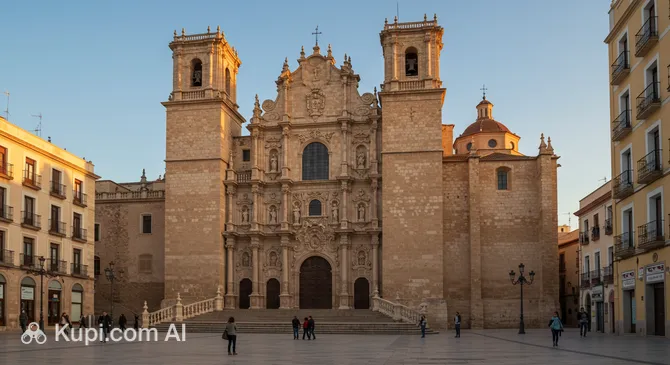
The Basilica of Santa Maria in Alicante is not just the oldest active church in the city, but a true testament to the rich and multi-layered history of Spain. Its history begins in the 14th century when the first Christian church was built on the ruins of a former mosque immediately after the city's liberation from Moorish rule. This symbolic act marked a new era for Alicante and laid the foundation for the city's future spiritual center.
The fate of the original temple was a difficult one. In the 15th century, a major fire caused significant damage. Instead of simply restoring the damaged building on the same site, the decision was made to relocate the church. The new site for construction was the very center of Alicante, where an old Muslim monastery had previously stood. This relocation and the subsequent construction of the church on a new foundation became an important stage in shaping the city's appearance.
The construction of the basilica building we see today began much later, in 1672, and spanned more than a century. During this time, the architectural appearance of the church underwent many changes, reflecting the transition of eras and styles. Initially conceived in the Gothic style, the basilica was eventually enriched with Baroque, Rococo, and Neoclassical elements. Masters from different generations, including the famous architect Jaime Bort y Meliá, contributed to its creation, giving the building a unique and eclectic character. Every element of the facade and interior tells its own story, making a visit to the basilica a true journey through time.
The Church of Santa Maria received the official status of a minor basilica relatively recently, in 2007, which emphasizes its special significance not only for Alicante but for the entire Catholic world. Today, it is not only a place of pilgrimage and prayer but also one of the city's main architectural gems, attracting tourists with its beauty and historical depth.