Support

Museum of Navarre

About

If you want to see the history of an entire region captured in stone, mosaics, and paint, then the Museum of Navarre will be a true discovery for you. Located in the historic center of Pamplona, this gallery is rightfully considered the primary guardian of the cultural code of northern Spain.

The museum occupies a majestic 16th-century building of a former hospital, where a strict Renaissance facade harmoniously exists alongside modern interiors. Here, under one roof, treasures from various eras are gathered: from prehistoric finds to avant-garde contemporary art.
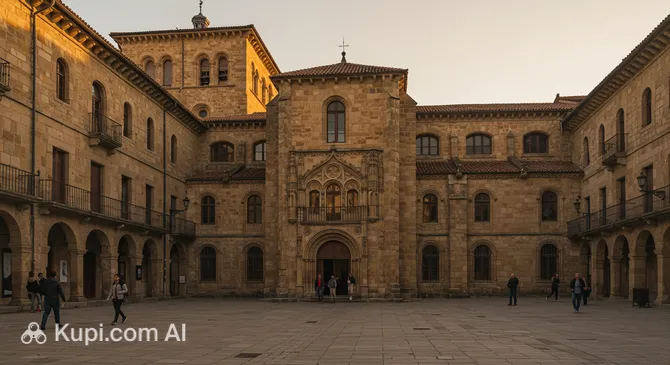
Museum of Navarre
Museum of Navarre. Иллюстрация. Источник: Kupi.com AI

The crown jewels of the collection are the exceptionally well-preserved Roman mosaics and an exquisite Islamic ivory casket found in the Monastery of Leyre. Classical painting enthusiasts come here specifically to see the Portrait of the Marquis de San Adrián, painted by the great Francisco Goya. This is a place where every exhibit—from a Paleolithic relief to a Gothic fresco—helps piece together the puzzle of Navarre's rich past.

Contacts

For visit details or to book group tours, you can use the following official contact information:

How to contactContact
AddressC. de Santo Domingo, 47, 31001 Pamplona, Navarra, Spain
Phone+34 848 42 64 92
Websitewww.navarra.es

What to Do

Visiting the museum is like an exciting journey in a "time machine." We recommend starting your tour on the ground floor, where the oldest artifacts are presented, including the unique "Abauntz Map"—one of the oldest examples of cartography in Europe, carved into stone.

As you go higher, be sure to linger in the room with the Roman mosaics. The scale and detail of the "Triumph of Bacchus" panel are staggering. No less impressive are the Romanesque capitals moved here from the old cathedral: you can spend hours examining the delicate carvings of biblical scenes and fantastic creatures.

In the fine arts galleries, your attention will surely be drawn to Goya's masterpiece—the portrait of the Marquis de San Adrián, considered one of the pinnacles of the master's portrait work. For those interested in more modern movements, the 20th–21st-century art section was updated in 2019, showcasing works by prominent Navarrese artists.

The museum has a calm and meditative atmosphere, perfect for thoughtful contemplation. Photography is permitted (without flash), so you can capture the details of ancient Gothic frescoes or the elegant forms of the Islamic casket from Leyre as a memento.

Getting There

The museum is located in the heart of the historic center at C. de Santo Domingo, 47, right at the foot of the ancient city walls. If you are already wandering through the old town, getting there is easy: a walk from the famous Plaza del Castillo or the Cathedral will take only 10–15 minutes.

For those who prefer public transport, city buses that connect the center with other districts stop nearby. If you are arriving from the airport or the train station, it is most convenient to take a taxi—the ride takes about 20 minutes depending on traffic.

Keep in mind that Pamplona's historic center is a restricted traffic zone. If you are traveling by car, it is best to leave it in one of the paid parking lots (such as the Ciudadela parking) and walk to the museum, enjoying the atmosphere of the ancient streets.

Ближайший город: Pamplona

History & Facts

The history of this cultural collection began back in 1844, when a special commission started gathering artistic and historical monuments of the region to save them from destruction. Initially, the collection was housed in a different building, but in the mid-20th century, the government decided to move it to a more spacious and significant location.

The choice fell on the building of the former Hospital of Nuestra Señora de la Misericordia, built in the 16th century. A magnificent Renaissance facade has been preserved from that time—the only example of its kind of civil architecture from that era in the city. In 1956, the museum officially opened its doors to its first visitors within these walls.

The museum acquired its modern look after a large-scale renovation between 1986 and 1990. Architects Jordi Garcés and Enric Sòria masterfully combined historical elements (such as the old church) with modern exhibition spaces. The result of their work was so impressive that Queen Sofia herself attended the grand opening of the renovated museum.

Today, it houses unique artifacts transferred from the Pamplona Cathedral and other monasteries in the region. Every detail—from the Romanesque capitals to the Gothic frescoes—tells its own chapter in the long chronicle of Navarre.

Time Needed

To explore all four floors of the museum without rushing and to soak in each era, we recommend setting aside 1.5 to 2.5 hours. This is plenty of time to carefully examine the Roman mosaics and spend a while admiring the Goya portrait.

If you are a true connoisseur of archaeology or medieval art, plan for a bit more time. The museum is very logically structured chronologically, so the tour flows smoothly and doesn't cause the "museum fatigue" typical of massive galleries.

Working Hours

The museum is open to visitors from Tuesday to Sunday; however, the schedule has specific features typical of the Spanish rhythm of life. Please note the afternoon break on weekdays and Saturdays:

  • Tuesday – Saturday: from 9:30 AM to 2:00 PM and from 5:00 PM to 7:00 PM.
  • Sunday: from 11:00 AM to 2:00 PM.
  • Monday: Closed.
DayWorking hours
ПонедельникЗакрыто
Вторник9:30 – 14:00, 5:00 – 19:00
Среда9:30 – 14:00, 5:00 – 19:00
Четверг9:30 – 14:00, 5:00 – 19:00
Пятница9:30 – 14:00, 5:00 – 19:00
Суббота9:30 – 14:00, 5:00 – 19:00
Воскресенье11:00 – 14:00

Nearby

A walk around the museum is a great way to feel the spirit of old Pamplona more deeply. The museum's location allows you to reach key historical sites that make this city unique in just a few minutes.

After exploring the exhibits, be sure to take some time to see the fortress walls or walk the route of the famous Bull Run. Below is a list of interesting places within walking distance:

NameDistance
Church of San Saturnino0.2 km
Estafeta Curve, San Fermín Bull Run0.3 km
Zumalacárregui Gate0.3 km
Vermutería RÍO0.4 km
Pamplona Cathedral0.4 km
Church of San Lorenzo0.4 km
Saint Nicholas Church0.4 km

Reached the end of the page?

That means the route is fully explored