Support

Estafeta curve. San Fermin Bull Run

About

If you are looking for the ultimate adrenaline-pumping spot in all of Europe, then the famous Estafeta Curve is exactly what you need. Located in the heart of Pamplona, this stretch of street has become legendary thanks to the annual San Fermín festival. Spain is famous for its traditions, but it is here, at the junction of Mercaderes and Estafeta streets, where the most dramatic events of the famous bull run—the encierro—unfold.
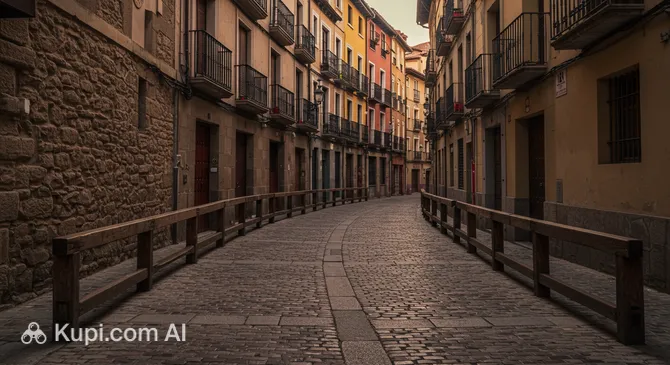
Estafeta Curve, San Fermín Bull Run
Estafeta Curve, San Fermín Bull Run. Иллюстрация. Источник: Kupi.com AI

The Estafeta Curve is not just a geographical point, but a historic site where the courage of participants is put to the test. Due to the sharp angle and slippery cobblestones, the multi-ton bulls often fail to make the turn due to inertia, crashing into the barriers, which creates incredibly dangerous and spectacular moments. For tourists, this is an opportunity to see an ancient tradition in its most intense and unpredictable form.

The encierro route itself is about 849 meters long, and this turn is considered its critical point. Here, the average speed of the running animals reaches 25 km/h, and the density of the crowd creates an atmosphere of indescribable tension. This spot attracts millions of spectators who want to see with their own eyes how man and nature meet on narrow, ancient streets.

Contacts

For those planning to visit this iconic location or book a balcony to watch the bull run, it is useful to have up-to-date contact information at hand. You can check details by phone or find the location on the map to navigate through the Old Town.

How to contactContact
AddressC. Mercaderes, 21, 31001 Pamplona, Navarra, Spain
Phone+34 638 16 94 67

What to Do

The main reason thousands of people come here is to watch the encierro. Spectators take up positions along the barriers or rent balconies in residential buildings to see from above how the furious bulls navigate the dangerous curve. This is the perfect moment to capture the full power of the running animals and the emotions of the participants trying to dodge the horns on the sharp turn.

Besides spectating, you can immerse yourself in the preparation rituals: arrive at 6:30 AM to listen to orchestral performances or watch the police and the mayor conduct an inspection of the route. To fully blend in with the crowd, be sure to wear the traditional costume: white clothes with a red neckerchief and sash. This creates a unique sense of unity with all the guests of the fiesta.

After the final rocket sounds, signaling the end of the run, the entertainment doesn't stop. You can head to the artisans' fair, attend a mass in honor of Saint Fermín, or simply enjoy some tapas in one of the many bars on Estafeta Street. In the evening, it is worth visiting the Plaza de Toros, where bullfights take place featuring the same bulls that rushed past you in the morning.

Getting There

Getting to the legendary curve is easy, as it is located right in the historic center of the city. The nearest airport—Noáin (Pamplona Airport)—is situated just 6 kilometers from the center. From there, you can take a taxi (a 15–20 minute ride) or use the regular bus services that connect the airport with city districts.

If you are traveling across the country, it is most convenient to use the AVE high-speed trains or ALSA intercity buses, which arrive at the central station. From the station, you can walk to Estafeta Street while enjoying the architecture, or take a local bus to the stop near the Plaza del Ayuntamiento.

Within the old part of the city, vehicle traffic is restricted, so the best way to get around is on foot. It is only a 5-minute walk from the City Hall Square to the curve. Keep in mind that during the San Fermín festival in July, many streets are closed, and public transport operates on a special schedule, so it is worth allowing extra time for travel.

Ближайший город: Pamplona

History & Facts

The history of this location is inextricably linked to the development of the city itself and its traditions, which root back to the Middle Ages. Originally, shepherds simply moved bulls from pastures to the arena through city streets, and local residents helped them by goading the animals. Over time, this evolved into a religious and folk festival in honor of Saint Fermín, the patron saint of Navarre, who, according to legend, saved the city from the plague in the 13th century.

The Estafeta Curve itself gained fame due to urban planning features: when the city began to be actively developed in the 19th century, the route passed through this sharp angle, creating a natural obstacle. In 1867, the authorities officially recognized the bull run (encierro) as part of the celebrations and introduced the first safety rules to organize the chaotic movement of people and animals.

World fame for Pamplona and its dangerous turn was brought by Ernest Hemingway. His novel "The Sun Also Rises" (1926) introduced the fiesta to the English-speaking world, turning a local event into a global phenomenon. Since then, the festival's history has been divided into "before" and "after" Hemingway, and the number of foreign tourists wishing to test themselves on Estafeta Street has grown hundreds of times over.

The tradition begins on July 6th with the Chupinazo—the launching of a signal rocket from the City Hall balcony. Although the start time of the run has changed over the centuries (from dawn at 6:00 AM to the current 8:00 AM), the essence remains the same: it is a tribute to history, courage, and Spanish culture, carefully preserved by the people of Pamplona from generation to generation.

Time Needed

If you plan to simply explore this place as a historical site, 30–40 minutes will be enough to take photos at the famous corner and walk along Estafeta Street. However, during the festival days (July 6 to 14), the timing changes drastically: to secure a good spot by the barriers, spectators arrive 1.5–2 hours before the start, which means around 6:30 AM.

For those who want to feel the full atmosphere of the event, it is recommended to set aside half a day. After the run itself, which lasts only a few minutes, it is worth staying for the solemn mass or visiting the Procession of the Giants. A full introduction to the San Fermín traditions usually takes several days, during which you can see both the morning runs and the evening bullfights.

Working Hours

As a public space, the street and the curve itself are accessible for walking 24/7. However, the shops and establishments located directly in this building operate on the following schedule: Monday to Wednesday and on weekends from 9:30 AM to 9:30 PM, and on Thursday and Friday until 9:00 PM.

It is important to remember that during the San Fermín festival (July 7–14), the bull run along this street starts strictly at 8:00 AM. At this time, access for regular pedestrians to the roadway is closed for safety reasons.

DayWorking hours
Понедельник9:30 – 21:30
Вторник9:30 – 21:30
Среда9:30 – 21:30
Четверг9:30 – 21:00
Пятница9:30 – 21:00
Суббота9:30 – 21:30
Воскресенье9:30 – 21:30

Nearby

A visit to the Estafeta Curve is a great reason to explore the rest of the Old Town. Pamplona is filled with historical monuments and cozy squares located just a few steps from the encierro route. A stroll through the surrounding area will allow you to better understand the spirit of Navarre and see the city outside the festive hustle and bustle.

NameDistance
Pamplona Cathedral0.2 km
Church of San Saturnino0.2 km
Zumalacárregui Gate0.3 km
Bar Gaucho0.3 km
Vermutería RÍO0.3 km
Casa Jesús Mari Bar0.3 km
Museum of Navarre0.3 km

Reached the end of the page?

That means the route is fully explored