Support

Segovia Cathedral

About

Segovia Cathedral, whose full official name is the Cathedral of the Assumption of the Virgin Mary and Saint Fructus, is one of the main architectural gems of Spain. This majestic temple, located on the Main Square at the highest point of the city, is often called the "Lady of Spanish Cathedrals" for its elegance and impressive size. Its construction began in 1525 by order of Emperor Charles V.
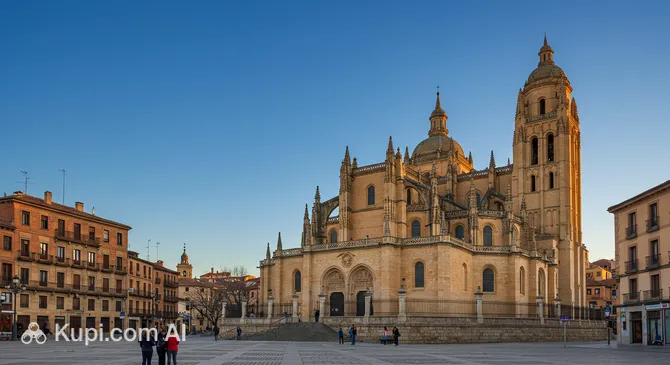
Segovia Cathedral. Illustration.
Source: Kupi.com AI

Traveler photos:

The cathedral is considered the last great Gothic cathedral built in Spain and one of the last in Europe. It is built in the Late, so-called "Flamboyant" Gothic style, even though it was founded in an era when the Renaissance already dominated architecture. This fact makes it a unique monument demonstrating commitment to the traditions of Gothic architecture. Its slender silhouette, reaching upwards, is visible from almost anywhere in the city.

The majestic appearance of the cathedral with its nearly 90-meter bell tower, numerous turrets, and delicate details is the dominant feature of the historic center of Segovia. Inside, the temple impresses with the spaciousness of its three naves, a ceiling height of 33 meters, and the splendor of ancient stained-glass windows. In addition to its religious significance, the cathedral is also a museum housing valuable works of art, Flemish tapestries, and ancient manuscripts.

Contacts

For up-to-date information on opening hours, ticket prices, religious services, or guided tours, it is recommended to contact the cathedral directly. All necessary details can also be found on the official website.

How to contactContact
AddressC. Marqués del Arco, 1, 40001 Segovia, Spain
Phone number+34 921 46 22 05
Websitecatedralsegovia.es

What to Do

Once inside Segovia Cathedral, visitors can fully appreciate its grandeur. Your attention will surely be drawn to the main nave, numerous richly decorated chapels, and exquisite stained-glass windows that fill the space with colored light. The cathedral houses an impressive collection of artworks, including paintings, sculptures, and valuable relics. Special mention should be made of the ancient gallery — a fragment preserved from the previous 12th-century cathedral — as well as the magnificent Baroque organ.

For those who want to see the city from above, it is highly recommended to climb to the observation deck of the 88-meter bell tower. From here, a breathtaking panorama of the tiled roofs of the old town of Segovia and its surrounding landscapes opens up. In addition to self-guided tours, the cathedral offers visitors themed excursions, as well as the opportunity to attend services and organ music concerts. This makes the visit interesting not only for lovers of architecture and history but also for classical music enthusiasts.

Getting There

Segovia Cathedral is located in the heart of the historic part of Segovia, on the main square — Plaza Mayor. Thanks to its central location, getting there is very easy. The cathedral is one of the city's main landmarks, and its high spire is visible from afar, serving as an excellent point of reference for tourists.

For travelers arriving from Madrid, the journey to Segovia is quick and comfortable. You can choose to travel by high-speed train, which takes about 30 minutes, or use a bus, in which case the trip will last between 1 and 1.5 hours. Upon arrival at the Segovia railway station, which is located a few kilometers from the center, you can take a city bus (for example, route No. 11) or a taxi to reach the historic part of the city.

If you are already in the old town visiting other attractions, such as the famous Aqueduct, the walk to the cathedral will take no more than 10–15 minutes. The route passes through picturesque medieval streets, which is a pleasant part of the city experience in itself.

Nearest city: Segovia

History & Facts

The history of Segovia Cathedral is a tale of rebirth from the ashes. Its predecessor, the 12th-century Cathedral of Saint Mary, was partially destroyed in 1521 during the "Revolt of the Comuneros." Following these events, it was decided not to restore the old Romanesque church but to build a new, more majestic one in its place. Thus, by order of King Charles I of Spain (also known as Holy Roman Emperor Charles V), the first stone of the future masterpiece was laid in 1525.

The project was entrusted to the outstanding architect of the time, Juan Gil de Hontañón, and after his death, the work was continued by his son, Rodrigo Gil de Hontañón. The construction became a long-term project, stretching over more than two centuries. The main work took place between 1525 and 1577, but the cathedral was finally consecrated only on July 16, 1768. Such a long construction period explains the unique blend of architectural styles seen in the cathedral's appearance.

Although construction began during the Renaissance, the cathedral was designed in the Late "Flamboyant" Gothic style, making it the last great Gothic cathedral built in Segovia and across Europe. Over the years, Renaissance and even Baroque elements were harmoniously woven into its architecture. A fascinating fact is that the cloister from the destroyed old cathedral was preserved, carefully moved, and integrated into the new building, creating a symbolic link between the past and the present.

Time Needed

When planning a visit to Segovia Cathedral, you should allow for 1–2 hours. This time is usually sufficient for a full and leisurely tour of the temple's main treasures. During this period, you can walk through the majestic main hall, look into the richly decorated chapels, and see the collection of artworks kept in the cathedral.

If you want to get the most out of your experience, you should consider other options. For example, climbing to the bell tower's observation deck, which offers stunning views of Segovia, may take additional time. Also, connoisseurs of religious art or history wishing to study every detail in depth might spend more than two hours here. Overall, for a standard visit including the main halls and the tower climb, it's best to set aside about two hours to enjoy the atmosphere of this unique place without rushing.

Working Hours

Segovia Cathedral is open to visitors year-round, but opening hours vary depending on the season. In the winter period, which lasts from November to March, the cathedral welcomes guests from 9:30 AM to 6:30 PM. In the summer season, from April to October, the opening hours are extended, and the temple is open from 9:00 AM to 9:30 PM. It is important to remember that entry for visitors usually stops 30 minutes before closing. On Sundays and religious holidays, visiting hours may be reduced due to services.

To avoid queues, especially at the height of the tourist season, it is recommended to purchase tickets online in advance. This also gives you the opportunity to book a spot for popular tours, such as the climb to the bell tower, which offers a magnificent view of the city. Since the schedule may change, we strongly advise checking the official cathedral website for up-to-date information on opening hours, possible changes, and ticket prices before your visit.

DayOpening hours
Monday9:00 – 21:30
Tuesday9:00 – 21:30
Wednesday9:00 – 21:30
Thursday9:00 – 21:30
Friday9:00 – 21:30
Saturday9:00 – 21:30
Sunday12:30 – 21:30

Nearby

A visit to Segovia Cathedral is just the beginning of exploring the rich heritage of Segovia. Located in the heart of the historic center on the Main Square, the cathedral serves as an ideal starting point for further exploration. A walk around its surroundings will allow you to immerse yourself deeper into the atmosphere of medieval Spain and discover other iconic sites just a few steps away.

Many key attractions, cozy restaurants, and museums are located within walking distance, making a stroll through the ancient streets especially pleasant. Exploring the cathedral's surroundings will enrich your experience and help you form a more complete picture of this amazing city. Below are some interesting places located nearby.

NameDistance
Episcopal Palace of Segovia0.2 km
San Andrés Gate0.2 km
Jose Maria Restaurant0.2 km
Antonio Machado House-Museum0.2 km
Mesón Don Jimeno0.4 km
Torreón de Lozoya Foundation0.4 km
Plaza de Medina del Campo0.4 km

Have you reached the end of the page?

So the route has been studied inside and out