Support

Segovia Aqueduct

About

The Aqueduct of Segovia is not just a landmark; it is a true symbol of the city of Segovia and one of the most remarkable monuments of ancient Roman engineering in all of Spain. This grand structure, which crosses the city, is a testament to the skill and ambition of the Roman Empire. For centuries, its primary task was to deliver clean water to the city from mountain springs located 17 kilometers away.

What is most striking is the construction technology. The aqueduct is built from massive granite blocks without the use of any mortar or cement. The structure is held together solely by the precise fit of the stones and ingenious engineering calculations of forces. This fact makes the aqueduct a true marvel of engineering that has stood for nearly two thousand years, surviving wars and natural disasters.
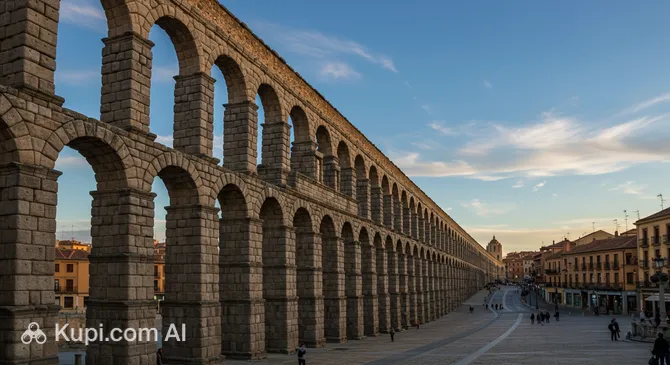
Segovia Aqueduct. Illustration.
Source: Kupi.com AI

Traveler photos:

The most impressive part of the aqueduct is the two-tiered arcade rising above Plaza del Azoguejo. It consists of 167 arches, and its maximum height reaches 28 meters, which is comparable to the height of a nine-story building. Walking under these majestic arches allows you to fully appreciate the scale and beauty of this ancient structure. Today, the Aqueduct of Segovia is a UNESCO World Heritage Site and attracts travelers from all over the world.

Contacts

The Aqueduct of Segovia is a public architectural monument, so it does not have a specific phone number or email address. It is located outdoors in the very heart of the city, at Plaza del Azoguejo, and is open for viewing at any time of day. For detailed tourist information, including maps and route advice, you can visit one of the Segovia tourist offices, the main one of which is also located on Plaza del Azoguejo.

How to contactContact
AddressPl. Azoguejo, 1, 40001 Segovia, Spain
Phone number+34 921 46 67 20
Websitewww.turismodesegovia.com

What to Do

The main thing to do at the Aqueduct of Segovia is, of course, taking a leisurely stroll along its majestic arches. Visitors can spend hours examining its architectural details, marveling at the skill of ancient builders, and taking impressive photographs. The central part of the aqueduct, located at Plaza del Azoguejo, makes a particularly strong impression. It is here that the structure reaches its maximum height, crossing the lowland and creating a truly monumental sight. At the base of the aqueduct, you can also see a replica of the famous Capitoline Wolf sculpture, the symbol of Rome.

To appreciate the scale of the aqueduct from a different perspective, it is worth climbing to one of the viewpoints. The Mirador del Postigo viewpoint offers magnificent panoramic views of the monument itself, the ancient roofs of Segovia, and the distant mountains. For those who want to dive deeper into history, there are museums nearby dedicated to Roman engineering. Additionally, you can join one of the many guided tours. An experienced guide will tell you about the structure of the aqueduct, its hidden details, and the fascinating legends that surround this symbol of Spain.

Getting There

Getting to the Aqueduct of Segovia is quite simple, especially if you are traveling from Madrid. The city of Segovia is located about 90 kilometers northwest of the capital of Spain. The fastest way is the high-speed train (AVE or AVANT), which departs from Madrid's Chamartín station and will take you to Segovia in just 30 minutes. There is also a regular bus service, which can be a more budget-friendly option, although it takes a bit longer—about an hour and a half.

Upon arrival at the Segovia-Guiomar railway station, which is located a bit away from the historical center, you can easily reach the heart of the city. City buses run directly from the station to the central squares, including the aqueduct. Alternatively, you can take a taxi. The aqueduct itself is located in the very center of Segovia, on the lively Plaza del Azoguejo. Thanks to its central location, it is easy to reach on foot from any major tourist route or nearby bus stops.

Nearest city: Segovia

History & Facts

The history of the Aqueduct of Segovia dates back to the heyday of the Roman Empire. It is believed that its construction took place in the 2nd century AD, during the reign of the Flavian dynasty. The main purpose of this grand structure was to deliver clean water to the city from the Fuenfría spring, located in the mountains about 17 kilometers away. The water flowed through a specially built stone channel into the city's cisterns for purification and further distribution, which was vital for the growing Roman settlement.

The uniqueness of the aqueduct, which continues to inspire admiration today, lies in its construction. It was built from more than 20,400 granite blocks without the use of cement, lime, or any other binding mortar. This entire monumental structure is held together solely by gravity and the incredibly precise fit of the stones. This fact turns the aqueduct into more than just a historical monument; it is a true masterpiece of engineering genius that served the city for centuries and became its primary symbol.

There is also an interesting local legend associated with the aqueduct. It says that a young girl, tired of carrying water from the mountain, made a deal with the devil: he was to build a water system in one night in exchange for her soul. The devil almost succeeded but failed to place the last stone before the rooster crowed. Thus, the girl's soul was saved, and a small flaw is said to remain in the aqueduct's structure. This story adds mystical charm to the ancient structure, which for centuries was not only a source of water but also the heart of Segovia's cultural life.

Time Needed

When planning a visit to the Aqueduct of Segovia, it is worth considering how much time you want to dedicate to this grand monument. If your goal is simply to see it and take a few photos, 20–30 minutes will be enough. However, for a more complete and meaningful encounter with this marvel of Roman engineering, it is recommended to set aside more time. For a thorough tour of the aqueduct and a walk through the adjacent squares and viewpoints, 1–2 hours is usually sufficient.

During this time, you can take a leisurely stroll along its base at Plaza del Azoguejo, feeling the full scale and power of the stone arches. You will also have the chance to climb the stairs to the viewpoints, which offer classic panoramic views of the aqueduct against the backdrop of the old city. This will allow you to take magnificent photos and examine the details of the masonry, which has held together without a single drop of mortar for almost two thousand years.

If you want to dive deeper into the atmosphere, you can extend your visit. For example, you can relax in one of the many cafes overlooking the aqueduct or use it as a starting point for exploring Segovia's historic center. Many tourists combine a tour of the aqueduct with visits to other iconic city landmarks, such as the Cathedral and the Alcázar, which can take half a day or even a full day.

Working Hours

One of the main advantages of the Aqueduct of Segovia is its accessibility. As an integral part of the city landscape, this ancient monument is open for viewing 24 hours a day, year-round. You don't need to worry about opening hours, buying tickets, or making advance reservations—access to the aqueduct is completely free.

You can visit it at any time convenient for you: early in the morning to enjoy the silence and take photos without the crowds of tourists, during the day to fully appreciate its grandeur under the bright sun, or in the evening when the clever lighting creates a particularly magical atmosphere. Since it is an open-air public space, there are no restrictions on visiting.

Open 24 hours

Nearby

The majestic Aqueduct of Segovia is just the starting point for exploring this amazing city. The true charm of Segovia reveals itself in its narrow streets that fan out from the foot of the ancient Roman giant. A walk around the surrounding area will allow you to dive deeper into history and feel the unique atmosphere of old Castile.

Just a few steps from the aqueduct, cozy squares, old churches, viewpoints with breathtaking vistas, and authentic restaurants await you. Exploring these nearby spots won't take much time but will significantly enrich your travel experience, showing the city from different and sometimes unexpected sides.

NameDistance
Casa de los Picos0.2 km
El Secreto de San Clemente0.2 km
Canaleja Viewpoint0.2 km
Torreón de Lozoya Foundation0.3 km
Asador Maribel0.3 km
Plaza de Medina del Campo0.3 km
Church of San Millán0.4 km

Have you reached the end of the page?

So the route has been studied inside and out