The Aljafería Palace is one of the most significant and impressive landmarks not only in Zaragoza but in all of Spain. This majestic fortified palace, built in the second half of the 11th century, is a unique example of Islamic architecture from the Taifa period — independent Muslim emirates. Originally known as the "Palace of Joy," it served as the residence for the rulers of the Banu Hud dynasty and epitomized the state's cultural and political flourishing. Today, it is not just a museum but a living symbol of history, recognized as a UNESCO World Heritage site as part of the "Mudejar Architecture of Aragon."
The architectural appearance of Aljafería is a wonderful tapestry of styles reflecting its rich history. Here, Moorish arches and delicate gypsum and wood carvings sit alongside Gothic and Renaissance elements added after the palace came under the rule of the Aragonese kings. The oldest part of the complex is the Troubadour Tower (Torre del Trovador), built in the 9th century as a defensive structure. Later, it was harmoniously integrated into the overall structure of the palace. Particularly noteworthy are the luxurious interiors, such as the Golden Hall with its magnificent coffered ceiling and a small mosque with a mihrab decorated with floral ornaments.
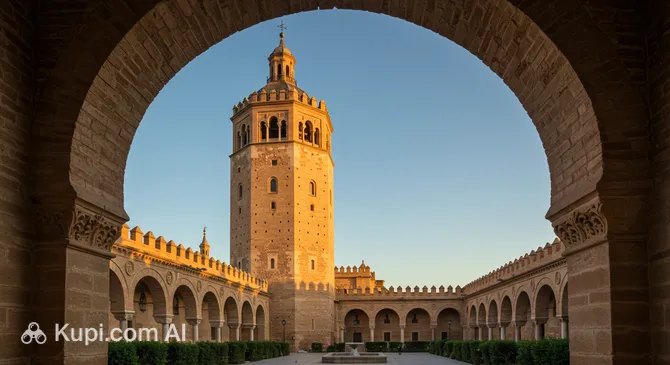
Traveler photos:
Over the centuries, the Aljafería Palace has changed many roles: it has been a residence for the Catholic Monarchs, an Inquisition building, a prison, and military barracks. This multi-layered history makes it a truly unique place. Currently, the walls of this magnificent architectural monument house the parliament of the autonomous community of Aragon — the Cortes of Aragon — emphasizing its enduring importance in the life of the region. Visiting Aljafería is an opportunity to touch a thousand years of history and see one of the most important examples of Hispano-Islamic architecture.