Support

Escuela Museo de Origami Zaragoza (EMOZ)

About

In the heart of the historic quarter that graces Zaragoza, you'll find a remarkable place—the Origami Museum School (EMOZ). This is the first cultural space in Europe and across all of Spain entirely dedicated to the ancient Japanese art of transforming a sheet of paper into an artistic masterpiece.
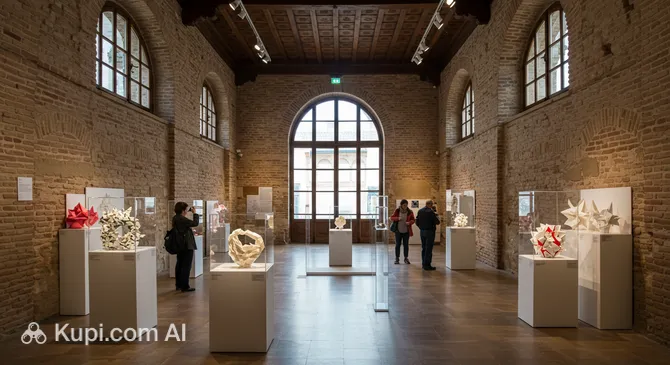
Zaragoza Origami Museum School
Zaragoza Origami Museum School. Иллюстрация. Источник: Kupi.com AI

Located on the top floor of the History Center (Centro de Historias), the museum is a unique combination of an educational center and an exhibition gallery. Here, you can see not only classic cranes but also incredible paper sculptures, large-scale geometric figures, and complex compositions created from sheets of over 50 square meters without a single cut or drop of glue.

The EMOZ exhibition is considered one of the most significant in the world, thanks to close collaboration with great origami masters. The museum was founded by a local group of enthusiasts who spent decades developing the art of papiroflexia in the region, turning their hobby into a world-class attraction.

Contacts

If you have any questions before your visit or would like to check the workshop schedule, you can contact the museum administration directly. Escuela Museo de Origami Zaragoza is always open to connecting with art lovers.

How to contactContact
AddressPl. de San Agustín, 2, Casco Antiguo, 50002 Zaragoza, Spain
Phone+34 876 03 45 69
Websitewww.emoz.es

What to Do

The main reason to visit EMOZ is to experience its incredible rotating exhibition. The collections are updated four times a year, so even regular visitors find new and surprising works every season. In the central hall, you will see how mathematical precision transforms into elegant forms of animals, fantastic creatures, and complex architectural objects.

For those who want to do more than just observe, the museum organizes workshops on weekends. Experienced instructors teach the basics of folding, proving that the art can be practiced anywhere. You might be surprised to find that even ordinary napkins, advertising flyers, or store receipts can serve as material for a masterpiece.

Beyond the hands-on activities, visitors can dive into an educational program that reveals the history of origami, from ancient Shinto rituals to modern engineering solutions. This is a place where you can witness the evolution of simple paper and find inspiration for your own creativity.

Getting There

The museum is located in the historic Casco Antiguo district on Plaza de San Agustín. It occupies the top floor of the Centro de Historias de Zaragoza—a unique cultural space housed in a building reconstructed to preserve the architectural features of an 18th-century convent church.

Thanks to its central location, the museum is easily accessible on foot from almost anywhere in the old city. If you are near Plaza del Pilar, the walk will take no more than 10–15 minutes. This is a great opportunity to enjoy the atmosphere of the ancient streets for which Zaragoza is famous.

For those who prefer public transport, several city bus routes stop near Plaza San Agustín. You can also take a taxi, which will bring you to the entrance of the History Center in just a few minutes from the city's central quarters.

Ближайший город: Zaragoza

History & Facts

The art of origami, or papiroflexia as it is often called in Spain, has deep roots in this region. Although the skill of folding paper originated in Japan as early as the 6th century and served ceremonial purposes for a long time, Zaragoza developed its own active community of masters. The first mentions of an origami group in the city date back to 1944.

The modern era of the museum's history began in 1978 with the revival of the Zaragozano de Papiroflexia group. Enthusiasts organized paper airplane festivals and even created a unique paper cloak for the famous statue of the Virgin of the Pillar in 2007. The resounding success of an international exhibition in 2009 finally confirmed that Spain was ready to open Europe’s first specialized center for this craft.

The official opening of EMOZ took place in 2013. Since then, the museum has become more than just an exhibition space; it is a true guardian of cultural heritage. World-renowned origami legends like Akira Yoshizawa and Eric Joisel participated in its creation, contributing works that form the basis of one of the finest collections in the world.

Time Needed

To take your time exploring all the halls and understanding the nuances of the exhibits, most guests need 1.5 to 2 hours. This is enough time to study both the permanent collection and the temporary exhibitions, which change frequently.

If you plan to participate in one of the workshops or study the history of technique development in different countries in detail, it’s worth setting aside a bit more time. The museum encourages thoughtful contemplation, as many details of the miniature paper sculptures are only revealed upon close inspection.

Working Hours

The museum follows a traditional Spanish schedule with a midday break. From Tuesday to Saturday, the doors are open from 10:00 AM to 2:00 PM and from 5:00 PM to 9:00 PM. On Sundays, you can explore the exhibition in the morning from 10:00 AM to 2:30 PM.

Please note that Monday is a day off. The entrance fee is only 3 euros, making a visit to the museum affordable for any traveler.

DayWorking hours
ПонедельникЗакрыто
Вторник10:00 – 14:00, 5:00 – 21:00
Среда10:00 – 14:00, 5:00 – 21:00
Четверг10:00 – 14:00, 5:00 – 21:00
Пятница10:00 – 14:00, 5:00 – 21:00
Суббота10:00 – 14:00, 5:00 – 21:00
Воскресенье10:00 – 14:30

Nearby

After immersing yourself in the world of paper art, it is worth spending some time visiting other treasures within walking distance. A stroll through the surrounding area will allow you to see the city's architectural contrasts—from Roman ruins to Baroque facades.

Below are some interesting sites nearby to complement your Zaragoza itinerary:

NameDistance
Centro de Historias0 km
Museum of the Theatre of Caesaraugusta0.6 km
Cathedral of the Savior of Zaragoza0.6 km
Plaza de los Sitios0.7 km
La Lonja Exhibition Hall0.7 km
La Flor de Lis0.7 km
Stone Bridge of Zaragoza0.8 km

Reached the end of the page?

That means the route is fully explored