Support

Turia Gardens

About

The Turia Gardens (Jardines del Turia) is one of the most impressive and largest urban parks not only in Valencia but in all of Spain. This unique green oasis emerged where the Turia River once flowed. After the devastating flood of 1957, its course was diverted south of the city to prevent future disasters. In the massive space left behind, the park was officially opened in 1986, becoming the city's true "green lungs."
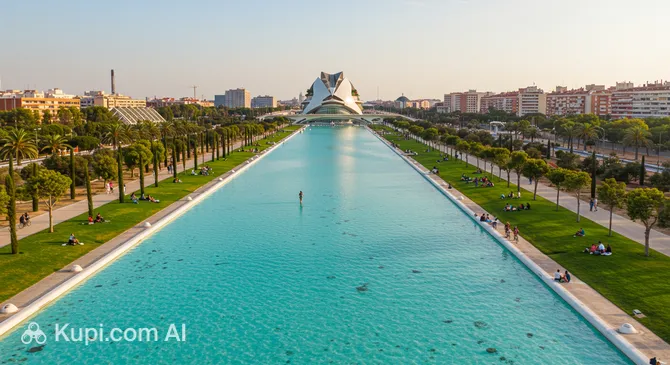
Turia Gardens. Illustration.
Source: Kupi.com AI

Traveler photos:

The park is a long green zone about 9 kilometers long, crossing almost the entire city from west to east. It begins at Cabecera Park, home to the famous Bioparc, and extends to the futuristic City of Arts and Sciences, skirting Valencia's historic center. Due to its location, the gardens serve not only as a place for relaxation but also as an important transit artery for pedestrians and cyclists, connecting different parts of the city.

Many architects and landscape designers worked on creating the various sections of the park. They managed to recreate the former river landscape by laying paths among palms, orange trees, pine groves, and fragrant rose bushes. The area is decorated with numerous fountains, ponds, sports grounds, and relaxation zones. The 18 ancient and modern bridges crossing the park's green thread and connecting its banks serve as reminders of the past.

The Turia Gardens is not just a park but a vital cultural and social space loved by both residents and visitors. Here you can find entertainment for every taste: from peaceful walks and picnics to active sports. Gulliver Park is particularly popular with children, where they can feel like Lilliputians climbing over a giant 70-meter figure of a sleeping giant.

Contacts

The Turia Gardens is a massive public park stretching for 9 kilometers across Valencia, so it does not have a single address or phone number. Entry to the park is free and possible from numerous points throughout the city, making it easily accessible from any neighborhood. You can reach the park by metro (Alameda, Turia stations) or by the many city buses with stops located all along the former riverbed.

How to contactContact
Address46003 Valencia, Spain
Websitewww.jardindelturia.com

What to Do

The Turia Gardens offer a variety of activities and entertainment for visitors of all ages, making them an ideal place to relax. It's a true paradise for active lifestyle enthusiasts: here you can go jogging, ride a bike on specially equipped paths, or simply enjoy a leisurely stroll. Families with children will appreciate the numerous playgrounds and sports areas, while those seeking romantic encounters will find secluded spots with picturesque views. Additionally, the vast green lawns are perfect for outdoor picnics.

The park is not only a green zone but also a kind of open-air museum. As you travel along its trails, you can see 18 bridges, each a witness to its era. The Gothic Puente del Real, built back in the 16th century, deserves special attention. Culture lovers can visit the famous Palau de la Música concert hall, located right in the park, which regularly hosts musical performances of various genres.

Beyond architectural and cultural sites, the Turia Gardens impress with their diverse landscapes. Here you can admire fountains and ponds, as well as explore numerous sculptures and art installations harmoniously integrated into the natural surroundings. Walking along the former riverbed, you can reach the famous Valencia Bioparc—a modern zoo. Throughout the year, the park also serves as a venue for various festivals and events, filling with music and a festive atmosphere.

Getting There

Getting to the Turia Gardens is exceptionally easy, as this vast park stretches across all of Valencia, encircling its historic center. Thanks to its 9-kilometer length, the park has numerous entrances, and your choice of route depends on which part you wish to visit—the western end where the Bioparc is located, the central section adjacent to the old town, or the eastern end home to the City of Arts and Sciences. This layout makes it accessible from almost anywhere in the city.

The most convenient way to travel is by public transport. Several metro stations are located in the immediate vicinity of the park. The Turia (Lines 1, 2) and Alameda (Lines 3, 5, 7, 9) stations are right inside the park; the latter is an architectural landmark in its own right, designed by Santiago Calatrava. You can also take many city buses that run along the streets bordering the entire park. This allows for easy access to specific sections of the gardens, whether it's Gulliver Park or the Palau de la Música.

For those who prefer active travel, the Turia Gardens is an ideal place. If you're staying in the center, the park is an easy walk away. Additionally, Valencia is a very bicycle-friendly city, and there are convenient bike lanes running the full length of the park. You can rent a bike at one of the many rental points or use the city's bike-sharing system. A taxi ride will also be quick and comfortable, especially if you're heading to one of the park's far ends, like the Bioparc or the Oceanogràfic aquarium.

Nearest city: Valencia

History & Facts

The history of the Turia Gardens is inextricably linked to a tragic event that forever changed the face of Valencia. The park owes its existence to the Turia River, which was notorious for its destructive flooding. The most catastrophic was the Great Flood of October 14, 1957, when after several days of continuous rain, the river overflowed its banks and flooded most of the city. This natural disaster caused colossal damage and claimed dozens of lives, forcing the authorities to take radical measures to prevent similar tragedies in the future.

After the disaster, a bold engineering decision was made—to completely divert the riverbed, directing it south of the city. This massive project, known as the "South Plan" (Plan Sur), left behind a vast drained space that snaked through the entire city, skirting the historic center. Initially, there were plans to build a highway in this space, but thanks to the active stance of citizens who protested under the slogan "The riverbed is ours, and we want it green!", it was decided to create a public park here.

The park's official opening took place in 1986 after many years of landscaping work. A whole group of architects and landscape designers, including the famous Santiago Calatrava, worked on its creation. They transformed the former riverbed into a unique green artery, recreating the river landscape with picturesque ponds, fountains, and diverse vegetation. Thus, in place of a natural force that once threatened the city, one of the largest and most beautiful urban parks in Spain emerged, becoming a symbol of rebirth and the harmony between nature and man.

Time Needed

When planning a visit to the Turia Gardens, you should consider its impressive size. It takes a significant amount of time to cross the entire park on foot, so the duration of your walk depends directly on your goals. For a quick overview of one of the central sections adjacent to Valencia's historic center, 1–2 hours might be enough. However, to truly feel the atmosphere of this place, stroll leisurely along its shaded paths, and relax by the fountains, it's better to set aside at least half a day.

If you want to see the whole park, from the Bioparc to the City of Arts and Sciences, a bike ride is the optimal choice. By renting a bike, you can cover all 9 kilometers in about 1.5–2 hours, making short stops for photos. A full walk along the entire route will take at least 3–4 hours one way. It's important to remember that visiting major sites located within or at the edges of the park, such as the City of Arts and Sciences or the Bioparc, will require additional time—from a few hours to a whole day for each.

Therefore, to fully experience the Turia Gardens, it is recommended to allocate half a day to a full day. This will allow you not only to enjoy the nature and beauty of the landscapes but also perhaps to visit one of the iconic landmarks. However, the beauty of this park in Spain is that it's perfect for both a quick break from the city bustle and a long, rewarding all-day walk.

Working Hours

The Turia Gardens is a public space, so access to the park itself is free and open 24/7 throughout the year. You can come here for a morning jog, have a daytime picnic, or enjoy an evening walk at any time that suits you. No tickets or advance booking are required to enter the park.

However, it's worth noting that within the vast territory of the Turia Gardens, there are individual attractions and facilities that have their own operating hours and may require a ticket. These places include, for example, the City of Arts and Sciences, the Bioparc, or the Gulliver children's park. Before visiting these specific locations, it is recommended to check the current opening hours and entry rules on their official websites.

Open 24 hours

Nearby

A walk through the Turia Gardens is just the beginning of your encounter with the rich cultural heritage of Valencia. Thanks to its central location, the park serves as a magnificent starting point for exploring the city's numerous treasures. Exploring the surrounding areas will allow you to dive deeper into the atmosphere of this amazing corner of Spain and enrich your experience.

Many iconic sights are within walking distance of the park, making it easy to combine outdoor relaxation with a cultural program. Simply cross one of the ancient bridges, and you'll find yourself in the labyrinth of narrow streets of the historic center, where every stone breathes history. Below is a list of interesting places located very close by.

NameDistance
Museum of Fine Arts of Valencia0.3 km
Valencia Museum of Natural Science0.3 km
Hortensia Herrero Art Centre0.4 km
Valencia Cathedral0.5 km
Serranos Towers0.6 km
National Museum of Ceramics and Decorative Arts González Martí0.6 km
Silk Exchange of Valencia0.8 km

Have you reached the end of the page?

So the route has been studied inside and out