Support

Oceanogràfic Valencia

About

The Oceanogràfic in Valencia (Oceanogràfic) is not just an aquarium, but Europe's largest oceanographic park, spanning 11 hectares. It is the jewel of the futuristic "City of Arts and Sciences" complex in Spain and represents a true underwater kingdom. The park's architecture impresses with its avant-garde forms, and the main building, designed by Félix Candela, resembles a water lily.

Inside the complex, a journey around the world's major ecosystems awaits you. The park is divided into several themed zones: the Mediterranean, tropical and temperate seas, the polar regions of the Arctic and Antarctic, and the Red Sea. It is home to approximately 45,000 marine animals representing over 600 different species, including sharks, beluga whales, walruses, penguins, and jellyfish. The total volume of water in the aquariums reaches 42,000 cubic meters, creating the most natural conditions possible for their life.

One of the most thrilling parts of Oceanogràfic is the 70-meter underwater tunnel, where you can watch sharks and rays swimming directly overhead. Additionally, it features one of the largest dolphinariums in the world, which regularly hosts spectacular performances. A visit to this unique destination will provide unforgettable impressions and allow you to touch the secrets of the underwater world.
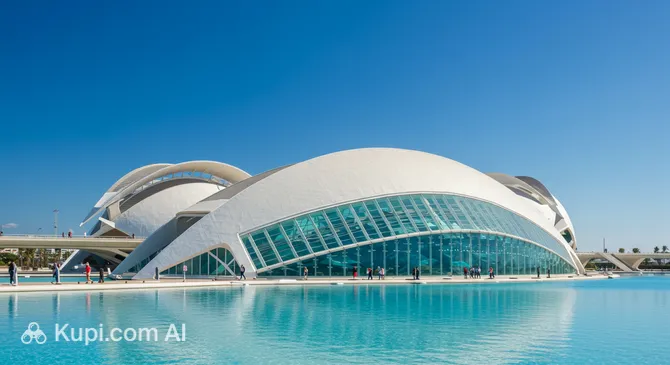
Oceanogràfic Valencia. Illustration.
Source: Kupi.com AI

Traveler photos:

Contacts

To plan your visit and check up-to-date information on opening hours, ticket prices, and special events, it is recommended to visit the official Oceanogràfic website. All the main contact details for reaching the park administration are provided below.

How to contactContact
AddressC/ d'Eduardo Primo Yúfera, 1, Quatre Carreres, 46013 València, Valencia, Spain
Phone number+34 960 47 06 47
Websitewww.oceanografic.org

What to Do

Visiting Oceanogràfic is a true round-the-world journey through the deep seas that can be completed in just one day. The complex consists of several interconnected pavilions, each recreating a unique ecosystem of the planet: from the Mediterranean and tropical seas to the polar regions of the Arctic and Antarctic. You can stroll through zones representing wetlands and peek into the world of Red Sea inhabitants. The architecture itself, almost entirely devoid of sharp angles and featuring two-level buildings that descend underwater, is part of the experience and creates a sense of total immersion in the aquatic world.

The main highlights await visitors in the giant aquariums. One of the most breathtaking parts of the park is the underwater tunnels, where you can find yourself surrounded by gracefully swimming sharks, rays, and thousands of other marine creatures. This creates an incredible effect of presence and allows you to observe their lives in their natural environment. Another must-see is one of Europe's largest dolphinariums, which regularly hosts engaging shows featuring intelligent and artistic dolphins. There is also a 4D cinema on-site, where you can watch nature films with full sensory effects.

In addition to animal observation, Oceanogràfic offers other unique experiences, such as the chance to dine in an underwater restaurant surrounded by fish. Furthermore, it is not only an entertainment venue but also an important scientific and educational center. Active work is carried out here for the rescue and rehabilitation of marine animals, along with programs for the conservation of rare species, making your visit both exciting and educational.

Getting There

Getting to Oceanogràfic in Valencia is quite simple, as it is located within the famous City of Arts and Sciences — one of the city's primary symbols. This impressive complex is situated in the dry bed of the Turia River, about 3 km from the historic center, and is easily accessible from any part of the city. The most popular ways to get there are by public transport, taxi, or for active travelers — by bicycle or a pleasant walk through the scenic Turia Park.

The most convenient and fastest way to reach Oceanogràfic by public transport is the metro. The new Line 10 (L10) will take you directly to the `Oceanogràfic` station, which is located in the immediate vicinity of the complex entrance. The trip from the city center takes about 15-20 minutes. An alternative route is to take metro lines 3 or 5 to `Alameda` station, followed by a 15-minute walk through the Turia Gardens. Additionally, many city buses serve the City of Arts and Sciences. Routes No. 95 and No. 15 stop almost right at the entrance, making them a very convenient option.

If you prefer comfort, a taxi ride from central Valencia will take only 10–15 minutes, depending on traffic. For those who want to combine the journey with sightseeing, walking or cycling through Turia Park is the ideal choice. Valencia is a very bicycle-friendly city with an extensive network of bike paths, and a ride through the green oasis of the park is a wonderful experience in itself. A walk from the central square takes about 40 minutes. For those arriving by car, there is an underground parking lot available on the complex grounds.

Nearest city: Valencia

History & Facts

The history of Oceanogràfic began on February 14, 2003, when it first opened its doors to visitors. Behind its futuristic appearance lies the work of brilliant architects — Santiago Calatrava and Félix Candela, as well as engineers led by Alberto Domingo. For Félix Candela, a master of reinforced concrete structures, this project was the final and perhaps most impressive achievement of his outstanding career.

The unique architecture of the complex has its own backstory. Félix Candela developed and first applied the concept of elegant reinforced concrete shells in the form of hyperbolic paraboloids back in the 1950s during the construction of the Los Manantiales restaurant in Mexico City. For Oceanogràfic in Valencia, he did not just repeat his idea but designed these soaring arches on a much grander scale, creating one of the most recognizable buildings in modern Spain.

The construction of the park was not without its challenges — after a brief hiatus, work resumed in 1997, eventually giving the world this masterpiece. The architectural design of Oceanogràfic consciously moves away from the traditional solemnity often found in museums. Instead, visitors are greeted by a modern and innovative space where the architecture itself becomes part of an exciting journey into the underwater world.

Time Needed

When planning a visit to the Valencia Oceanogràfic, it is worth setting aside enough time to enjoy all the wonders of this unique place without rushing. For a complete and relaxed exploration of Europe's largest aquarium, it is recommended to allocate at least 4–5 hours. Many visitors suggest dedicating half a day to the park, especially if you are traveling with children who enjoy lingering at the interactive zones. This timeframe will allow you not only to see all the themed pavilions but also to calmly observe the marine life.

The bulk of your time will be spent exploring diverse ecosystems: from the Mediterranean and tropical seas to the polar zones of the Arctic and Antarctic. Be sure to include the spectacular dolphin show in your plan, which takes place several times a day according to the schedule and is one of the park's main highlights. To get good seats, it is best to arrive at the dolphinarium stands early. Attempting to see everything in 2-3 hours will likely mean missing some interesting pavilions or the show itself, so it's better to arrive in the morning to avoid queues and fully immerse yourself in the magic of the underwater world.

Working Hours

Oceanogràfic is open year-round, but its operating hours may change depending on the season. Generally, the park opens at 10:00 AM. During the low season (typically from October to May), it closes around 6:00 PM, while during the high season (summer months) and on holidays, hours are extended to 8:00 PM, 9:00 PM, or even later. On certain holidays, such as December 24 and 31, a shortened schedule is in effect. As the schedule can vary, it is highly recommended to check the exact opening hours on the official Oceanogràfic website for your specific date.

To avoid long lines, especially during the peak tourist season, on weekends, and on public holidays, it is highly recommended to purchase tickets online in advance. This will not only save you time but also guarantee your entry to the park, as the number of visitors may be limited. When buying online, you can also find combined tickets that include access to other parts of the City of Arts and Sciences, which can help you save money.

DayOpening hours
Monday10:00 – 18:00
Tuesday10:00 – 18:00
Wednesday10:00 – 18:00
Thursday10:00 – 18:00
Friday10:00 – 18:00
Saturday10:00 – 20:00
Sunday10:00 – 18:00

Nearby

A visit to Oceanogràfic is a highlight in itself, but don't forget that it is part of the grand architectural ensemble of the City of Arts and Sciences. Exploring its surroundings will allow you to fully appreciate the scale and futuristic nature of this unique corner of Valencia. Walking through the complex grounds and seeing its other structures will enrich your experience and make your day even more memorable.

Just a few minutes' walk from Oceanogràfic, you'll find other iconic sites that deserve your attention. From interactive science exhibits to impressive opera houses and shopping centers, there is something for everyone here. Below is a list of nearby attractions that you can easily include in your itinerary.

NameDistance
Oceanogràfic0.2 km
City of Arts and Sciences0.3 km
Principe Felipe Science Museum0.5 km
Casa Montaña2 km
La Finestra2.2 km
Las Arenas Balneario Resort2.5 km
Boa Beach2.5 km

Have you reached the end of the page?

So the route has been studied inside and out