Support

Principe Felipe Science Museum

About

The Príncipe Felipe Science Museum is one of the most brilliant gems of the futuristic "City of Arts and Sciences" complex located in Valencia, Spain. It is not just a museum, but a true interactive knowledge center where science becomes an exciting adventure. Its motto — "Forbidden not to touch, not to feel, not to think" — perfectly reflects its concept. Visitors are encouraged to actively interact with the exhibits, conducting their own experiments and learning about the world through personal experience.

The museum building, designed by the outstanding architect Santiago Calatrava, is a work of art in itself. Its shape resembles a giant whale skeleton, symbolizing the harmony between nature and scientific discovery. The scale of the structure is staggering: it reaches 250 meters in length and 33 meters in height. Thanks to the fully glazed northern facade, the interior halls are flooded with natural light, creating a sense of space and inspiration.
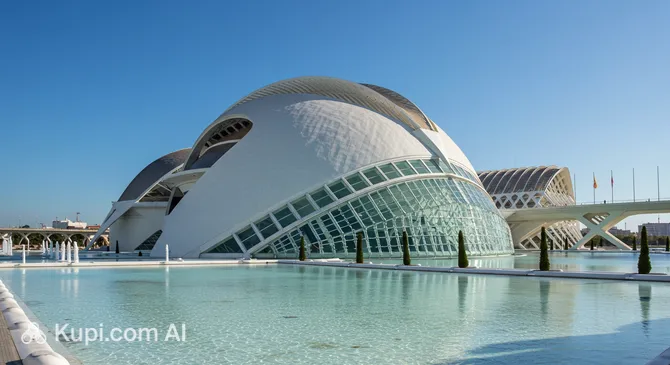
Principe Felipe Science Museum. Illustration.
Source: Kupi.com AI

Traveler photos:

Opened to the public on November 13, 2000, the museum quickly gained popularity among tourists and locals alike. Its massive exhibition space, covering about 26,000 square meters, houses both permanent and temporary displays. Here, you can learn about various fields of science and technology — from space exploration and genetics to the laws of physics and modern technologies. Exhibits are presented in a visual and playful way, making complex information accessible and interesting for visitors of all ages, especially children.

A visit to the Príncipe Felipe Science Museum is an opportunity not only to see impressive scientific achievements but also to become part of a thrilling research process. It is a place where curiosity is encouraged, and learning turns into unforgettable entertainment, leaving lasting impressions of your trip to Valencia.

Contacts

To plan your visit to the Príncipe Felipe Science Museum, it is recommended to use official sources. You will always find the most up-to-date information regarding opening hours, ticket prices, and current exhibitions on the museum's official website. Below are the main contact details.

How to contactContact
AddressCiudad de las Artes y de las Ciencias, Av. del Professor López Piñero, 7, Quatre Carreres, 46013 Valencia, Spain
Phone number+34 961 97 46 86
Websitecac.es

What to Do

A visit to the Príncipe Felipe Science Museum is an immersion into a world of interactive discoveries. The main feature of the museum is that you can and should interact with the exhibits, following the motto "Forbidden not to touch, not to feel, not to think." Visitors can look forward to numerous interactive exhibitions dedicated to the development of science, modern technologies, and humanity's most important discoveries. You won't just observe the exhibits; you'll take an active part in the learning process, as most of them can be touched, studied, and even used for small experiments.

The museum's exhibitions cover a wide range of fields. Here, you can visually study the structure of the DNA molecule in the form of a massive 15-meter sculpture, understand fundamental physical laws, trace the stages of evolution, and peer into the secrets of space. For young visitors, spectacular scientific shows and experiments are regularly held, where they can feel like real researchers. This format makes complex scientific concepts clear and engaging for the whole family.

In addition to the permanent collection, the museum is constantly updated with temporary exhibitions that touch on current scientific topics, such as climate change or biometrics. Scientific lectures, workshops, and various thematic events designed for audiences of all ages also take place here. Thanks to educational programs for school and student groups, the museum has become an important popular science center, making learning an exciting adventure.

Getting There

The Príncipe Felipe Science Museum is located in the southern part of Valencia, within the famous "City of Arts and Sciences" architectural complex. Thanks to its convenient location and well-developed transport infrastructure, reaching it from any part of the city is easy. Whether you prefer public transport, walking, or driving, you will easily find a suitable route.

One of the most convenient ways to reach the museum is by using the city buses. Numerous routes pass near the complex, including Nos. 13, 15, 19, 35, 95, and 40. Additionally, special hop-on hop-off tourist buses stop here as they circulate through the city's main attractions, making a visit to the museum a convenient part of a Valencia sightseeing tour.

For those who enjoy walking, a great option is a stroll from the city center through the picturesque Turia Garden — a former riverbed transformed into a vast green space. Such a walk is an enjoyable experience in itself. If you are traveling by car, there is convenient parking available near the City of Arts and Sciences. You can also always use a taxi or arrive by bicycle — special parking areas are equipped for two-wheeled transport.

Nearest city: Valencia

History & Facts

The history of the Príncipe Felipe Science Museum is inextricably linked with one of Valencia's most ambitious urban development projects — the "City of Arts and Sciences." The idea for its creation was born in the late 1980s, and construction began in 1994. This massive complex was designed to become the city's new cultural and scientific heart, symbolizing its focus on the future. The museum became one of the key elements of this futuristic ensemble.

The world-renowned Spanish architect Santiago Calatrava, a native of Valencia, is responsible for the building's impressive appearance. His signature style, often referred to as "bio-tech," found a vivid expression here. The museum's structure, resembling a giant whale skeleton, has become not only a landmark of the city but also a symbol of harmony between nature and scientific knowledge. This bold architectural image has made the museum one of the most recognizable examples of modern architecture in the world.

The grand opening of the museum was divided into two stages. In March 2000, a symbolic inauguration took place with the participation of Prince Felipe, after whom the museum was named (now King Felipe VI of Spain). The museum opened its doors to the general public a bit later — on November 13, 2000. From that moment, it began its mission to popularize science, offering visitors a unique interactive experience under the motto "Forbidden not to touch, not to feel, not to think."

Since its opening, the Príncipe Felipe Science Museum has played a vital role in the cultural and tourist life of Valencia. It has not only become a significant educational center that introduces science to visitors of all ages in a playful and engaging way but has also turned into a major attraction for hundreds of thousands of tourists annually. Thus, the museum has fully lived up to the expectations placed upon it, becoming a bright symbol of a renewed and modern city.

Time Needed

When planning a visit to the Príncipe Felipe Science Museum, you should keep in mind that a full exploration of its exhibitions requires a significant amount of time. To tour the main halls and participate in interactive activities without rushing, it is recommended to allocate at least 3–4 hours. This time is sufficient to immerse yourself in the world of science, study the most interesting exhibits, and understand the museum's main concept — "Forbidden not to touch, not to feel, not to think."

If you are traveling with children or are a big fan of science, be prepared to spend much more time here. For these visitors, a visit can easily take half a day or even a full day to fully enjoy all the interactive exhibitions, attend special presentations, and watch scientific shows. To get the most out of your experience and ensure you don't miss anything important, it is best not to plan any other major excursions for that day.

Working Hours

The Príncipe Felipe Science Museum is open to visitors year-round, though opening hours may vary depending on the season. Typically, the museum opens daily at 10:00 AM, with closing times varying: in the low season (most of the year), it is open until 6:00 PM or 7:00 PM, while in the high summer season (usually from July to mid-September), the hours are extended until 9:00 PM. Since the schedule is subject to change, it is highly recommended to check the current opening hours on the museum's official website before planning your visit.

To avoid queues, especially during the height of the tourist season, on weekends, or public holidays, it is better to purchase tickets online in advance. This will not only save you time but also guarantee entry to the museum, as the number of visitors may be limited. Purchasing tickets beforehand will make your visit more relaxed and comfortable.

10:00 – 19:00

Nearby

A visit to the Príncipe Felipe Science Museum is just one part of a grand adventure. The museum is a key element of the magnificent City of Arts and Sciences, and its surroundings offer many other exciting places to explore. A stroll through this futuristic complex and its nearby areas will allow you to dive deeper into the unique atmosphere of modern Valencia and get the most out of your trip.

Just a few minutes' walk away are other iconic sites, from the opera house and aquarium to picturesque parks and shopping centers. Exploring these attractions will not only complement your museum visit but also provide a holistic view of one of Spain's most impressive architectural ensembles. Below is a list of interesting places located in the immediate vicinity.

NameDistance
City of Arts and Sciences0.2 km
Oceanogràfic Valencia0.5 km
Oceanogràfic0.7 km
La Finestra1.8 km
Mestalla Stadium2.1 km
Casa Montaña2.1 km
Las Arenas Balneario Resort2.6 km

Have you reached the end of the page?

So the route has been studied inside and out