Support

Mestalla Stadium

About

Mestalla Stadium is not just a sports arena; it is a true legend and the heart of Valencia's football life. Located in a bustling district of the city, this stadium is one of the oldest and most famous in all of Spain. Since its opening in 1923, it has served as the home ground for Valencia CF, witnessing many historic victories and dramatic moments.
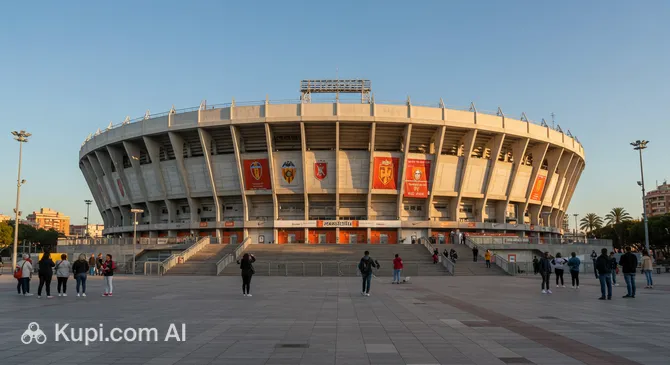
Mestalla Stadium. Illustration.
Source: Kupi.com AI

Traveler photos:

The architectural highlight of Mestalla is considered its famous steep stands. Their incline is one of the steepest in Europe, creating an incredible atmosphere of unity and allowing fans to be as close to the pitch as possible. This particular feature gives spectators indescribable emotions and a feeling of full immersion in the game, and world-class players admit that playing under such pressure from the stands is a special test.

Today, Mestalla accommodates about 49,430 spectators and holds the highest, fourth UEFA category. It is not only a pilgrimage site for football fans from all over the world but also an important cultural landmark in Valencia. A visit to the stadium allows you to touch the club's rich history and feel the energy that has accumulated within its walls for decades.

Contacts

Since Mestalla is the home ground of Valencia CF, it is recommended to visit the club's official resources for the most accurate and up-to-date information regarding tickets, stadium tours, matchday regulations, and schedules. This is where all essential announcements for fans and visitors are published.

How to contactContact
AddressAv. de Suècia, s/n, El Pla del Real, 46010 València, Valencia, Spain
Phone number+34 963 37 26 26
Websitewww.valenciacf.com

What to Do

A visit to Mestalla is an opportunity to get two completely different but equally vivid experiences. The first and foremost is, of course, a football match. Attending a Valencia home game means diving into the unique energy created by dedicated fans. Thanks to the steep stands, there is an excellent view of the pitch from any seat, and the roar and support of the fans make you feel like you are becoming part of the club's history.

If you want to peek behind the scenes of the football world, be sure to take a stadium tour, available even on non-match days. During the tour, you can walk through the tunnel players use to enter the field, visit the locker rooms of football stars, and even sit on the substitutes' bench. The route also includes a visit to the press center where post-match conferences are held, and, of course, the trophy room, which houses the major awards and cups of Valencia CF.

Besides football, Mestalla occasionally serves as a venue for other major events. The stadium hosts concerts, cultural events, and meetings with famous athletes, making it an important hub of the city's social life. Before your trip, it's worth checking the event calendar—your visit might coincide with one of these unique events.

Getting There

Mestalla Stadium is conveniently located in the central part of Valencia at Avenida de Suecia, making it easily accessible for fans and tourists. The most convenient and fastest way to reach the arena is by public transport. The Aragón metro station (Line 5) is nearby, just a few minutes' walk from the stadium. This option avoids traffic jams and parking difficulties, especially on match days.

In addition to the metro, the stadium can be reached by one of the many city buses, as bus stops are located in the immediate vicinity of Mestalla. If you prefer more comfort, you can take a taxi—a trip from most central areas of the city won't take much time. You can also reach the arena by car; however, keep in mind that on match days, traffic near the stadium can be congested, and the number of parking spaces is strictly limited. Therefore, it is highly recommended to use public transport when attending matches.

Nearest city: Valencia

History & Facts

The history of Mestalla began on May 20, 1923, when the stadium was officially opened. The project was designed by architects Francisco Almenar Quinzá and Salvador Pascual Gimeno. At that time, it was a fairly modest arena: the stands, which accommodated 17,000 spectators, were entirely wooden, and the football pitch remained dirt until the 1926/27 season. The stadium got its name from the irrigation canal of the same name that passed nearby. Throughout its long life, the arena has endured many challenges, including damage during the civil war and a severe flood in 1957, but each time it was restored and became even better.

An interesting fact in the stadium's biography is its name change. From 1969 to 1994, the arena was named Estadio Luis Casanova in honor of one of the most respected presidents in the history of Valencia CF. However, in 1994, Luis Casanova himself requested that the stadium's historical and more familiar name for the fans—"Mestalla"—be returned, which was done. This gesture emphasized the arena's deep connection with the history and traditions of the city.

Mestalla has repeatedly hosted world-class events. The stadium hosted matches for the 1982 FIFA World Cup, but one of the brightest chapters in its history was its participation in the football tournament of the 1992 Summer Olympics, held in Barcelona. Several group stage matches, as well as quarter-final and semi-final games, took place on the Mestalla pitch, forever writing the stadium into Olympic history.

Time Needed

When planning a visit to the legendary Mestalla Stadium in Valencia, you should expect to spend between 1.5 and 3 hours. The exact time will depend on the type of visit you choose: a standard stadium tour or immersion in the atmosphere of a real football match. Both options will provide unforgettable impressions but require different amounts of time.

For those who want a behind-the-scenes look, a guided tour is ideal. It usually lasts about an hour. During this time, accompanied by a guide, you will visit the arena's most interesting locations: see the players' dressing rooms, walk through the famous tunnel to the pitch, sit on the substitutes' bench, and visit the press conference room. This is plenty of time to take commemorative photos and feel the spirit of one of Spain's oldest stadiums.

If your goal is to attend a match, allow at least three hours. The football match itself lasts about two hours, including the break. However, to fully enjoy the event, it is worth arriving early: take your seats without rushing, feel the growing excitement of the stands, and perhaps catch the colorful team welcome by fans before the game. Attending a match is a unique opportunity to become part of the vibrant football culture of Valencia.

Working Hours

You can visit Mestalla Stadium either as part of a tour or during a football match. The stadium does not have fixed operating hours like a traditional museum, as its schedule depends entirely on the match schedule and the season. Tours are usually conducted during the day, but their availability and exact times may vary. For example, on match days, tours may only take place in the morning, and access to certain areas, such as locker rooms, may be restricted.

To ensure your visit goes smoothly, it is highly recommended to check the current schedule in advance and buy tickets on the official Valencia CF website. Pre-booking is especially important during the tourist season and for key matches, as tickets can sell out quickly. This approach will guarantee your entry to the stadium and allow you to fully enjoy its legendary atmosphere.

DayOpening hours
Monday11:00 – 18:30
Tuesday11:00 – 18:30
Wednesday11:00 – 18:30
Thursday11:00 – 18:30
Friday11:00 – 18:30
Saturday11:00 – 6:30
Sunday11:00 – 16:00

Nearby

Visiting Mestalla Stadium is a wonderful opportunity to experience the football history of Valencia, but don't limit yourself to just the arena. Thanks to the stadium's favorable location, its surroundings offer many interesting places to help you get to know this amazing city better. A walk through nearby parks and museums will enrich your trip and turn a stadium visit into a full cultural adventure.

Just a few minutes' walk from Mestalla lie famous gardens, art galleries, and unique parks. This is a great chance to combine a love of sports with exploring the cultural heritage of Spain. Below is a list of attractions located in the immediate vicinity of the stadium and easily accessible on foot.

NameDistance
Valencia Museum of Natural Science1 km
Museum of Fine Arts of Valencia1.2 km
Hortensia Herrero Art Centre1.3 km
Valencia Cathedral1.4 km
National Museum of Ceramics and Decorative Arts González Martí1.4 km
Serranos Towers1.6 km
Silk Exchange of Valencia1.7 km

Have you reached the end of the page?

So the route has been studied inside and out