Support

Valencia Cathedral

About

The Valencia Cathedral, officially known as the Cathedral of the Assumption of the Blessed Virgin Mary, is not just the city's main church, but a true architectural gem and spiritual center located in the heart of its historical district. This is one of the most significant sites in Spain, attracting both believers and tourists who wish to touch centuries of history.
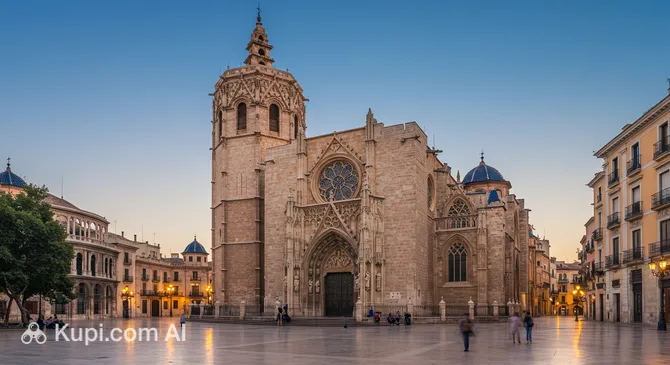
Valencia Cathedral. Illustration.
Source: Kupi.com AI

Traveler photos:

Construction of the cathedral began in the 13th century on the site of a former Visigoth church, which in turn had been converted into a mosque during the era of Arab rule. This rich history explains its unique blend of architectural styles. Its appearance is dominated by Valencian Gothic, yet within its walls, you can find elements of the Romanesque period, Renaissance, Baroque, and Neoclassicism. This eclecticism turns the cathedral into a veritable stone chronicle of the city.

In addition to its architectural value, the cathedral houses one of the most important Christian relics — the Holy Grail, the chalice that, according to tradition, Jesus used during the Last Supper. This relic, recognized by the Vatican, is displayed in a separate chapel and attracts pilgrims from all over the world.

The ultimate symbol of not only the cathedral but all of Valencia is its octagonal bell tower — the Miguelete Tower (or Micalet). It rises proudly over the old town, and the most daring travelers can climb its spiral staircase of 207 steps to enjoy an unforgettable panoramic view of the city and the coast.

Contacts

To plan your visit to the Valencia Cathedral, check the current schedule, or confirm ticket prices, we recommend consulting official sources. All the necessary contact information is provided below.

How to contactContact
AddressPl. de l'Almoina, s/n, Ciutat Vella, 46003 València, Valencia, Spain
Phone number+34 963 91 81 27
Websitecatedraldevalencia.es

What to Do

A visit to the cathedral in Valencia is an opportunity to immerse yourself in its rich history and spiritual atmosphere. The main goal for many pilgrims and tourists is the Chapel of the Holy Chalice, where, according to tradition, the Holy Grail — the chalice of the Last Supper — is kept. Exploring the magnificent interiors, decorated with artworks from different eras, allows you to fully appreciate the greatness of this place. Visitors can take a leisurely stroll through the ambulatory, looking into the side chapels, each of which has its own unique history and decor.

For those who want to see the city from a bird's-eye view, a climb up the Miguelete bell tower is a must. After conquering the spiral staircase, you will find yourself on an observation deck at a height of over 50 meters, offering a breathtaking panoramic view of the historic center of Valencia and its surroundings. This is one of the most popular experiences, leaving unforgettable memories of the trip.

Beyond the main halls, it's worth paying attention to other iconic parts of the cathedral. See the majestic Apostles' Gate, the Gothic Chapter House, and visit the cathedral museum. The museum houses an impressive collection of valuable relics and religious artworks that will help you gain a deeper understanding of the church's history. Additionally, the cathedral regularly hosts services, organ concerts, and guided tours, making a visit even more informative and rewarding.

Getting There

Valencia Cathedral is conveniently located in the heart of the city's historic center, on Plaça de l'Almoina, making it easily accessible for pedestrians. If you are exploring the old town of Valencia, a walk through its charming streets is the best way to reach this iconic landmark.

For those who prefer public transport, there are numerous bus stops and metro stations in the immediate vicinity of the cathedral. For example, the Colón or Àngel Guimerà metro stations are a 10-15 minute walk away. If you are traveling by car, there is paid parking nearby, but due to the narrow streets of the historic center, a taxi or public transport might be a more convenient option.

Travelers arriving in the city by train can easily reach the cathedral from the main railway station, Estación del Norte. The walk takes only 15–20 minutes and allows you to immediately soak up the city's atmosphere. Additionally, you can take public transport from the station to the stops near Plaça de l'Almoina, where the cathedral is located.

Nearest city: Valencia

History & Facts

The history of the Valencia Cathedral is a tale of changing eras and cultures. Its foundation is closely linked to a key moment in the history of Spain — the Reconquista. The first stone of the future cathedral's foundation was laid in 1262 by order of King James I the Conqueror. This happened shortly after the city's liberation from Moorish rule, and the church was consecrated in honor of the Blessed Virgin Mary. Notably, the site has been considered sacred since ancient times: before the Arab mosque, an early Christian Visigoth church stood here, and even earlier — a Roman temple of the goddess Diana.

The cathedral's construction spanned several centuries, from the 13th to the 15th, with subsequent eras adding their own touches to its appearance. This is why today the cathedral is a unique blend of architectural styles. The base of the building is in the strict Gothic style, but an observant eye will notice elements of the Romanesque period, ornate Baroque, and austere Neoclassicism. This diversity has turned the cathedral into a true stone chronicle, where every detail tells the story of its era.

The 20th century was a time of trial and revival for the cathedral. In 1931, it was officially recognized as a historical and artistic monument of national importance. However, the church was severely damaged by fire during the unrest of the mid-1930s, and part of its priceless artistic treasures were lost. In the following decades, extensive restoration work was carried out, thanks to which many elements were restored, preserving this majestic heritage for future generations.

Time Needed

When planning a visit to the Valencia Cathedral, it is worth setting aside enough time to see all its treasures without rushing. For a full and leisurely introduction to the cathedral, including climbing the bell tower and visiting the museum, it is recommended to allow at least 1.5–2 hours. This time will be enough to fully appreciate the architectural grandeur, see the main relics, and feel the special atmosphere of this historical site.

Most of the time will be spent exploring the main nave with its impressive vaults and side chapels, as well as visiting the famous Chapel of the Holy Grail. The climb up the Miguelete bell tower deserves special attention — you should set aside about 30-40 minutes for this, including the ascent up the spiral staircase and time on the observation deck to enjoy the panoramic views. If you are interested in religious art, be sure to stop by the cathedral museum, which will add about another 30 minutes to your visit.

If you are short on time, you can focus on the essentials: a quick tour of the main part of the cathedral and a visit to the Chapel of the Holy Grail will take about 30–45 minutes. However, to truly immerse yourself in the history and art that the cathedral in Valencia is so rich in, it is better not to rush and dedicate the recommended couple of hours to it.

Working Hours

The Valencia Cathedral is open to visitors year-round, but its opening hours may vary depending on the season and the schedule of services. As a rule, for cultural visits, the cathedral is open from Monday to Saturday from morning until evening, and on Sunday in the afternoon. It is worth noting that opening hours may differ slightly at different times of the year, and there may be a break during lunchtime. Since the schedule can be adjusted for religious events, it is strongly recommended to check the current information on the cathedral's official website before planning your visit.

For a standard visit to the cathedral, advance booking is usually not required — tickets can be purchased at the ticket office on-site. However, if you are planning a visit as part of a large group or want to book a guided tour, it is better to check the conditions in advance. Please note that certain parts of the complex, such as the Miguelete bell tower or the cathedral museum, may have their own schedules and separate entrance tickets, which should also be checked beforehand.

7:30 – 20:30

Nearby

Visiting the Valencia Cathedral is just the beginning of your journey through the city's historical heart. Thanks to its central location, you are at the epicenter of cultural life, where every corner holds its own secrets and treasures. A stroll through the surrounding area will allow you to dive deeper into the atmosphere of Valencia and discover other iconic sites just steps away.

Exploring the nearby streets and squares will enrich your experience, as the old city is a true open-air museum. From ancient Gothic buildings to bustling markets and cozy squares, it all creates the unique flavor of Spain. To help you find your way, we have compiled a list of interesting places located right next to the cathedral.

NameDistance
Hortensia Herrero Art Centre0.2 km
Silk Exchange of Valencia0.3 km
Church of Saint Nicholas of Bari and Saint Peter Martyr0.3 km
National Museum of Ceramics and Decorative Arts González Martí0.3 km
Fox Congo0.3 km
Serranos Towers0.5 km
Hundred Burgers0.5 km

Have you reached the end of the page?

So the route has been studied inside and out