Support

Castle of La Atalaya

About

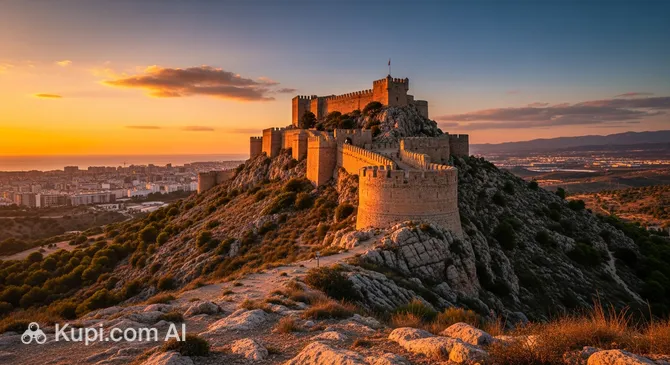
Rising 242 meters above sea level, Castillo de La Atalaya (Atalaya Castle) serves as a majestic reminder of the region's military past. This formidable 18th-century fortress, located in the city of Cartagena, represents a unique example of defensive architecture. The fort owes its name, which translates from Arabic as "viewpoint", to its strategic position, which allowed it to control all approaches to the city and the seaport.
\n
Castle of La Atalaya
Castle of La Atalaya. Иллюстрация. Источник: Kupi.com AI
\n

This monumental structure in Spain stands out for its trapezoidal shape and its so-called "bomb-proof" construction, characteristic of the Spanish engineering school of that era. Although the fort is in a state of picturesque ruins today, its thick stone walls and remnants of artillery positions still impress tourists with their rugged beauty and imposing presence.

\n

Castillo de La Atalaya is considered one of the most significant elements in the city's fortification system. Built in an eclectic Neoclassical style under the direction of prominent engineers Pedro Martín-Paredes Cermeño and Mateo Vodopich, it is the perfect place for those who want to touch living history and see the best panoramic views of the Murcia coast.

Contacts

For those planning a visit to this historic site, the following contact information may be useful. Although the castle is in a semi-ruined state, it is officially recognized as a Site of Cultural Interest.

How to contactContact
AddressPasaje Cast Atalaya, 1, 30205 Cartagena, Murcia, Испания
Websiteturismo.cartagena.es

What to Do

The main draw for visitors to this site is the incredible panoramic views. From the top of Atalaya Hill, a breathtaking vista opens up over the harbor, the military port, and the vast expanse of the Mediterranean Sea. It is an ideal location for photographers and those who want to catch the most beautiful sunset in the city, watching as the sun slowly slips behind the horizon and the port lights begin to twinkle.

Military history enthusiasts will find it fascinating to explore the structure of the fort itself. Here, you can see the power of 18th-century engineering firsthand: examine the remains of artillery platforms, massive walls, and internal bomb shelters. Walking among the ruins creates a sense of traveling through time, allowing you to imagine how soldiers of past centuries stood their watch.

For active tourists, the castle makes an excellent destination for a hike. The climb up the slopes of the hill among local flora will provide a boost of energy and allow you to appreciate the architecture of other fortifications, such as the neighboring Fort Galeras. After the walk, you can set up a small picnic in the fresh air, enjoying the peace and quiet away from the busy tourist quarters.

Getting There

The castle is located in the Canteras district at an altitude of over 240 meters above sea level. The most convenient way to get here from the city center is by car or taxi. The trip takes about 10–15 minutes. There is parking available at the foot of the hill, where the hiking trails leading directly to the fortress walls begin.

If you prefer public transport, use the buses heading towards the Canteras district. After getting off at the stop nearest to Pasaje Cast Atalaya, be prepared for a walk uphill. The hike up the marked trails takes between 20 to 40 minutes, depending on your physical fitness.

For the most accurate navigation, it is recommended to use modern mapping services. As the terrain is hilly, be sure to wear comfortable sports shoes and bring a supply of water, especially during the warmer months.

Ближайший город: Cartagena

History & Facts

The history of this site is rooted in the distant past. Atalaya Hill itself has been used as a strategic observation point since the Middle Ages, as its name is derived from the Arabic word for "watchtower" or "viewpoint". Cartagena has always been a coveted prize for conquerors, which necessitated the creation of a powerful defensive system.

The construction of the modern fort took place between 1766 and 1777. The project was designed by the military engineer Pedro Martín-Paredes Cermeño, and the implementation was overseen by the Croatian engineer Mateo Vodopich. The castle became a vital part of the ring of fortifications intended to protect the city plains and prevent enemy landings from the sea.

One of the most dramatic episodes in the fortress's history was the Cantonal Revolution of 1873–1874. Rebels seized the fort and held it until the final siege, after which the fortification fell. These events left their mark on the walls of the structure, turning it into a silent witness to the turbulent political changes in Spain.

Until the 1960s, Castillo de La Atalaya maintained its status as a military site. After the army vacated the premises, the fortress was abandoned, but even today its massive ruins and "bomb-proof" architecture evoke genuine admiration from researchers and history buffs alike.

Time Needed

To leisurely explore the ruins of the fort and take spectacular photos against the city panorama, most travelers find 1–2 hours sufficient. This provides enough time to study the layout of the fortifications and enjoy the sea breeze at the summit.

If you are planning a full-scale hike, including the ascent from the foot of the mountain and a walk along the surrounding nature trails, it is better to set aside about 3 hours for your visit. Such a mini-journey will allow you to fully appreciate the scale of the region's defensive system and enjoy the tranquility away from the city noise.

Working Hours

At present, Castillo de La Atalaya is accessible for viewing 24/7 every day of the week. This gives tourists the unique opportunity to choose the most suitable time for a visit—whether it's early morning to catch the sunrise or late evening when the city at the foot of the mountain is illuminated by thousands of lights.

Nevertheless, before planning your trip, it is recommended to check the official Cartagena tourism portal. Occasionally, access to certain parts of the ruins may be restricted due to restoration work or archaeological research.

Круглосуточно

Nearby

A visit to the castle can easily be combined with exploring other interesting locations in the city. Its proximity to the center allows you to see both ancient monuments and modern leisure parks in a single day.

NameDistance
Plaza de España1.6 km
Cartagena Department Store1.8 km
Tentegorra Park Maze1.9 km
Albedrío Bar Restaurant1.9 km
Municipal Archaeological Museum of Cartagena1.9 km
Roman Forum Museum (Cartagena)2 km
Naval Museum of Cartagena2 km

Reached the end of the page?

That means the route is fully explored