Support

The Punic Wall

About

Imagine the chance to touch stones that remember the great battles of antiquity. The Punic Wall is a unique archaeological site in the city of Cartagena, representing the ruins of a defensive structure built by the Carthaginians over 2,200 years ago. This site is a rare testament to the presence of the Punic civilization in Spain.
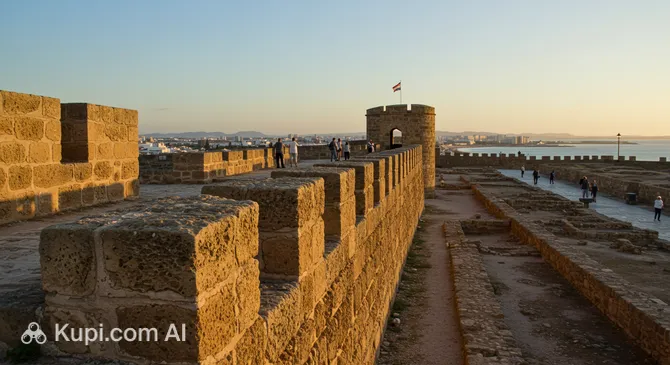
Punic Wall
Punic Wall. Иллюстрация. Источник: Kupi.com AI

The wall was built in 227 BC by order of Hasdrubal the Fair to protect the settlement of Qart Hadasht (New Carthage). The sandstone structure was built according to the canons of Hellenistic architecture and served as the city's main shield at the start of the Second Punic War. Today, this site has been transformed into a modern museum center, where the ancient masonry is carefully preserved within a protective pavilion.

Visitors note the special atmosphere of this place, where history comes to life right under your feet. With a high rating of 4.4, the site is deservedly considered a must-see for everyone interested in archaeology and the ancient world. The walls, which withstood the siege of Roman legions, still impress with their power and monumentality.

Located on San Diego Street, this site serves as a starting point for exploring the city's centuries-old past. Here, you can not only see fragments of the walls but also learn about the daily life of the ancient Carthaginians, whose cultural heritage became the foundation for the development of modern Cartagena as a major Mediterranean port.

Contacts

If you need to clarify visit details or book a group tour, we recommend using the official contact information.

Below is the up-to-date information for contacting the archaeological center:

How to contactContact
AddressC. San Diego, 25, 30202 Cartagena, Murcia, Spain
Phone+34 968 50 00 93
Websitepuertodeculturas.cartagena.es

What to Do

The main reason to visit is the opportunity to see authentic 3rd-century BC masonry. Visitors can examine the sandstone blocks in detail and appreciate the ancient "double-row" construction technique. Inside the exhibition space, information panels clearly explain the design of defensive systems and the context of the Punic Wars.

The adjacent museum hall features archaeological finds and detailed reconstructions, allowing you to imagine what the city looked like during Hannibal's time. It's an excellent spot for atmospheric photos, where the ancient stone contrasts with the pavilion's modern design. For those wanting a deeper dive into the subject, we recommend taking an audio guide, which shares details about Roman siege tactics.

Since the wall is at the very beginning of the tourist route, the visit is easy to combine with a trip to the Roman Theater or a stroll to the port. During the hot summer months, a visit here offers a pleasant escape into the cool exhibition hall, so it's best to plan your visit for the morning hours to set the right historical tone for your day in Cartagena.

Getting There

Finding this unique historical monument is easy, as it is located at C. San Diego, 25, in the heart of the historic center. The most convenient way to reach the site is on foot if you are already in the old part of the city or have arrived at the train station (Renfe) — the walk takes only 10–15 minutes.

For those who prefer public transport, city bus lines 1 and 6 pass nearby. If you are coming from neighboring regions, such as via Murcia (RMU) or Alicante (ALC) airports, you first need to reach the Cartagena station by intercity bus or train, and then follow the signs to the center.

If you are traveling by car, remember that the streets in the center are quite narrow. It is better to look for parking in specialized lots near the port, then continue on foot to fully enjoy the atmosphere of the ancient city.

Ближайший город: Cartagena

History & Facts

The construction of the Punic Wall dates back to 227 BC. It was built by the Carthaginians under the leadership of Hasdrubal the Fair to protect the city of Qart Hadasht (New City). This settlement served as the Carthaginians' main stronghold on the Iberian Peninsula and a strategic base for controlling rich silver mines.

It was from here that the legendary general Hannibal began his famous march across the Alps in 218 BC, marking the beginning of the Second Punic War. The city walls witnessed massive historical upheavals as the interests of two of antiquity's greatest powers — Carthage and Rome — clashed in a struggle for dominance over the Mediterranean.

In 209 BC, the wall withstood the initial onslaught, but the city eventually fell to the troops of Scipio Africanus. Subsequent centuries layered new eras onto this foundation: Romans, Visigoths, and Arabs all left their mark here. Today, the surviving fragments are one of the few physical remains of the Punic period in all of Europe.

Interestingly, the name "Punic" comes from the Latin word Punicus, which Romans used for the Phoenicians and their descendants, the Carthaginians. The discovery of these ruins in the 20th century allowed historians to more accurately reconstruct the plan of the ancient city and appreciate the high level of engineering skill of ancient builders.

Time Needed

For a thoughtful introduction to the site, 30–45 minutes is usually sufficient. This is enough time to view the masonry, study the archaeological details, and take a few memorable photos of the ancient structure.

If you decide to use the audio guide or study the exhibition hall's detailed historical reconstructions, you should allow about 1 hour for the visit. Visiting this site fits perfectly into a short walk on the way to the Roman Theater or the waterfront.

Working Hours

To plan your visit, it's important to note that the museum center operates on a fixed schedule. Please note that Monday is a day off.

Opening hours:

  • Tuesday — Sunday: 10:00 – 19:00
  • Monday: Closed
Keep in mind that opening hours may change slightly on public holidays, so it's worth checking the current information at the entrance before visiting.

DayWorking hours
ПонедельникЗакрыто
Вторник10:00 – 19:00
Среда10:00 – 19:00
Четверг10:00 – 19:00
Пятница10:00 – 19:00
Суббота10:00 – 19:00
Воскресенье10:00 – 19:00

Nearby

Exploring the surroundings of the Punic Wall will take you on a true journey through the centuries, as monuments from different eras are found literally at every step. Cartagena is a compact city, so most iconic sites are within walking distance.

We have prepared a list of the nearest attractions to help you fully experience the historical character of the region:

NameDistance
Isaac Peral Submarine Monument0.3 km
House of Fortune0.4 km
Basilica of Our Lady of Charity0.4 km
Castle of the Conception0.5 km
Roman Forum Museum of Molinete0.5 km
Panoramic Lift0.5 km
Civil War Museum0.5 km

Reached the end of the page?

That means the route is fully explored