Support

Cathedral of Santa Maria of Palma

About

The Cathedral of Santa Maria, also widely known as La Seu, is a majestic Gothic cathedral located in Palma, in the heart of the Balearic Islands in Spain. It is the primary church of Mallorca and one of the city's most recognizable symbols, rising proudly over the bay.
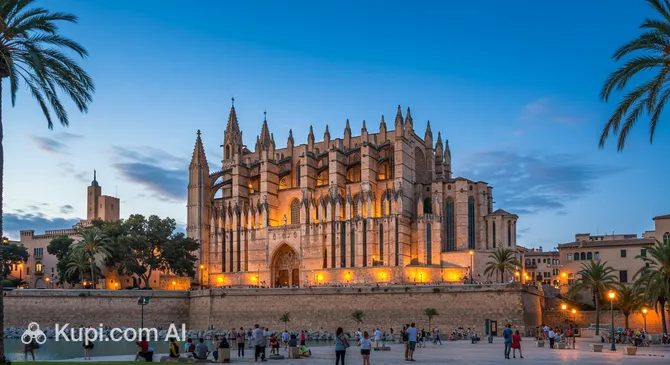
Cathedral of Santa Maria of Palma. Illustration.
Source: Kupi.com AI

Traveler photos:

This structure is rightfully considered one of the most impressive Gothic cathedrals in Europe and the largest in its southern part. The scale of the Cathedral of Santa Maria is truly staggering: it is nearly 110 meters long, and the height of the central nave reaches 44 meters, creating a sense of incredible space and light inside. Because of its unique stained-glass windows and light effects, which can be observed on certain days of the year, it is also known as the "Cathedral of Light."

A visit to La Seu is an opportunity to touch centuries of history and admire a unique architectural masterpiece that harmoniously combines grandeur and elegance. This cathedral is not just a tourist attraction, but the very soul of Palma, a must-visit for every guest on the island.

Contacts

To plan your visit, check the current opening hours, or purchase tickets online, it is best to use the official website. You can also contact the cathedral representatives by phone or visit in person at the address provided.

How to contactContact
AddressPlaça de la Seu, s/n, Centre, 07001 Palma, Illes Balears, Spain
Phone number+34 971 71 31 33
Websitewww.catedraldemallorca.org

What to Do

Inside the Cathedral of Santa Maria in Palma, visitors will find a sight no less impressive than its exterior. The space of the temple is filled with unique works of art and architectural solutions. One of the main highlights is the interior, which the famous architect Antoni Gaudí worked on in the early 20th century. Between 1904 and 1914, he carried out a large-scale renovation: visually expanding the temple's space by removing unnecessary elements and shifting focus to emphasize the grandeur of the central apse.

In addition to Gaudí's brilliant innovations, the cathedral holds many other treasures. Be sure to notice the Great Organ, created by the Mallorcan Gabriel Tomás in the late 18th century and carefully restored in 1993. Walking through the cathedral, you will see numerous works of art collected here over centuries: from ancient wall paintings and luxurious Baroque altarpieces to elegant Renaissance sculptures.

Of particular historical significance is the Royal Chapel, which serves as the tomb of the Mallorcan kings, housing the remains of monarchs James II and James III, who ruled the island in the Middle Ages. Visiting the cathedral is not just a sightseeing trip, but a true immersion into history and art, allowing you to appreciate the full diversity of Palma's cultural heritage.

Getting There

Getting to the Cathedral of Santa Maria is easy, as it is located in the heart of the historic center of Palma, right by the sea. If you are staying in the old town or its surroundings, the best way to get there is a leisurely walk through the picturesque streets. The cathedral is visible from afar, making it an excellent landmark. Such a stroll will not only allow you to enjoy the city's atmosphere but also to discover many cozy cafes and souvenir shops along the way.

For those who prefer public transport, Palma has an excellent bus network. Several city routes stop in the immediate vicinity of the cathedral. Key stops are Plaça de la Reina and Porta des Camp. Bus numbers 4, 25, and 35 are ideal for getting almost right to the cathedral. Additionally, Hop-On Hop-Off tourist buses make a mandatory stop right at this iconic landmark, which is very convenient for those wanting to see the city's main sights in one day.

If you value comfort and speed, you can always use a taxi, which will take you to the cathedral from anywhere in the city, including the airport or cruise port. For travelers with a rental car, please note that parking in the historic center can be difficult. However, next to the cathedral, beneath Parc de la Mar, there is a large underground parking lot where you can leave your car during your visit.

Nearest city: Palma

History & Facts

The history of the Cathedral of Santa Maria is inextricably linked to a key event in Mallorca's history — the liberation from the Moors. According to legend, in 1229, the fleet of the Aragonese King James I was caught in a severe storm on the way to the island. The monarch made a vow that if saved, he would build a magnificent temple in honor of the Virgin Mary. After his victory, the king kept his word: in 1230, he ordered the cathedral to be founded on the very site where the main mosque had previously stood. This symbolic gesture marked the beginning of a new era for the city of Palma.

The construction of such a grand structure spanned several centuries. Main works began under the founder's son, King James II, around 1302. Building the cathedral became a matter of honor for many generations who diligently continued the work of their ancestors. The process took more than 370 years: the main part of the building was completed by 1587, and the main portal in 1601, when the temple was officially consecrated.

Throughout its long history, the cathedral has survived not only periods of creation but also serious trials. In 1851, a powerful earthquake caused part of the main facade to collapse, requiring a massive reconstruction. Restoration work began in 1882 and was only completed in the early 20th century. Notably, the cathedral is not a frozen monument — its completion and renovation continue with varying intensity to this day, making it a living witness to the history of Spain.

Time Needed

When planning a visit to the Cathedral of Santa Maria, you should set aside about 1–2 hours for exploration. This is usually enough for a leisurely walk through the main nave, viewing the famous stained-glass windows — including the world's largest Gothic rose window — and getting to know the main chapels. During this time, you can appreciate the architectural grandeur, including elements created by Antoni Gaudí, and feel the special atmosphere of the "Cathedral of Light."

If you want a deeper dive into history and art, you should increase your visiting time. For instance, you could take an audio guide or join a guided tour, which typically lasts about an hour and a half. Furthermore, during the summer months, the cathedral's rooftop terraces are open, offering breathtaking views of the city and the sea. Visiting the terraces will require an additional hour. Thus, for a complete and comprehensive experience, including the museum and terraces, it is better to plan for about 2.5–3 hours.

Working Hours

The Cathedral of Santa Maria is open to tourists year-round, but opening hours can vary significantly depending on the season and the day of the week. Generally, from April to October, the cathedral is open Monday through Friday from approximately 10:00 AM to 5:15 PM (during peak summer months, from June to September, hours may be extended until 6:15 PM). In the winter period, from November to March, working hours are reduced, and the cathedral closes around 3:15 PM. On Saturdays, it operates for a shorter day (usually until 2:15 PM), and on Sundays and major religious holidays, tourist visits are not permitted as the church is open only for worship services.

As the schedule is subject to change, it is highly recommended to check for the most up-to-date information on the cathedral's official website before your visit. To avoid long queues, especially during the height of the tourist season, it is best to purchase tickets online in advance. This will not only save you time but also guarantee entry on your chosen day.

DayOpening hours
Monday10:00 – 17:15
Tuesday10:00 – 17:15
Wednesday10:00 – 17:15
Thursday10:00 – 17:15
Friday10:00 – 17:15
Saturday10:00 – 14:15
SundayClosed

Nearby

Exploring the majestic Cathedral of Santa Maria is just the beginning of your acquaintance with the historic heart of Palma. To truly feel the city's atmosphere, it's worth spending time in its immediate surroundings. A walk through the ancient streets surrounding the cathedral will reveal many hidden treasures and provide a more complete picture of the cultural wealth of Mallorca's capital.

Literally a few steps away from La Seu are other iconic landmarks, cozy gardens, and authentic establishments. For example, directly opposite the cathedral is the Royal Palace of La Almudaina, a former Arabian fortress and now the official residence of the King of Spain on the island. The La Lonja building, the former maritime trade exchange, is one of the finest examples of Gothic civil architecture in Spain. Exploring these places won't take much time but will offer plenty of new impressions.

NameDistance
Cathedral Museum of Mallorca0 km
Royal Palace of La Almudaina0.1 km
Bar Abaco0.3 km
OMBU Passeig del Born0.3 km
La Lonja de Palma0.4 km
Bar Espanya0.4 km
El Camino0.4 km

Have you reached the end of the page?

So the route has been studied inside and out