Support

Poble Espanyol of Mallorca

About

The concept of "Poble Espanyol", or "Spanish Village," is a unique open-air architectural museum format that allows visitors to explore the diverse architecture of various regions across Spain. The most famous such complex is located in Barcelona. However, if you are in Palma, Mallorca, there is also a local site known as Poble Espanyol de Mallorca. It likewise aims to introduce visitors to the country's rich architectural and cultural heritage in miniature.
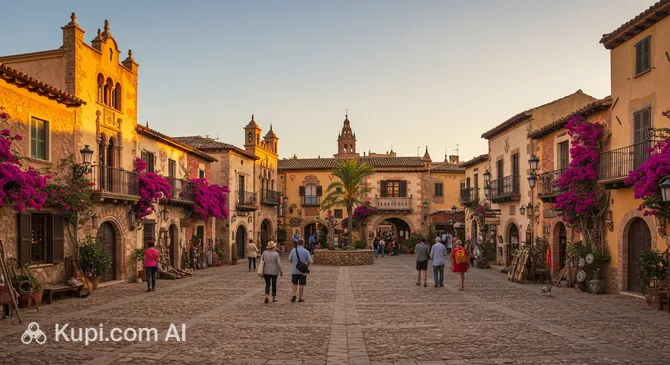
Poble Espanyol of Mallorca. Illustration.
Source: Kupi.com AI

Traveler photos:

Typically, these "Spanish villages" recreate characteristic buildings, streets, and squares from all corners of the country. Visitors can see replicas of famous structures reflecting various architectural styles—from the Moorish motifs of the south to the rugged stone buildings of the north. If Poble Espanyol de Mallorca follows this concept, it should offer a fascinating journey through Spain's architectural history, showcasing detailed replicas of iconic buildings.

A visit to a place like Poble Espanyol de Mallorca can be more than just an excursion; it’s a true immersion into Spanish culture. Often, such complexes house craft workshops where you can watch artisans at work and purchase authentic souvenirs. Folklore performances or themed events may also take place here. It can be a wonderful opportunity for a leisurely stroll and an introduction to the cultural diversity of Spain during your stay in Palma.

Contacts

To get the most up-to-date information on opening hours, ticket prices, and upcoming events at Poble Espanyol de Mallorca, we recommend visiting the attraction's official website or contacting the tourist information centers in Palma. There, you can confirm all the details for your visit.

How to contactContact
AddressCarrer del Poble Espanyol, 55, Ponent, 07014 Palma, Illes Balears, Spain
Phone number+34 971 73 10 62
Websitewww.pueblo-espanol.com

What to Do

Visiting Poble Espanyol de Mallorca is a unique opportunity to take a fascinating journey across all of Spain without leaving Palma. Here, you can stroll through picturesque streets and squares, each recreating the architectural style and atmosphere of a specific region of the country. It is a true open-air museum where you can spend hours admiring the details of the buildings, taking photos against the backdrop of iconic structures, and immersing yourself in the culture of different Spanish lands.

Your introduction to the "Spanish Village" begins with the impressive medieval San Vicente fortress gate, which is a replica of the gate in Avila. Passing through it, you will find yourself in the main square—Plaza Mayor. Here, you will be met by buildings representing the architectural traditions of Navarre, Castile, Catalonia, Burgos, and Aragon. From this central square, streets branch out like rays, each leading to a new corner of Spain, allowing you to see the country's most striking architectural gems in just a few hours.

Strolling through Poble Espanyol, you can explore, for example, Levante street, lined with typical houses from Valencia and Murcia, or Príncipe de Viana street, featuring buildings from the Basque Country and Navarre. On Arcos street, you will feel as if you are in charming Andalusia. This is a wonderful opportunity to appreciate the diversity of Spanish architecture, from the austere northern forms to the vibrant southern motifs, and to take many memorable photographs.

Getting There

Poble Espanyol de Mallorca is located in the city of Palma, and there are several ways to reach this unique attraction. Since it is a popular spot for tourists, transport links are generally well-established, making it easy to include in your itinerary around the capital of Mallorca.

The most economical option is often public transport. Palma has an extensive network of city buses, and it is likely that one or more routes pass near Poble Espanyol de Mallorca. We recommend checking the Palma bus route map in advance or using online trip planners to find the most convenient option for you. You can also get route information at tourist information centers or bus stops.

If you prefer comfort and speed, you can always use a taxi or popular ride-hailing apps. A taxi ride from the center of Palma or your hotel to Poble Espanyol de Mallorca will be quick and convenient, especially if you are traveling with family or are short on time. For those who enjoy walking and are staying relatively close by, the walk to the "Spanish Village" can be a pleasant opportunity to take in the city scenery.

Nearest city: Palma

History & Facts

Poble Espanyol de Mallorca, or the "Spanish Village," is more than just a tourist attraction; it is a true open-air architectural museum. It was designed to introduce visitors to the richness and diversity of Spanish architecture and culture by bringing together replicas of iconic buildings from various regions of Spain. The idea of creating such complexes, where one can travel across the entire country without leaving a single location, has an interesting history.

The concept of the "Spanish Village" found its landmark realization in Spain thanks to the World Exhibition held in Barcelona in 1929. It was then that the first famous Poble Espanyol was built, becoming the prototype for many similar projects. Talented architects Ramón Reventós and Francesc Folguera, along with artists Xavier Nogués and Miquel Utrillo, worked on its creation. They managed to complete this ambitious project in a remarkably short time—just 13 months—presenting the public with a unique space reflecting the architectural styles and traditions of the entire country.

The original goal of the Barcelona project was to showcase Spanish architecture, crafts, and cultural diversity in all its glory. It was an overwhelming success: the Poble Espanyol in Barcelona quickly became one of the exhibition's main attractions, and the city council decided to preserve it for the public. Since then, it has attracted tourists from all over the world, serving as a model for similar initiatives and vividly demonstrating the wealth of Spanish heritage. Interestingly, there are different opinions regarding the authorship of the original masterpiece: some sources attribute it to the famous Catalan architect Josep Puig i Cadafalch, known for his modernist works, while others point to Ramón Reventós and Francesc Folguera as the primary creators.

Poble Espanyol de Mallorca, built in Palma between 1965 and 1967 according to the design by architect Fernando Chueca Goitia, is a worthy successor to this remarkable tradition. Although it has its own later history, its core mission is similar to its Barcelona predecessor—to provide island guests with the opportunity to take a fascinating journey through the architectural styles of Spain. Here, you can also see meticulously recreated replicas of famous buildings and characteristic structures representing various regions—from sunny Andalusia to the distinctive Castile—making it an important cultural and tourist site in Mallorca.

Time Needed

When planning a visit to Poble Espanyol de Mallorca, it's worth setting aside enough time to enjoy this unique place without rushing. On average, it is recommended to allow 2 to 3 hours for a full tour of the "Spanish Village." This time is usually enough to stroll through all the streets, examine the architectural details of buildings representing different regions of Spain, and take memorable photos.

Of course, the duration of your visit may vary depending on your interests. If you are passionate about architecture and history, or simply enjoy leisurely walks to soak up the atmosphere, you might need more time. Similar to other complexes like Poble Espanyol in Barcelona, where visitors are also advised to spend several hours for a detailed exploration, a visit to Poble Espanyol de Mallorca invites you to immerse yourself in the diversity of Spanish culture.

By planning enough time, you can not only tour the entire site but also perhaps visit the souvenir shops or relax in one of the cafes, if available on the premises. The most important thing is not to rush, so you can fully appreciate the craftsmanship of the creators of this architectural ensemble in Palma.

Working Hours

When planning a visit to Poble Espanyol de Mallorca, it is important to check the current opening hours in advance. Unfortunately, the provided data does not contain specific information about the schedule for this attraction. Operating hours may vary depending on the season, the day of the week, or special events.

Therefore, we highly recommend checking the latest information on the official website of Poble Espanyol de Mallorca or contacting tourist information centers in Palma before your trip. There, you can also find out if the "Spanish Village" is open year-round or operates on a specific seasonal schedule, as well as whether advance ticket booking is required, especially during the peak tourist season.

10:00 – 18:00

Nearby

After a fascinating journey through the architectural styles of Spain at Poble Espanyol de Mallorca, don't be in a hurry to leave this area of Palma. Exploring the surroundings will allow you to dive even deeper into the city's atmosphere and discover other interesting places within walking distance or a short drive away.

The area around Poble Espanyol de Mallorca offers various options to continue your day—from historical monuments to cozy spots for relaxation. It is a great opportunity to complement your impressions and gain a more complete picture of Palma.

NameDistance
Bellver Castle1.2 km
La Lonja de Palma1.5 km
Bar Abaco1.5 km
Concepció1.5 km
OMBU Passeig del Born1.6 km
Royal Palace of La Almudaina1.7 km
El Camino1.7 km

Have you reached the end of the page?

So the route has been studied inside and out