Support

Park Güell

About

Park Güell is one of the most amazing and fairytale-like places in Barcelona, a true masterpiece by the genius architect Antoni Gaudí. Located in the upper part of the city, this famous architectural and park ensemble is a hallmark of Spain and attracts travelers from all over the world with its unique charm. It is a place where nature and architecture merge into one, creating a magical atmosphere.

Created between 1900 and 1914, the park represents a unique blend of landscape gardening and Catalan Modernist architecture. Here, whimsical buildings covered in colorful "trencadis" mosaics are harmoniously integrated into the natural landscape. The famous undulating bench, the gingerbread houses at the entrance, and the Hall of a Hundred Columns—every element of the park captures the imagination and demonstrates Gaudí's boundless creativity.
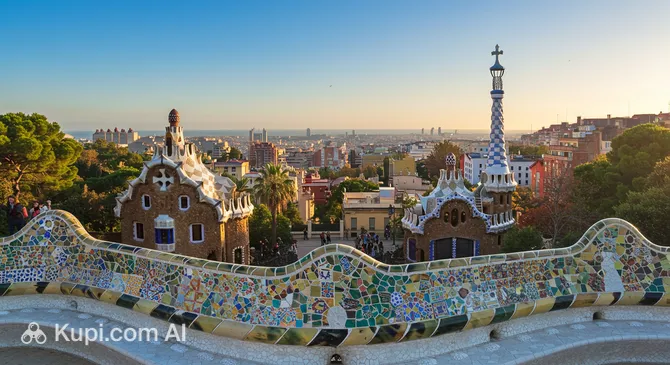
Park Güell. Illustration.
Source: Kupi.com AI

Traveler photos:

Originally, this project was conceived as an elite residential area inspired by the English "garden city" concept. Although the commercial plan was not fully realized, Barcelona gained one of the most unusual public spaces in the world. Today, Park Güell is not just an attraction, but a UNESCO World Heritage Site where every corner holds a piece of Gaudí's genius and offers visitors stunning views of the city.

Contacts

To plan your visit, check current opening hours, and purchase tickets, it is recommended to consult official sources. All necessary information is available on the park's website, and you can also contact the administration by phone.

How to contactContact
AddressGràcia, 08024 Barcelona, Spain
Phone number+34 934 09 18 31
Websiteparkguell.barcelona

What to Do

In Park Güell, visitors can look forward to a fascinating encounter with Antoni Gaudí's unique architectural creations. Among the main highlights are the central staircase with its famous mosaic dragon (salamander), the hall of 86 Doric columns known as the Hypostyle Room (or Hall of a Hundred Columns), and the long, winding bench on the main terrace, which offers magnificent views of Barcelona. At the main entrance, guests are greeted by two fairytale-like buildings resembling gingerbread houses, designed in the master's recognizable style.

The park area is divided into two main sections: the paid "Monumental Zone," where the main architectural masterpieces are located, and a large free park area. The free section is perfect for leisurely walks along picturesque paths amidst Mediterranean vegetation, family outings, and photo sessions. Additionally, the Gaudí House Museum, where the architect lived for some time, is located within the park, allowing for an even deeper dive into his history and work.

Getting There

You can reach Park Güell, located on a hill in the Gracia district, in several ways using Barcelona's well-developed public transport system. One of the most popular options is the metro. The closest stations to the park are Lesseps and Vallcarca, both on the green L3 line. From either of these stations, it's about a 15–20 minute walk to the park entrance, following the signs.

It is worth noting that the path from the metro to the park goes uphill on a rather steep slope, so comfortable shoes are essential. To make the climb easier, street escalators are installed on some parts of the route, such as from the Vallcarca station, to help save your strength. This option is great for those who don't mind a short walk and want to enjoy the city's atmosphere.

You can also reach the park by city buses. Routes H6 and D40 stop near the park, from where it is about a 10-minute walk to the entrance. Bus No. 24 is considered the most convenient; it departs from Plaça de Catalunya and stops right near one of the park entrances. Additionally, a special shuttle called the Güell Bus also runs for tourists, departing from Plaça de Catalunya. Taking a taxi from the city center is the fastest but also the most expensive way to reach this famous landmark.

Nearest city: Barcelona

History & Facts

The history of Park Güell is inextricably linked with the name of its creator, industrialist and patron Eusebi Güell. Inspired by the "garden city" concept popular at the time in England, he planned to create an elite green residential area for wealthy families on the Montaña Pelada hill. To realize this ambitious project, a vast plot of land covering about 17 hectares was purchased, where 60 mansions were planned to be built, harmoniously integrated into the natural landscape. The work was entrusted to the brilliant Antoni Gaudí, who already had experience collaborating successfully with Güell.

Construction of the park took place from 1900 to 1914, but the project faced unexpected difficulties. The distance from the city center and the complex terrain of the hilly area did not attract potential buyers, and the ambitious venture proved to be a commercial failure. Only two of the planned sixty mansions were built. One of them, originally built as a model home, was purchased by Gaudí himself in 1906, and he lived there with his family for almost 20 years. This house is known today as the Gaudí House Museum.

Despite the commercial failure, the park's story took an unexpected turn. The project, which failed as an elite housing complex, became an invaluable gift to the entire city. In 1922, Eusebi Güell's heirs sold the land to the city authorities, and soon the park was opened to the public. Thus, one man's private dream turned into one of Barcelona's most beloved public spaces.

Decades later, the park's uniqueness gained global recognition. In 1984, the architectural ensemble of Park Güell was included in the UNESCO World Heritage List as an outstanding example of Antoni Gaudí's creativity. This decision emphasized its exceptional value as a site where architecture and nature merge into a single organic whole, showcasing the unique style of Catalan Modernism.

Time Needed

To fully see Park Güell, it is recommended to set aside at least 2–3 hours. This time is usually enough to enjoy the main monumental part of the park without rushing, take photos with the famous mosaic lizard, walk through the Hypostyle Room, and relax on the serpentine bench while admiring the panoramic views of Barcelona. In a couple of hours, you will have time to feel the fairytale atmosphere of this place.

If you want to explore the park more thoroughly, plan for extra time. You can visit the Gaudí House Museum, where the architect lived for nearly 20 years, which will add about an hour to your visit. Additionally, the large free area of the park, with its many paths and "bird's nests," is perfect for a leisurely stroll and relaxation away from the tourist bustle. Therefore, a half-day might be needed for a full immersion into the world of Gaudí and the park's nature.

Working Hours

Park Güell is open to visitors year-round, although its opening hours may vary depending on the season. Generally, the park is open daily starting from 9:30 AM. During the summer period, which is considered high season, it usually stays open longer, while in winter, the hours are shorter. Since the exact schedule can vary, it is highly recommended to check current information on the attraction's official website before planning your visit.

Given the park's immense popularity, tickets for the Monumental Zone should be purchased in advance online. This will not only help you avoid long ticket office queues but also guarantee entry on your desired date and time, as the number of tickets for each session is limited. Booking online is the most reliable way to plan your visit to this Gaudí masterpiece in Barcelona.

9:30 – 20:00

Nearby

Visiting Park Güell is just one part of a fascinating journey through Barcelona. The surroundings of this famous Gaudí creation are also rich in interesting places that help deepen your understanding of the city's culture and history. A walk through the nearby neighborhoods will allow you to discover other architectural masterpieces as well as cozy corners hidden from the main tourist routes.

Exploring nearby attractions will enrich your experience and make your trip to Spain even more rewarding. Below is a list of places within walking distance of the park that are definitely worth adding to your itinerary.

NameDistance
MUHBA Turó de la Rovira0.9 km
Casa Vicens1.2 km
CosmoCaixa Science Museum1.8 km
Vivo Tapas2.2 km
Casa Milà2.3 km
Casa Batlló2.7 km
Tibidabo Panoramic Area2.8 km

Have you reached the end of the page?

So the route has been studied inside and out