Support

Monastery of Pedralbes

About

Pedralbes Monastery (Monestir de Pedralbes) is a wonderful corner of the Middle Ages located in the district of the same name, one of the most prestigious in Barcelona, Spain. This Catalan monastery holds centuries of history and is considered one of the most established and wealthiest in the city. The name "Pedralbes" itself has an interesting origin: it dates back to the Catalan words "Petras Albas," which translate to "white stones," referring to a white stone quarry that once existed here.
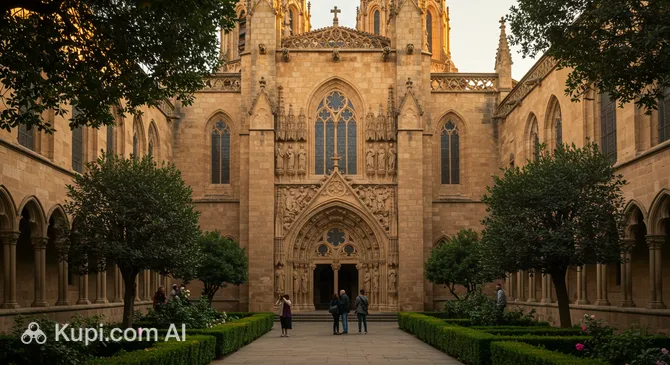
Monastery of Pedralbes. Illustration.
Source: Kupi.com AI

Traveler photos:

The architectural ensemble of the monastery is a magnificent example of the Catalan Gothic style and is rightfully considered one of the important landmarks of Barcelona. The complex includes an elegant three-story gallery-cloister, around which the cells are centered, and the monastery building with its characteristic, though unfinished, octagonal tower. The facade is decorated with a portal and the coats of arms of the noble Montcada family, who played a key role in founding the cloister.

A visit to the Pedralbes Monastery allows you to dive into an atmosphere of peace and tranquility, contrasting with the bustling life of the modern metropolis. Situated on a hill, it offers not only a journey through history but also the chance to enjoy silence away from the city noise. You can reach the monastery from the city center by bus; the trip takes about 20 minutes, opening the doors to the world of medieval Catalan culture for you.

Contacts

For the most up-to-date information on the opening hours of the Pedralbes Monastery, ticket prices, or to clarify other details, we recommend visiting the official website of the attraction or contacting the Barcelona tourist information centers. There you can also find the latest contact details if they are needed for planning your visit.

Please remember that you can reach the monastery from the city center by public transport, for example, by bus, which makes it easily accessible for a visit.

How to contactContact
AddressBaixada del Monestir, 9, Les Corts, 08034 Barcelona, Spain
Phone number+34 932 56 34 34
Websitemonestirpedralbes.barcelona

What to Do

Upon entering the Pedralbes Monastery, visitors are immediately immersed in the atmosphere of its rich past. You can see in detail the luxurious interior of the monastery complex, which eloquently testifies to the former splendor of this courtly cloister. The crown jewel of the collection and a must-see item is the cell of Queen Elisenda's niece, who later became the abbess. This room is a true masterpiece, decorated from floor to ceiling with unique paintings by the court master Ferrer Bassa. These frescoes are of particular value, as they are the only surviving work of the artist, allowing you to touch the art of the 14th century.

In addition to the interior decoration, pay attention to the architectural features of the monastery itself, such as its facade and Gothic style elements, which complement the overall impression of this historical site. A walk through the monastery grounds and its surroundings will also be a pleasure. The Pedralbes district, where the monastery is located, is famous for its numerous parks, well-kept gardens, and evergreen hedges. Here you can enjoy a calm atmosphere while observing the interesting combination of ultra-modern buildings with elegant old mansions and villas, making your visit to the monastery even more multifaceted.

Getting There

Pedralbes Monastery is nestled in the prestigious district of the same name in Barcelona, on a picturesque hill, which makes it not only historically significant but also a pleasantly located spot. Getting here from the city center is easy. The most convenient and popular way is by city bus. A trip from the central districts of Barcelona to the monastery usually takes about 20 minutes. We recommend checking the suitable route numbers and schedule in advance on the official Barcelona transport website or using online maps to plan your visit in the best way possible.

The journey to the monastery will take you through the Pedralbes district, known for its respectability and high level of safety. This is one of the city's greenest and quietest corners, where you can see elegant villas and well-kept gardens along the way, so the trip itself can become a pleasant part of your excursion. In addition to the bus, you can always use taxi services for a more direct and faster transfer, especially if you value comfort or are traveling with luggage or a small group. Since the monastery is located on an elevation, beautiful views of the surrounding area may open up as you approach it.

Nearest city: Barcelona

History & Facts

The history of the Pedralbes Monastery dates back to the 14th century. Its foundation in 1326 was made possible by the will of King James II the Just of Aragon and his wife, Queen Elisenda de Montcada. Notably, the construction of the monastery's main buildings progressed very quickly: it began in that same year, 1326, and took little more than a year. Such a tight timeframe allowed for a remarkable unity of architectural style, which continues to fascinate visitors to this ancient cloister today.

Queen Elisenda de Montcada played a special role in the monastery's fate. After the death of her husband, King James II, in 1327, she became a widow but did not leave her spiritual creation. The queen ordered a palace to be built next to the monastery, where she soon moved and lived for another 37 years until her death. Throughout all these years, Elisenda tirelessly patronized the Pedralbes Monastery, granting it all sorts of privileges and providing generous financial support to ensure the monastic life knew no want. It is also known that on May 3, 1637, its walls welcomed fourteen new nuns, joining the ranks of the sisters of the cloister.

The main buildings of the monastery complex that we see today were erected in the middle of the 14th century, during the heyday of Catalan Gothic. An interesting fact is that the monastery was built on the site of a formerly destroyed Roman villa, adding another historical layer to this unique place. From its very foundation and throughout the centuries, the Pedralbes Monastery was permeated with a spirit of refinement and a certain wealth, which was reflected in both its majestic architecture and the exquisite interior decoration of the entire complex.

Time Needed

When planning a visit to the Pedralbes Monastery, it is worth setting aside approximately 1.5-2.5 hours for the tour. This time is usually enough to take a leisurely stroll through the magnificent three-story Gothic cloister, look into the cells where the nuns once lived, and visit the church and the St. Michael’s Chapel with its unique frescoes by Ferrer Bassa. Part of the time will also be taken up by visiting a small museum featuring objects of religious art and everyday monastic life.

If you are particularly interested in medieval architecture, religious art, or simply want to soak deeper into the peaceful atmosphere of this place, your visit might take a bit longer, perhaps up to 3 hours. The monastery offers a unique opportunity to immerse yourself in the history of Barcelona and Spain, so there is no need to rush. Exploring the monastery garden can also add pleasant impressions to your visit.

In general, the indicated time will be sufficient to get a complete picture of the Pedralbes Monastery, its history, and architectural features, as well as to enjoy its calm and spiritual atmosphere, which contrasts with the busy life of the big city.

Working Hours

When planning a visit to the Pedralbes Monastery in Barcelona, it is important to check the current opening hours in advance, as they may change depending on the season or special events. At the moment, we do not have exact information about the schedule. We recommend visiting the official website of the monastery or contacting the Barcelona tourist information centers. You can also find out there if pre-booking tickets is required, which is especially relevant during the peak tourist season to guarantee entry and avoid queues.

Typically, attractions such as the Pedralbes Monastery are open to visitors year-round; however, opening hours may be reduced during the winter period or on certain holidays. Checking the information on official resources before your trip will help you plan your visit in the best way and enjoy this historical site in Spain without any inconvenience.

DayOpening hours
MondayClosed
Tuesday10:00 – 17:00
Wednesday10:00 – 17:00
Thursday10:00 – 17:00
Friday10:00 – 17:00
Saturday10:00 – 19:00
Sunday10:00 – 20:00

Nearby

A visit to the Pedralbes Monastery is, without a doubt, an immersion into the history and spirituality of Barcelona. However, to make your journey even richer and more complete, it is worth paying attention to the attractions located nearby. Exploring the surroundings will allow you to better understand the context of this unique place, see it surrounded by other interesting sites, and perhaps discover new facets of the Catalan capital.

The Pedralbes district and its surroundings offer various options to continue your excursion. From park areas and museums to other architectural masterpieces, Barcelona is generous with discoveries. Below is a list of some interesting places near the Pedralbes Monastery that can complement your impressions.

NameDistance
Oreneta Park Miniature Train0.6 km
Grand Hyatt Barcelona1.4 km
FC Barcelona Museum1.8 km
CosmoCaixa Science Museum2.5 km
Tibidabo Panoramic Area2.9 km
Casa Vicens3.3 km
Vivo Tapas3.9 km

Have you reached the end of the page?

So the route has been studied inside and out