Support

CosmoCaixa Science Museum

About

The CosmoCaixa Science Museum is one of Barcelona's most fascinating and modern attractions, proving that science can be incredibly exciting. Covering over 30,000 square meters, this museum is one of the largest in Spain and is rightfully considered a must-visit for curious travelers of all ages. Its main feature is interactivity: almost all exhibits can and should be touched, allowing visitors to conduct experiments and participate personally in scientific demonstrations.

The heart and pride of the museum is the "Flooded Forest" (Bosque Inundado)—a unique 1,000-square-meter reconstruction of a section of the Amazon jungle. Here, amidst tropical plants and artificial rain, you can find capybaras, fish, birds, and other representatives of Amazonian fauna. Other key exhibits include the "Geological Wall", showing rock cross-sections, and the "Hall of Matter," where the laws of physics, chemistry, and biology are clearly explained. To round off the experience, visit the 3D planetarium for a breathtaking journey through the universe.
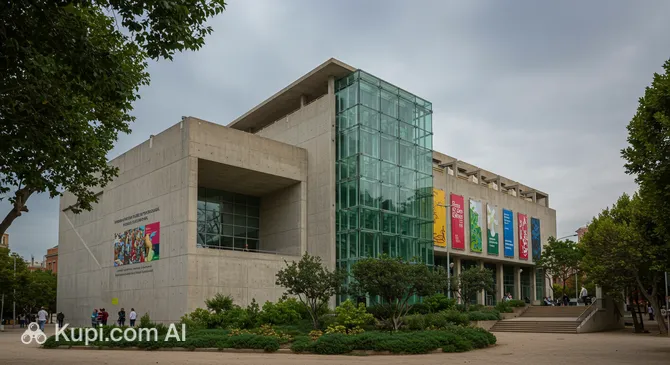
CosmoCaixa Science Museum. Illustration.
Source: Kupi.com AI

Traveler photos:

CosmoCaixa is not just an exhibition space, but a true educational center designed to inspire and awaken an interest in understanding the world. It is perfect for families, as even the youngest visitors will find special play areas where science is learned through play. A visit to this museum becomes an exciting adventure where everyone can feel like a real explorer.

Contacts

To plan your visit to the CosmoCaixa Science Museum in Barcelona, you can use the following contact details. It is always recommended to check the official website for up-to-date information on opening hours, ticket prices, and special exhibitions.

How to contactContact
AddressCarrer d'Isaac Newton, 26, Sarrià-Sant Gervasi, 08022 Barcelona, Spain
Phone number+34 932 12 60 50
Websitecosmocaixa.org

What to Do

At the CosmoCaixa Science Museum in Barcelona, visitors can expect a total immersion into the world of science through numerous interactive zones. One of the most impressive is the recreated Amazon rainforest, where you can walk among real exotic plants and observe the lives of its inhabitants. Additionally, the museum features a large aquarium, halls dedicated to matter, evolution, and the laws of physics, as well as a unique spiral staircase built around a 30-meter-tall acaricuaru tree. Outdoors, you'll find the "Science Square", where physical phenomena are demonstrated through hands-on interactive models.

For young explorers, CosmoCaixa offers special play areas and science labs. Here, children can conduct safe experiments under the guidance of facilitators, turning learning into a fun game. The museum features two planetariums: one designed for adults with spectacular 3D shows about the universe, and a children's planetarium where they can learn about planetary models in a playful way. The museum is constantly evolving, offering guests temporary exhibitions, lectures, science shows, and workshops for the whole family, making every visit unique.

Getting There

Getting to the CosmoCaixa Science Museum is quite simple, as it is conveniently located in a green area at the foot of Mount Tibidabo. The most popular way is to use Barcelona's efficient public transport system, making it easy to include a visit to the museum in any city itinerary.

One convenient option is to take the FGC train (line L7) to Av. Tibidabo station. From there, it’s a short uphill walk of about 10–15 minutes to the museum entrance. If you prefer the bus, several routes including the V13, 196, and H2 stop very close to the museum, making it even more accessible. Bus No. 196 will drop you off almost right at the entrance.

For those traveling by private or rental car, parking is available nearby. Additionally, you can always take a taxi—the ride from the city center is quick and comfortable, especially if you are traveling with children or in a small group.

Nearest city: Barcelona

History & Facts

The history of the CosmoCaixa Science Museum dates back to the early 20th century. Its predecessor, the first Science Museum, opened in Barcelona in a building constructed between 1904 and 1909. However, it gained its modern look and international fame after a radical transformation. In 2004, following an extensive renovation and expansion, the museum was completely reimagined and renamed CosmoCaixa, becoming one of the leading popular science centers in Spain.

The influential la Caixa Foundation stands behind the management and development of CosmoCaixa. Thanks to its initiatives, the museum has become more than just an exhibition space; it is a true center for informal education. The foundation actively implements programs aimed at developing scientific culture and popularizing knowledge among a wide audience, from children to adults. This mission is embodied in every corner of the museum, where curiosity and a thirst for discovery are encouraged.

Today, CosmoCaixa is not just a landmark but a true symbol of scientific progress in Barcelona. It consistently ranks among the city's most visited sites, attracting thousands of tourists, families, and school groups. Its success lies in its unique interactive approach to learning, which makes complex scientific concepts clear and engaging for everyone. The museum has become an important part of the city's cultural and educational life, confirming its status as a world-class science center.

Time Needed

When planning a visit to the CosmoCaixa Science Museum in Barcelona, it's worth timing it right to get the most out of the experience. To fully explore the main exhibits and participate in the interactive zones, we recommend setting aside at least 3–4 hours. This should be enough time to leisurely walk through the key halls, including the famous "Flooded Forest" and the "Hall of Matter," and try out the most interesting exhibits.

If you want to dive deeper into the world of science, plan for a half-day visit. Extra time will be needed to watch a thrilling show at the 3D planetarium, join special workshops, or explore the regularly updated temporary exhibitions. This is especially true for families with children, as interactive zones and science demonstrations can keep young explorers engaged for a long time, turning the visit into a real adventure.

Working Hours

The CosmoCaixa Science Museum is open to visitors year-round, offering a chance to dive into the world of science in any season. Typically, the museum is open daily from 10:00 AM to 8:00 PM. It is important to note that on public holidays and their eves (e.g., December 24 and 31), hours may be reduced, and the museum may be closed on certain dates such as December 25, January 1, and January 6. Therefore, checking the current schedule on the official website before planning your visit is highly recommended.

To make your visit as comfortable as possible and avoid queues, especially during the peak tourist season or on weekends, it is recommended to purchase tickets online in advance. This also gives you the opportunity to book specific sessions for the planetarium or temporary exhibitions, which may require separate reservations due to high popularity.

10:00 – 20:00

Nearby

Visiting the CosmoCaixa Science Museum is just one part of the great adventure that awaits you in Barcelona. The area where the museum is located is rich with other interesting spots that will help you dive deeper into the city's culture and atmosphere. A stroll through the neighborhood will give you a more complete impression and add variety to your travel itinerary.

Exploring nearby attractions is a great way to complement your visit to the museum. Just a few kilometers away, you'll find famous parks, architectural masterpieces, and viewpoints offering breathtaking vistas of the city. Below is a list of nearby places that may interest you.

NameDistance
Tibidabo Panoramic Area1.3 km
Casa Vicens1.9 km
Oreneta Park Miniature Train2.4 km
Monastery of Pedralbes2.5 km
MUHBA Turó de la Rovira2.6 km
Vivo Tapas3.1 km
Grand Hyatt Barcelona3.1 km

Have you reached the end of the page?

So the route has been studied inside and out