Support

Palau Güell

About

Palau Güell (Güell Palace) is a magnificent urban mansion in Barcelona, one of the early and iconic creations of the genius architect Antoni Gaudí. Built for his primary patron, the industrialist Eusebi Güell, this palace became a true embodiment of Catalan Modernism and marked the beginning of the master's unique style. Located in the El Raval district near the famous La Rambla boulevard, it is a UNESCO World Heritage site and a must-see for anyone wanting to understand Gaudí's work.
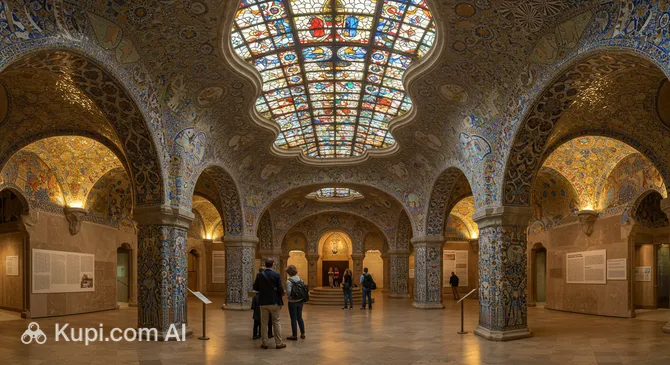
Palau Güell. Illustration.
Source: Kupi.com AI

Traveler photos:

The building is a stunning blend of functionality and decorative art. In the design of the seven-story palace, Gaudí first combined structural and decorative elements, which would later become his trademark. The facade, reminiscent of a Venetian palazzo, is made of gray stone and adorned with elegant wrought-iron grilles. Horse-drawn carriages could once drive directly through two large parabolic entrance arches into the stables located in the basement.

The interior of the palace is no less striking than its exterior. The central element of the layout is the main hall, topped by a parabolic dome that rises through several floors and creates the illusion of a starry sky thanks to small light apertures. Gaudí personally designed every interior detail, using expensive materials such as marble, rare woods, stained glass, and "trencadís" ceramic mosaics. Despite their luxury, the interior spaces create an atmosphere of comfort and harmony.

The roof of the palace deserves special attention — it is a veritable sculpture garden. Here, Gaudí transformed ordinary chimneys and ventilation pipes into vibrant art objects, decorating them with colorful ceramics. These 20 whimsical towers served as a prototype for his later works, including the famous Park Güell. Visiting Palau Güell in Spain is an opportunity to touch the roots of the great architect's creativity and see how one of the most unusual architectural styles in the world was born.

Contacts

It is recommended to check the official website for all up-to-date information on opening hours, ticket prices, and potential schedule changes. Below are the main contact details for reaching the Palau Güell administration.

How to contactContact
AddressCarrer Nou de la Rambla, 3-5, Ciutat Vella, 08001 Barcelona, Spain
Phone number+34 934 72 57 75
Websiteinici.palauguell.cat

What to Do

Visiting Palau Güell is a unique opportunity to get acquainted with the early work of Antoni Gaudí and see the birth of his unmistakable style. Guests are invited to independently explore all seven floors of the building, from the basement stables to the famous rooftop terrace. As you travel through the palace, you can study in detail the architectural solutions and decorative elements that were innovative for their time and would later become the great master's signature.

Particular attention should be paid to the central hall, which is the heart of the entire building and is topped by a parabolic dome that creates a starry sky effect. Carefully observe the materials Gaudí masterfully combined in the interiors: intricate wrought iron, unique masonry, and the colorful trencadís mosaic, which became one of the symbols of Catalan Modernism. Also, don't miss an important detail on the building's facade — the pediment with the wrought-iron inscription "1888," indicating the year the palace's construction was officially completed.

A visit to the rooftop is an absolute must, where ordinary chimneys and ventilation pipes have been turned into true sculptures decorated with colorful ceramics. From here, you can enjoy a beautiful view over the rooftops of the Raval district. Touring Palau Güell allows you not just to admire the luxury, but to literally follow the thought process of a genius who experimented here with forms, light, and materials, foreshadowing his future masterpieces.

Getting There

Finding Palau Güell is quite easy — it is located in the heart of Barcelona, in the El Raval neighborhood, at Carrer Nou de la Rambla, 3-5. This is just a stone's throw from the famous La Rambla pedestrian boulevard, making it easily accessible for tourists exploring the historic city center. Thanks to this prime location, a visit to the palace can be conveniently combined with a walk through the Gothic Quarter or a visit to the Boqueria Market.

The most convenient way to reach the attraction is by public transport. The nearest metro station is Liceu, located on the green line (L3). From the metro exit, the palace is just a few minutes' leisurely walk away. Additionally, city buses on routes 14, 59, 91, and 120 stop in the immediate vicinity. For those who prefer to see the city in comfort, the Barcelona Bus Turístic is an excellent option, with one of its stops also located nearby.

If you are in central Barcelona, for example, near Plaça de Catalunya or the Gothic Quarter, you can easily reach Palau Güell on foot. The walk takes no more than 15–20 minutes and allows you to better experience the atmosphere of the ancient streets. Alternatively, you can always take a taxi, which will quickly deliver you to the palace entrance from anywhere in the city.

Nearest city: Barcelona

History & Facts

The history of Palau Güell (Güell Palace) is inextricably linked to the friendship and fruitful collaboration between two outstanding figures — the architect Antoni Gaudí and his primary patron, the industrialist Eusebi Güell. This palace was the first major commission that Güell entrusted to the young architect in 1885. To build the future family residence, the industrialist purchased a 589 m² plot of land in the Raval district—which was not very prestigious at the time—paying 195,000 pesetas, equivalent to approximately 1,175 euros today. The choice of location was driven by Güell's desire to stay close to his parents' home.

Gaudí signed the palace design in 1886 after several months of intensive work on sketches. Interestingly, almost no original sketches or drawings by the master have survived to this day — folders containing his drawings were lost along with his archives. Only a few official blueprints, which were stored in the archives of the Barcelona municipality for a long time, have been preserved, making the building itself the primary evidence of the architect's original vision. This fact gives the palace special value, as it is virtually the only source for studying Gaudí's early ideas for this project.

Officially, construction took place from 1886 to 1888, as evidenced by the inscription "1888" on the building's pediment. However, true to his style, Gaudí did not consider the work finished and continued to make changes and handle the finishing touches until 1890. This perfectionism and constant creative search, where the architect refined details even after the formal end of construction, became one of the defining traits of his genius. It was at Palau Güell that Gaudí first began to boldly combine decorative and structural elements, laying the foundation for his unique style that would later make him world-famous.

Time Needed

For a complete and leisurely tour of Palau Güell, it is recommended to set aside approximately 1–1.5 hours. This is generally enough time to explore all the main levels of this unique building — from the former stables in the basement to the famous rooftop terrace. The ticket price usually includes an audio guide that will lead you through all the halls and rooms, sharing the history of the palace's creation and Antoni Gaudí's brilliant solutions. The standard audio guide route is designed for about an hour.

If you are a big fan of Gaudí's architecture or an avid photographer, it is worth planning a bit more time — up to 2 hours. This will allow you to take your time examining the numerous interior details the palace is famous for: intricate ironwork, unique wooden ceilings, stained glass, and, of course, the famous sculptural chimneys on the roof. This way, you can go beyond just following the route and truly immerse yourself in the atmosphere of one of the great Catalan architect's first masterpieces.

Working Hours

Palau Güell is open to visitors year-round, though opening hours change depending on the season. During the summer period, from April 1 to September 30, the palace is open Tuesday to Sunday from 10:00 to 20:00. In the winter season, from October 1 to March 31, the hours are shorter: Tuesday to Sunday from 10:00 to 17:30. Monday is a closing day. The palace is also closed on public holidays such as Christmas (December 25) and during a maintenance period, which usually falls in the third week of January.

Given the popularity of Gaudí attractions in Barcelona, it is recommended to buy tickets online in advance to avoid long queues and guarantee entry, as the number of visitors allowed at one time is limited. Purchasing a ticket online also allows you to choose a convenient time for your visit. Last entry to the palace is permitted one hour before closing. Before visiting, it is always useful to check the official palace website for the most current information on opening hours and closing days.

DayOpening hours
MondayClosed
Tuesday10:00 – 20:00
Wednesday10:00 – 20:00
Thursday10:00 – 20:00
Friday10:00 – 20:00
Saturday10:00 – 20:00
Sunday10:00 – 20:00

Nearby

A visit to Palau Güell is just the starting point for exploring one of Barcelona's most colorful districts — El Raval. A stroll through its lively streets after viewing Gaudí's masterpiece will allow you to dive deeper into the city's multifaceted atmosphere. Within walking distance of the palace, you will find many other iconic sites, from historical monuments to contemporary art centers and gastronomic markets.

Exploring the surroundings will enrich your experience and show just how diverse and surprising Spain can be. Literally around the corner, you can discover both authentic tapas bars and world-renowned museums. Below is a list of interesting places located very close to Palau Güell that will help you plan an exciting full-day itinerary.

NameDistance
Cañete0.1 km
Colom Restaurant0.2 km
Bishop's Bridge0.5 km
El Xampanyet0.9 km
Picasso Museum0.9 km
Palace of Catalan Music1 km
Bobby's Free1.3 km

Have you reached the end of the page?

So the route has been studied inside and out