Support

Palace of Catalan Music

About

The Palau de la Música Catalana (Palace of Catalan Music) is one of the most impressive architectural treasures of Barcelona and all of Spain. It is an outstanding example of Catalan Modernism, created by the architect Lluís Domènech i Montaner. The style of the building, where smooth curves prevail over straight lines and dynamic forms create a sense of lightness, makes it a true gem. In 1997, the palace was included in the UNESCO World Heritage list, highlighting its cultural and architectural significance.
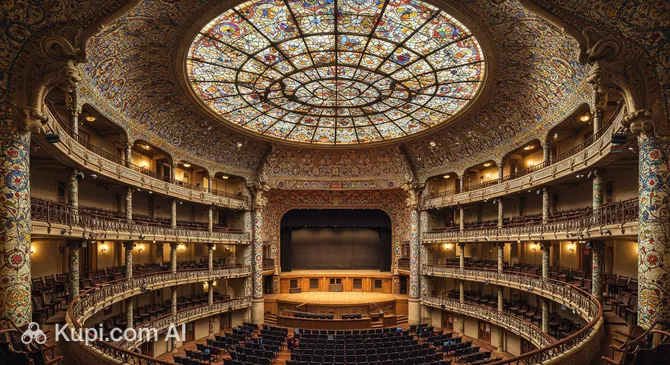
Palace of Catalan Music. Illustration.
Source: Kupi.com AI

Traveler photos:

Originally built as the headquarters for the famous "Orfeó Català" choral society, the building was constructed with donations from local residents. Over time, it transformed from a home for the choir into one of the city's main concert halls, hosting world-class stars. The uniqueness of the palace lies in the fact that it is the only concert hall in Europe with natural lighting, which creates a truly magical atmosphere inside.

The main hall, capable of seating up to 2,200 spectators, captures the imagination with its splendor. Its central element is a massive stained-glass ceiling in the shape of an inverted dome, which floods the space with warm sunlight. The walls, columns, and stage are richly decorated with mosaics, sculptures, and ceramics, turning every visit, whether for a concert or a tour, into an unforgettable aesthetic adventure.

Contacts

To get the most up-to-date information on concert schedules, ticket availability, and potential changes in opening hours, we recommend contacting the Palau de la Música Catalana directly. All the necessary details can be found on their official website or requested via phone.

How to contactContact
AddressC/ Palau de la Música, 4-6, Ciutat Vella, 08003 Barcelona, Spain
Phone number+34 932 95 72 00
Websitewww.palaumusica.cat

What to Do

The main reason to visit the Palau de la Música Catalana is, of course, the concerts. Attending a musical performance, be it classical music, jazz, or flamenco, allows you to fully appreciate not only the hall's magnificent acoustics but also its stunning visual beauty. For those who want to delve deeper into the history and architecture of this masterpiece, guided tours are available. During the tour, you can see unique decorative elements in detail, learn more about the architect's vision, and even stand on the stage.

In addition to musical events, the palace serves as a venue for various cultural exhibitions and conferences, making it an important center of social life in Barcelona. When viewing the building, pay special attention to its main facade, which harmoniously combines elements of classic Spanish and Arab architecture. Every corner of the palace, from mosaic panels to sculptural compositions, tells its own story, turning a visit into a true journey into the world of art.

Getting There

The Palau de la Música Catalana boasts a convenient location in the Sant Pere district, adjacent to the Gothic Quarter, making it easy to reach. The fastest and most convenient way is by metro. The nearest station, Urquinaona, is just a few minutes' walk away and serves two lines: L1 (Red) and L4 (Yellow). Alternatively, you can use the Jaume I station (Line L4), which is about a 7–10 minute walk away.

For those who prefer surface transport, many buses stop near the palace, including routes V15, V17, and 45. Additionally, the Bus Turístic (Gothic Quarter stop) stops nearby, making a visit to the palace a convenient part of a Barcelona sightseeing tour. Thanks to its central location, the palace is also an easy walk from Plaça de Catalunya — taking no more than 10 minutes.

If you value comfort or are short on time, you can take a taxi. A trip from the city center will be quick and reasonably priced, with the nearest official taxi stand located at Cathedral Square. For travelers with a rental car, keep in mind that parking in the narrow historical streets can be difficult, so it is best to check the locations of the nearest underground parking garages in advance.

Nearest city: Barcelona

History & Facts

The history of the Palau de la Música Catalana is inextricably linked with the cultural revival of Spain and, specifically, Catalonia. The building was originally designed with a dual purpose: to serve not only as a concert hall but also as the headquarters of the "Orfeó Català" choral society. The choir's main mission was the preservation and promotion of authentic Catalan music. The project was approved on May 31, 1904, and by the end of that year, a plot of land measuring 1,350 m² was purchased for construction.

The architect was the outstanding Lluís Domènech i Montaner, who was already widely known for his works at the time. An amazing fact is that construction was funded primarily by donations and took a record-short time — less than three years. The first stone of the future masterpiece was laid on April 23, 1905, and its grand opening took place on February 9, 1908.

Recognition followed quickly: in 1909, the Barcelona city council awarded the palace the prize for the best building of the year, and later the architect was awarded the city's gold medal. To preserve the splendor and functionality of this architectural treasure, the building has been restored several times. The most extensive restoration and expansion work took place between 1982 and 1989 under the direction of architects Oscar Tusquets and Carles Díaz, with another minor restoration carried out in 2006-2008.

Time Needed

When planning a visit to the Palau de la Música Catalana, you should aim for a duration of 1 to 2 hours. This will be quite enough for most visitors to see the main beauties of the building. A standard tour with a guide or an audio guide, which introduces the history of the palace and its unique architecture, usually lasts about 50-55 minutes. During this time, you will have time to see the main concert hall with its famous stained-glass ceiling, the foyer, and other iconic rooms.

If you want to do more than just see the palace and truly feel its atmosphere without rushing, allow about 2-3 hours for your visit. Extra time will let you take photos at your leisure, admire the details of the rich decor, and relax in the local cafe, which is itself part of this architectural ensemble. This leisurely approach will allow you to fully appreciate the splendor of this Catalan Modernism masterpiece.

Attending a concert is a completely different experience. In this case, the duration of your visit will depend on the event program and can be from 1.5 to 3 hours or more, including intermission. Attending a musical performance, whether it's classical music, flamenco, or jazz, allows you not only to enjoy the magnificent acoustics but also to see the palace in its true purpose — filled with music and the glow of evening lights.

Working Hours

The Palau de la Música Catalana is open to visitors year-round, but opening hours can vary depending on the season and concert schedule. Generally, the palace is open for visits and tours daily, roughly from 9:00-10:00 AM to 3:30 PM. During peak months, such as August, hours may be extended into the evening. However, it's worth noting that the schedule can change on event days, so checking for current information on the attraction's official website before your visit is highly recommended.

Since the Palau de la Música Catalana is one of Barcelona's most popular attractions, booking tour tickets in advance is recommended, especially during the high tourist season. This will not only guarantee your place in a group but also help you avoid long queues. Tickets can be purchased online on the official website, which is often more cost-effective than at the ticket office. Visits are available as self-guided tours with an audio guide or as part of a guided group.

Nearby

A visit to the Palau de la Música Catalana is a highlight in itself, but exploring the surrounding area can make your journey through Barcelona even richer. The area around the palace, located at the junction of the Gothic Quarter and El Born, is full of historical monuments, cozy streets, and authentic spots. A leisurely stroll nearby will allow you to dive deeper into the city's atmosphere and discover its other treasures.

Just a few minutes' walk away, you will find iconic sites that perfectly complement your impression of the masterpiece of Catalan Modernism. From Gothic cathedrals to lively squares and world-famous museums, the surroundings of the palace offer routes for every taste. Below is a list of nearby attractions worth including in your plan.

NameDistance
Bishop's Bridge0.5 km
Picasso Museum0.5 km
Bobby's Free0.5 km
El Xampanyet0.6 km
Colom Restaurant0.9 km
Casa Batlló1 km
Cañete1 km

Have you reached the end of the page?

So the route has been studied inside and out