Support

Pont Neuf

About

The Pont-Neuf, which translates from French as "New Bridge," is one of the most iconic and picturesque landmarks in Toulouse, a charming city in southern France. Paradoxically, this historic stone bridge across the Garonne River is actually the oldest of the city's surviving bridges. It elegantly connects the riverbanks, serving as an important transport link and a favorite walking spot for both locals and tourists.
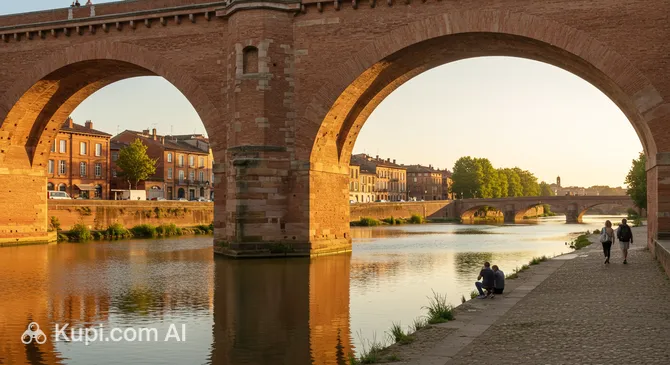
Pont Neuf. Illustration.
Source: Kupi.com AI

Traveler photos:

Construction of the Pont-Neuf began in the 16th century and lasted several decades, explaining its sturdy and massive structure capable of withstanding the Garonne's powerful currents. The bridge consists of seven asymmetrical arches supported by six imposing piers, with a total length of approximately 220 meters. Each pier features special cutwaters to help manage floods, which was a groundbreaking engineering solution for its time.

The Pont-Neuf is more than just an engineering feat; it is a true historical and architectural gem of Toulouse. Its arches and piers create a harmonious ensemble that blends perfectly with the panorama of the old city. The bridge offers magnificent views of the Garonne quays and historic buildings, making it a popular spot for photographers and romantic walks, especially at sunset. A visit to the Pont-Neuf allows you to touch the city's history and enjoy its unique atmosphere.

Contacts

Pont-Neuf is a historic bridge open to the public, so it does not have specific contact details like a phone number or email address. To find the bridge, look for its central location in Toulouse, where it crosses the Garonne River.

It is easily reached on foot from the old city or via public transport; the exact location can always be found on Toulouse tourist maps or online map services.

How to contactContact
AddressPont Neuf, 31400 Toulouse, France

What to Do

The main activity at the Pont-Neuf is, of course, contemplation. Take a stroll across the bridge to admire the scenic views of the Garonne River and the historic architecture of Toulouse. Many people come here at sunset, when the city panoramas are particularly impressive and the play of light on the water creates a truly magical atmosphere.

Active recreation and further exploration are also what the Pont-Neuf offers. On both sides of the bridge, you'll find quays perfect for a leisurely walk or even a picnic with a river view. The bridge is also an excellent starting point for exploring the historic center of Toulouse: nearby, you'll find numerous museums, cathedrals, and cozy cafes.

The Pont-Neuf often serves as a hub of cultural life. City events, festivals, and street performances may take place here. If you're lucky, you might witness one of these events, which will add vibrant impressions to your visit to Toulouse.

Getting There

Getting to the Pont-Neuf in Toulouse is quite simple, as it is located in the heart of the city, connecting the historic quarter with the left bank of the Garonne River. If you are in the old part of Toulouse, the most pleasant way is a walk. You can enjoy the city views and reach the bridge in no time.

For those who prefer public transport, Pont-Neuf is also very accessible. The nearest metro stations are Esquirol (Line A) and Saint-Cyprien – République (also Line A). Both stations are just a few minutes' walk from the bridge. Additionally, city bus and tram routes serve the area, making it easy to reach from various parts of the city.

If you are traveling by car, keep in mind that there is paid parking in the immediate vicinity of Pont-Neuf. For active travelers and cyclists, the city's VélôToulouse bike-sharing system is an excellent option. Convenient bike paths run along the Garonne quays, leading you directly to the bridge and allowing you to combine your journey with a pleasant bike ride.

Nearest city: Toulouse

History & Facts

The history of the Pont-Neuf in Toulouse dates back to the 16th century when there was an urgent need to replace the then-dilapidated Daurade Bridge. The official decision to build a new, stronger bridge was made by the city's capitouls (magistrates). King Francis I of France played a major role in funding this ambitious project by introducing a special tax. Construction began in 1544 on what was destined to become one of the city's primary symbols.

Building the Pont-Neuf proved to be a true test of strength and patience: it spanned nearly ninety years and was only completed in 1632. This long duration was due to a series of significant technical and financial difficulties. Engineers and builders had to constantly overcome challenges related to securing stable funding as well as the difficult hydrological conditions of the Garonne River itself.

One of the main goals in designing the Pont-Neuf was to ensure maximum resistance to the whims of the Garonne, known for its sharp bends and frequent, sometimes devastating, floods. Architects used cutting-edge engineering solutions for their time: the bridge was given powerful, deep-set piers and an elegant seven-arch structure. A key feature that ensured its longevity was the inclusion of special openings (discharge arches) built into the bridge's body above each pier. These openings allowed excess water to pass through during heavy floods, significantly reducing destructive pressure on the structure.

Thanks to these thoughtful engineering solutions, the Pont-Neuf has not only stood the test of time but has also survived numerous powerful floods, maintaining its integrity to this day. Thus, the bridge became not just an important transport artery, but a true monument to Renaissance engineering. Its successful completion and centuries of service are a clear testament to the skill of the builders and the foresight of the designers, making it an integral part of the cultural and historical heritage of Toulouse and all of France.

Time Needed

When planning a visit to the Pont-Neuf in Toulouse, consider how much time you want to spend at this iconic site. For a casual stroll across the bridge to enjoy views of the Garonne River and take a few photos, 30 to 60 minutes is usually sufficient. This is enough time to cross the bridge leisurely and appreciate its architectural features.

If you want to dive deeper into the atmosphere, it's worth setting aside more time. For instance, if you plan to have a photoshoot against the backdrop of the picturesque arches or the quays, linger for a rest or a picnic, or combine your visit to the Pont-Neuf with exploring nearby attractions in Toulouse, you might need up to 1.5–2 hours. This allows you to fully enjoy the beauty of the bridge and its surroundings without rushing.

Working Hours

The Pont-Neuf in Toulouse is a public bridge and can be visited at any time of day. It is open to pedestrians 24/7, year-round, so there are no time restrictions for viewing it. You can enjoy the views from the bridge both during the day and in the evening, when the illumination comes on, creating a special atmosphere.

Since it is an open public space, no advance booking or registration is required to visit the Pont-Neuf. Access to the bridge is free for everyone. Simply come and enjoy a walk and the views of the Garonne River and the historic part of Toulouse.

Open 24 hours

Nearby

Visiting an iconic landmark like the Pont-Neuf is just the starting point for exploring Toulouse. Exploring the surrounding area will allow you to dive deeper into the city's atmosphere, discover hidden gems, and gain a more complete understanding of its rich history and culture. Every nearby street and building has a story to tell, complementing your experience of the bridge itself.

A stroll through the adjacent neighborhoods will enrich your journey with new discoveries. In the immediate vicinity of the Pont-Neuf, you will find many interesting spots, from historic monuments to cozy cafes and museums. Below is a list of some attractions that might interest you.

NameDistance
Basilica of Notre-Dame de la Daurade0.2 km
Bemberg Foundation – Hôtel d’Assézat0.3 km
Prima Lova0.4 km
Dome of La Grave0.5 km
Cacaofages Chocolate Museum0.5 km
Jacobins Convent0.5 km
Place Saint-Pierre0.5 km

Have you reached the end of the page?

So the route has been studied inside and out