Support

Museum of Toulouse

About

The Museum of Toulouse (Muséum de Toulouse) is a major natural history museum located in the city of Toulouse, France. It is considered one of the oldest and most significant natural history museums in the country, offering a fascinating journey into the world of nature and science for visitors of all ages.
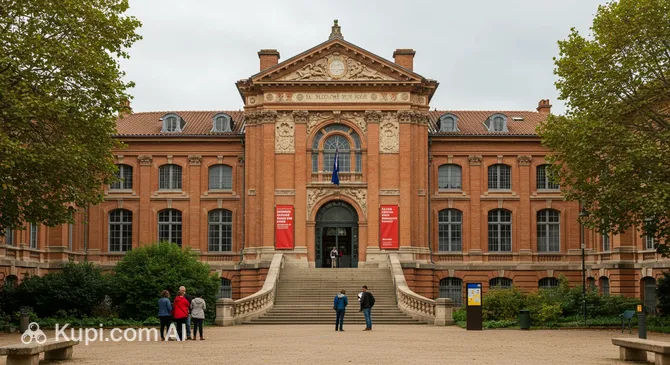
Museum of Toulouse. Illustration.
Source: Kupi.com AI

Traveler photos:

The museum's collections are truly impressive: they feature more than 2.5 million exhibits spread across an exhibition area of approximately 6,000 square meters. The themes of the exhibitions cover a wide range of disciplines, including zoology, botany, geology, paleontology, and anthropology. Here you can see skeletons of prehistoric animals as well as taxidermy of modern fauna, extensive herbaria, and mineralogical collections.

In addition to its rich collections, the Museum of Toulouse is known for its active scientific and educational activities. Numerous interactive displays make the learning process particularly engaging and accessible, attracting both adults and young explorers. The museum's location in a historic building of a former monastery adds a special atmosphere and a touch of ancient charm to the visit.

Contacts

If you are planning a visit to the Museum of Toulouse or need additional information, you can contact the museum administration. The most up-to-date way to get information is to visit the official website or call the provided phone number. The museum is located at: 35 allée Jules Guesde, 31000 Toulouse, France.

How to contactContact
Address35 All. Jules Guesde, 31000 Toulouse, France
Phone number+33 5 67 73 84 84
Websitemuseum.toulouse-metropole.fr

What to Do

At the Museum of Toulouse, visitors can immerse themselves in the fascinating world of natural history. Various collections are presented here, clearly demonstrating the evolution of life on Earth. You can see impressive dinosaur skeletons, examine ancient fossils, and admire a collection of minerals and taxidermy from all over the world. Of particular interest are the interactive exhibits that allow you to independently study the laws of nature and gain a deeper understanding of the region's geological history.

For young visitors and families, the museum offers special educational programs and engaging workshops. Temporary exhibitions are often held, expanding on the themes of the permanent collections and offering new discoveries. This makes every visit to the Museum of Toulouse educational and interesting for all ages.

In addition to touring the indoor exhibitions, guests can take a stroll through the botanical garden adjacent to the museum. It is a wonderful place to relax and study a variety of plants. The museum is also a hub of scientific life, regularly organizing lectures, meetings with researchers, and various themed events open to a wide audience.

Getting There

The Museum of Toulouse is located in the heart of Toulouse, at 35 allée Jules Guesde, making it easily accessible for visitors. Thanks to its central location near major transport hubs, getting to the museum is quite simple. The most convenient way is to use public transport: there are tram and bus stops nearby, from which the museum is just a few minutes' walk away.

If you prefer more personalized modes of transport, the city's bike-sharing system is at your service — a great option for those who like to combine sightseeing with light physical activity. Of course, you can always call a taxi, which will quickly take you to the museum entrance from anywhere in the city. For those traveling by car, there are paid parking lots near the museum where you can leave your vehicle during your visit.

The convenient location of the Museum of Toulouse also makes it easy to include in a walking tour of the historic center of Toulouse. While exploring the city's charming streets, you will easily find your way to this interesting cultural site.

Nearest city: Toulouse

History & Facts

The history of the Museum of Toulouse dates back to the late 18th century. It was founded in 1796 by the prominent French naturalist Philippe-Isidore Picot de Lapeyrouse. Originally, the museum was housed in a former monastery in Toulouse and was intended exclusively for scientists, serving as a research platform. However, nearly seventy years later, in 1865, its doors were opened to the general public, allowing everyone to touch the world of science.

As the museum grew, its grounds were enriched: a university botanical garden was established here, which in 1887 received the official name "Jardin des Plantes," becoming an integral part of the museum complex. Notably, the Museum of Toulouse was the first in the world to open a prehistory department. This innovative step highlighted its leading role in the development of natural science museums not only in France but also abroad, in the study of early human history.

Since the mid-20th century, specifically since 1950, the museum's exhibition has expanded significantly, occupying 19 halls. The collection of the Museum of Toulouse is continuously replenished thanks to private donations and the results of scientific expeditions, allowing it to remain relevant and interesting for visitors. In 1971, a pedagogical department and a children's library were opened, further strengthening its educational mission and making it an important center for enlightenment for all ages in Toulouse and the region.

Time Needed

When planning a visit to the Museum of Toulouse, you should expect that exploring it will take some time. To fully experience the permanent exhibition and visit the adjacent botanical garden, it is recommended to set aside at least 2–3 hours. This time is usually enough to get a general idea of the main collections and the museum's most interesting exhibits.

However, if you are a big fan of natural sciences, traveling with children, or planning a more in-depth study, your stay may increase. Participating in workshops, which are often held at the museum, or a detailed tour of temporary exhibitions will also require additional time. Therefore, for a more complete immersion into the world of the Museum of Toulouse, especially if you plan to attend special events, it is better to budget a bit more time, perhaps up to half a day.

Working Hours

The Museum of Toulouse welcomes visitors daily. According to available information, its doors are open from 10:00 AM to 12:30 PM and from 2:00 PM to 6:00 PM. It is important to remember that the schedule may change, especially on holidays or during special events. Therefore, before planning your visit, we strongly advise you to check the current opening hours on the museum's official website.

As for the need for advance ticket booking or tour registration, it is best to check the exact information directly on the official resource of the Museum of Toulouse. This is particularly relevant if you plan to visit during peak times or want to attend special programs. Although the museum is generally open year-round, it is always helpful to check the official website in advance for any possible schedule changes or visiting conditions.

DayOpening hours
MondayClosed
Tuesday10:00 – 18:00
Wednesday10:00 – 18:00
Thursday10:00 – 18:00
Friday10:00 – 18:00
Saturday10:00 – 18:00
Sunday10:00 – 18:00

Nearby

A visit to the Museum of Toulouse is undoubtedly a highlight, but your acquaintance with Toulouse doesn't end outside its walls. Exploring the area around the museum can significantly enrich your trip, allowing you to see more and deeply understand the character of this amazing city in France.

There are many other interesting places located in the immediate vicinity of the Museum of Toulouse, each attractive in its own way. From picturesque gardens to historic buildings and other cultural sites, a walk through this area promises to be rich and educational. Below is a list of some nearby attractions.

NameDistance
Jardin des Plantes0.2 km
Grand Rond0.3 km
Paul-Dupuy Museum0.4 km
The Biergarten0.7 km
Saint Stephen's Cathedral0.7 km
Bemberg Foundation – Hôtel d’Assézat0.9 km
Prima Lova1 km

Have you reached the end of the page?

So the route has been studied inside and out