Support

Basilique Notre-Dame du Port

About

Tucked away among the cozy alleys of the ancient city of Clermont-Ferrand is a true gem of medieval architecture — the Basilica of Notre-Dame-du-Port. This outstanding monument of 11th–12th century Romanesque architecture is one of the key landmarks of the Auvergne region in France. Built from characteristic beige sandstone, it impresses with its sturdiness and elegant proportions that have been preserved through the centuries.

The basilica is listed as a UNESCO World Heritage site as part of the Routes of Santiago de Compostela. It serves as a textbook example of the Auvergne Romanesque school: with its powerful towers, harmonious proportions, and detailed sculptural decorations that tell biblical stories without words.
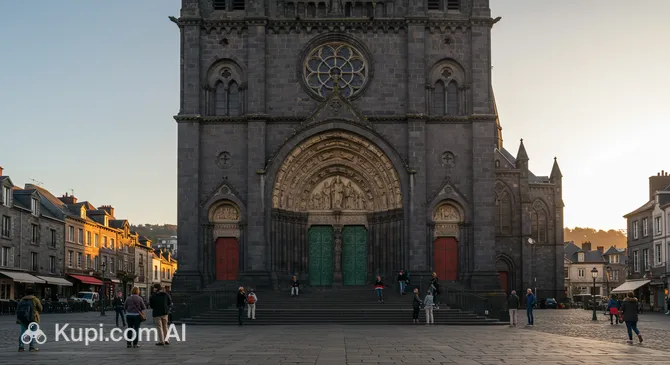
Basilica of Notre-Dame du Port
Basilica of Notre-Dame du Port. Иллюстрация. Источник: Kupi.com AI

Unlike the dark Gothic cathedral that towers over the city, Notre-Dame-du-Port offers a more intimate and peaceful atmosphere. Its uniqueness lies in how it is "hidden" within a city block, giving travelers the feeling of a sudden and miraculous discovery of an ancient world right in the middle of modern life.

Contacts

To contact the administration or for the latest event information, you can use the following details:

How to contactContact
Address4 Rue Notre Dame du Port, 63000 Clermont-Ferrand, France
Phone+33 4 73 29 29 70
Websitebasiliquenotredameduport.fr

What to Do

When visiting the basilica, the first thing to notice is its exterior facades. The southern and northern portals are adorned with intricate carvings, where you can find famous scenes such as the Sacrifice of Isaac. Even on a cloudy day, the light arkose stone gives the building a special glow, highlighting the monumentality of its architectural structure.

Inside the temple, an atmosphere of austere majesty prevails. Be sure to walk along the naves and examine the column capitals — a true "stone encyclopedia" where medieval craftsmen depicted fantastic creatures and religious scenes. The purity of the Romanesque lines here is not cluttered with unnecessary decor, allowing you to fully focus on contemplation and tranquility.

For photography and history enthusiasts, the Basilica of Notre-Dame-du-Port offers a unique contrast: you can compare its low, sturdy forms with the soaring black Gothic cathedral located nearby. It is also a great place to feel like part of centuries-old pilgrimage history, imagining how thousands of people have stopped here on their way to Santiago de Compostela.

Getting There

Reaching this architectural gem is quite easy, as it is located in the historic center at 4 Rue Notre Dame du Port. If you arrive in the city by train, the walk from the Clermont-Ferrand railway station takes about 15–20 minutes. You can also use the city tram or bus, getting off at one of the stops in the central part of town.

For those traveling from the capital, a TGV high-speed train from Paris to the city of Clermont-Ferrand takes approximately 3 hours. Clermont-Ferrand Auvergne Airport is just 10 kilometers from the center; a taxi or a special shuttle will take you to the basilica in 20–30 minutes.

Since the Basilica of Notre-Dame-du-Port is literally "embedded" into the surrounding urban fabric and hidden behind residential buildings, visitors traveling by car are advised to leave their vehicle in one of the central parking lots and continue on foot, following the signs or GPS.

Ближайший город: Clermont-Ferrand

History & Facts

The history of this sacred site dates back to the 11th century when Bishop Saint Avitus laid the first stone. Construction of the current building took place throughout the 11th and 12th centuries and required immense effort: records show that fundraising for its completion was still ongoing as late as 1185. The basilica was built from arkose — a local beige sandstone that gives it a warm, noble hue.

A major milestone in the temple's history was its inclusion in the UNESCO World Heritage list. This was granted because the basilica is a significant stop on the legendary Way of Saint James in France, welcoming pilgrims for many centuries.

The building's fate hasn't always been easy: in the late 18th century, historical upheavals led to the destruction of its towers. However, the massive walls and unique Romanesque vaults remained. Later, Gothic details were added to the basilica's appearance, which today harmoniously coexist with the ancient Romanesque foundation.

Interestingly, it was here in the city of Clermont-Ferrand that Pope Urban II proclaimed the start of the First Crusade in 1095. While the main events took place in the town square, the basilica, located in the heart of the city, has forever absorbed the atmosphere of that turbulent era.

Time Needed

To see this architectural treasure without rushing, most tourists need about 45 minutes to 1 hour. This is enough time to admire the delicate stone carvings on the facades and feel the majestic serenity of the inner naves.

If you plan to study every capital in detail and compare the basilica's Romanesque style with the neighboring Gothic cathedral, allow for a bit more time. Viewing the exterior usually takes about 20 minutes, with the rest of the time spent immersing yourself in the interior atmosphere and studying the biblical stories captured in stone.

Working Hours

The Basilica of Notre-Dame-du-Port warmly welcomes visitors every day. The doors of the temple are open to tourists and worshippers according to the following schedule:

  • Monday – Sunday: from 09:00 to 18:00.

Please note that sightseeing inside may be limited during religious services, so it is best to choose a time between masses for your visit.

9:00 – 18:00

Nearby

Exploring the surroundings of the Basilica of Notre-Dame-du-Port will allow you to better experience the spirit of the ancient city. Most interesting sites are within a short walking distance, making this area ideal for a long introduction to the culture of the Auvergne region.

NameDistance
Bistrot Honoré0.3 km
Place de la Victoire0.4 km
Clermont-Ferrand Cathedral0.4 km
La Bamboche0.7 km
Henri-Lecoq Natural History Museum0.7 km
Le Comptoir0.7 km
Le Bistrot d'à Côté0.7 km

Reached the end of the page?

That means the route is fully explored