Support

Stone Bridge of Zaragoza

About

The Stone Bridge (Puente de Piedra) is one of the most recognizable and significant architectural monuments in the city of Zaragoza, located in Spain. This historic bridge, elegantly spanning the Ebro River, is an outstanding example of medieval bridge construction. It not only connects different parts of the city but also serves as its true symbol, attracting travelers with its beauty and rich history.
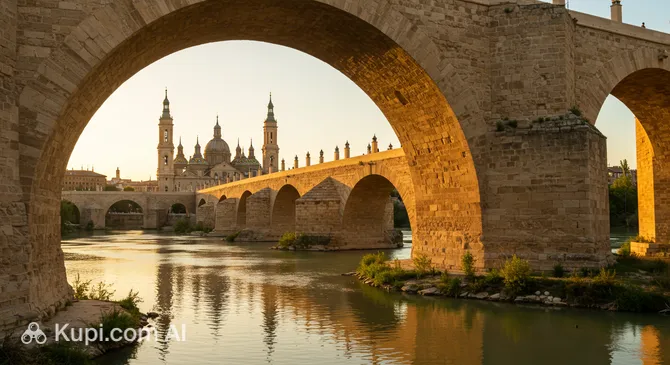
Stone Bridge of Zaragoza. Illustration.
Source: Kupi.com AI

Traveler photos:

This structure is also widely known as the Lion Bridge. It owes its nickname to the four majestic bronze lions installed on the columns at the entrances. These sculptures, which have become an integral part of the bridge's appearance, were created by sculptor Francisco Rallo Lahoz and added in 1991, symbolizing the power and pride of the city.

A walk across the Stone Bridge is a wonderful opportunity to enjoy magnificent views of the river and the famous Basilica of Nuestra Señora del Pilar, especially at sunset. Combining aesthetic appeal with an important transport function, the bridge remains a favorite spot for both tourists wanting to take memorable photos and locals who value its historical heritage.

Contacts

Stone Bridge in Zaragoza is a historical monument and part of the city's infrastructure, so it does not have a specific phone number or email address for tourists. It is open for walks 24/7 and is completely free of charge. The bridge is located in the very heart of the city, right next to the Basilica of El Pilar, and it is easy to find while walking along the Ebro River embankment.

How to contactContact
AddressPuente de Piedra, Casco Antiguo, 50001 Zaragoza, Spain
Websitewww.zaragoza.es

What to Do

A walk across the Stone Bridge of Zaragoza is one of the main pleasures for visitors to the city. Thanks to the wide pedestrian sidewalks, you can take a leisurely stroll here while enjoying magnificent panoramas. The bridge offers picturesque views of the Ebro River and the historic part of Zaragoza, making it an ideal spot for photography. Particular attention is drawn to the details: the ancient stonework itself and the famous bronze lions that "guard" the entrances to the bridge and have become one of the symbols of the city.

The Stone Bridge is not just a crossing, but a perfect starting point for exploring the Old Town. Immediately after walking across it, you can dive into the labyrinth of streets where numerous architectural monuments, cozy cafes, and interesting museums await. A visit to the bridge is easy to fit into any itinerary through the historic center, as it harmoniously connects key points of the city and allows you to feel its centuries-old history.

In the evening, the bridge is transformed. Thanks to skillfully designed lighting, it creates a truly romantic atmosphere, attracting both tourists and locals for evening walks. This time allows you not only to admire the city lights reflecting in the water but also to reflect on the rich history of this structure and its important role in the life of Zaragoza throughout the centuries.

Getting There

The Stone Bridge, also known as Puente de Piedra, is one of the key landmarks of Zaragoza and is located in its very heart. Thanks to its central location, the easiest and most pleasant way to reach it is on foot. If you are exploring the city's historic center, for example, walking through Plaza del Pilar, you can reach the bridge in just a few minutes while enjoying views of the Ebro River and the majestic basilica.

For those who prefer public transport, Zaragoza offers an extensive city bus network. Many routes pass through the center and have stops within walking distance of the bridge. Additionally, a tram line runs near the embankment, making a trip here quick and convenient from almost any part of the city. This is an excellent choice if you are staying outside the city center.

If you are traveling by car, there are public and private parking lots in the city center. However, keep in mind that finding a free spot in the historic district can be problematic, especially during peak hours. Therefore, to avoid unnecessary hassle, it is recommended to leave your car in a parking lot and walk, or use a taxi, which will comfortably take you to the bridge.

Nearest city: Zaragoza

History & Facts

The Stone Bridge (Puente de Piedra) is one of the oldest and most recognizable symbols of Zaragoza. Although the idea of building it arose back in the 12th century, actual construction began much later. The project was designed by architect Gil de Menestral, and the bridge was built between 1401 and 1440. Since then, it has become an integral part of the cityscape and a key transport artery connecting the banks of the Ebro River.

The bridge's history is full of dramatic events and reconstructions. In 1643, a powerful flood destroyed two central spans, requiring major restoration work. In 1659, architect Felip de Busignac not only restored the damaged parts but also strengthened the structure, widening the cutwaters for better protection against future floods. Later, in 1789, large-scale work to reinforce the embankment was carried out under the guidance of architect Agustín Sanz, providing the bridge with additional stability.

The bridge survived not only natural disasters but also military conflicts. In 1813, during the Peninsular War, retreating French troops blew up one of the spans, but it was quickly restored. The 20th century brought modernization: in 1906, tram tracks were laid across it, and in 1908, it was widened with comfortable pedestrian sidewalks to handle the growing flow of people and vehicles.

The bridge's most famous modern feature is the four bronze lions installed on its pillars in 1991. These majestic sculptures, created by Francisco Rallo Lahoz, symbolize the strength and courage of the city. Because of them, the bridge received its second, no less popular name — the Lion Bridge (Puente de los Leones), becoming not just an engineering structure but a true work of art and a favorite walking spot for residents and guests of Spain.

Time Needed

You won't need much time to explore the Stone Bridge of Zaragoza. For a leisurely stroll across the bridge itself to admire its ancient architecture and the magnificent views of the Ebro River and the Basilica of El Pilar, 30–45 minutes is usually sufficient. This time is enough to soak in the atmosphere of this historical site and take some memorable photos.

However, keep in mind that the bridge is part of the picturesque ensemble of Zaragoza's historic center. If you plan to do more than just walk across it—such as a full photo session or combining your visit with a walk along the embankment and nearby streets—it is better to set aside a bit more time. In this case, plan for about 1–1.5 hours to enjoy all the beauty of this iconic city landmark without rushing.

Working Hours

The Stone Bridge in Zaragoza is an open city landmark, not a museum with restricted access. This means that it is open for visits 24 hours a day, year-round. You can freely walk across it at any time convenient for you, whether it's early morning to enjoy the silence, or late evening when the picturesque lighting is turned on.

No tickets or advance reservations are needed to visit the bridge. Access is completely free for everyone. Just come and enjoy one of the best views of the Basilica of Nuestra Señora del Pilar and the Ebro River.

Open 24 hours

Nearby

Visiting the Stone Bridge in Zaragoza is a wonderful opportunity to explore the historic heart of the city. However, to get a full picture of this amazing place, it is worth taking the time to explore its surroundings. Many of Zaragoza's iconic landmarks are within walking distance, allowing you to create a rich and interesting full-day itinerary.

A walk through the nearby streets will reveal the rich history and culture of the capital of Aragon. You will see magnificent cathedrals, ancient ruins, and cozy squares, each holding its own secrets. Below is a list of interesting places located near the Stone Bridge that will help you dive deeper into the atmosphere of this city.

NameDistance
La Lonja Exhibition Hall0.2 km
Cathedral-Basilica of Our Lady of the Pillar0.3 km
Cathedral of the Savior of Zaragoza0.3 km
La Flor de Lis0.4 km
Macanaz Park0.4 km
Roman Walls of Zaragoza0.5 km
Museum of the Theatre of Caesaraugusta0.5 km

Have you reached the end of the page?

So the route has been studied inside and out