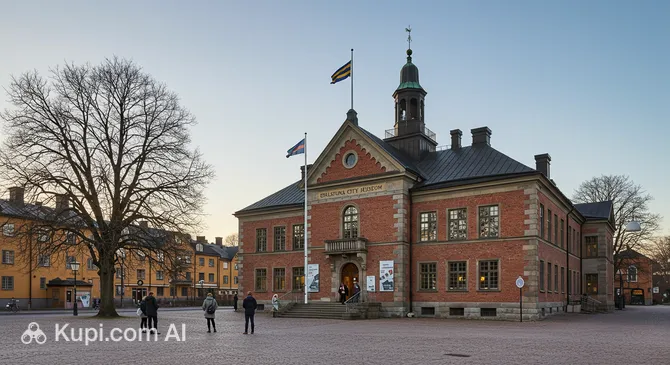
Immerse yourself in the atmosphere of the "City of Steel" with a visit to the Eskilstuna City Museum (Eskilstuna stadsmuseum). This unique cultural institution, located in the city of Eskilstuna, tells the fascinating story of how a small medieval settlement transformed into a powerful industrial hub in Sweden.
Eskilstuna City Museum. Illustration.
Source: Kupi.com AI
Traveler photos:
The museum occupies a historic building in the heart of the industrial zone, which gives its exhibits a special sense of authenticity. It features collections dedicated to the development of metalworking, crafts, and the daily life of local residents. Thanks to its high ratings and the appreciation of visitors, this site is considered a must-visit for those wanting to understand true Swedish industrial culture.
The museum's riverside location adds a special charm to the visit: after exploring the exhibitions, you can stroll along the embankments and parks, enjoying the harmonious blend of rugged factory architecture and tranquil Scandinavian nature.
Contacts
To clarify details before your visit or to organize group tours, you can use the following contact information for the museum:
A captivating journey through time awaits you within the museum walls. Be sure to visit the halls dedicated to metalworking and knife production—it was this very craft that made the city world-famous. Here, you can see rare examples of tools, weapons, and exquisite metalwork created by legendary master craftsmen of past centuries.
For families with children, the museum has prepared a special surprise: interactive children's rooms. In these rooms, young explorers can do more than just look at exhibits; they can actively engage with history by dressing up in period costumes, playing games from past eras, and even "hiding treasures." This makes the educational process light and memorable.
In addition to the permanent exhibitions, the museum frequently hosts temporary exhibitions dedicated to modern culture or local art. A walk through the spacious halls filled with authentic artifacts allows you to feel the spirit of old Sweden, while the proximity to the historic Rademacher Forges provides an opportunity to continue your historical journey right outside the museum's doorstep.
Getting There
The museum is located at Faktorigatan 4B, in a characteristic industrial zone that is a historical monument in its own right. If you are already in the center of Eskilstuna, a pleasant walk or bike ride along the banks of the Eskilstunaån river will take no more than 10–15 minutes.
For those traveling from other cities, the train is the most convenient option. The journey from Stockholm to Eskilstuna Central Station takes about an hour. From the station, you can reach the museum by local bus (the stop is just a few minutes' walk from the entrance) or by taxi.
Travelers by car should follow the E20 European route. There are parking spaces available near the museum, and the scenic bridges and green parks nearby make the final leg of the journey very pleasant.
Nearest city: Eskilstuna
History & Facts
The history of this site dates back to the early Middle Ages when a settlement named Tuna was located here. The city owes its current name to Saint Eskil—an 11th-century English missionary who preached in these lands and was buried here. Until the Reformation in the 16th century, a Johannite monastery flourished near his grave, serving as the spiritual center of the region.
A new chapter began in 1659 when King Charles X Gustav granted the settlement city privileges and established an industrial hub here. The development centered around the workshops of Reinhold Rademacher. Invited German master craftsmen brought advanced metalworking technologies with them, turning the city into Sweden's primary center for the production of locks, tools, and weapons.
In the 19th century, its reputation as the "City of Steel" was solidified by its knife production. Companies founded by Pontus Holmberg and the EKA firm became famous far beyond the country's borders. Today, the Eskilstuna City Museum carefully preserves this industrial heritage, housed in the historic buildings of former factories, allowing guests to literally touch the walls that witnessed the birth of Swedish industry.
Time Needed
To leisurely explore the main exhibits and immerse yourself in the industrial past, you will typically need between 1.5 and 2.5 hours. This is enough time to study the collections of blades and tools, as well as get acquainted with the daily lives of local residents from different eras.
If you are planning a visit with children, it is worth setting aside about 3 hours. The interactive zones and playrooms, where little visitors can try on historical costumes, usually keep them engaged for a long time, turning a standard museum trip into an exciting adventure.
Working Hours
The museum welcomes visitors from Wednesday to Sunday, opening slightly later on weekdays and inviting guests from early morning on weekends. Monday and Tuesday are traditionally days off.
Opening Hours:
Wednesday — Friday: 12:00 – 16:00
Saturday — Sunday: 10:00 – 16:00
We recommend checking the official website before your trip, as opening hours may change during public holidays.
Day
Working hours
Monday
Закрыто
Tuesday
Закрыто
Wednesday
12:00–16:00
Thursday
12:00–16:00
Friday
12:00–16:00
Saturday
10:00–16:00
Sunday
10:00–16:00
Nearby
Exploring the industrial heritage and cultural spaces around the museum will give you a complete picture of the city's character. The Eskilstunaån river area offers many interesting locations just a few minutes' walk away.